
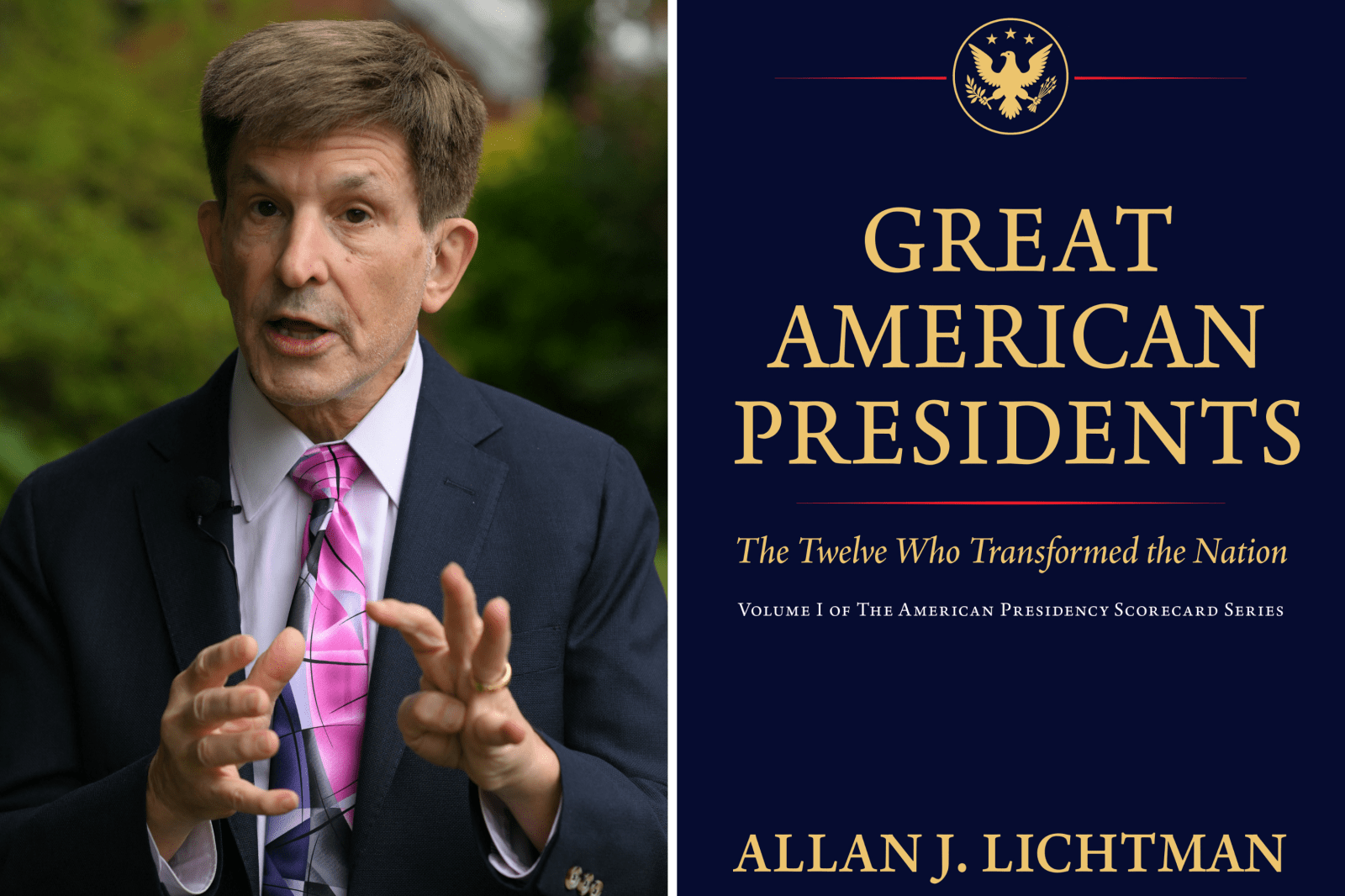
Allan Lichtman has developed a 10-point framework for evaluating presidential greatness, as detailed in his forthcoming book on transformative American leaders. Known for his Keys to the White House, a highly accurate presidential election prediction system, Lichtman has made a name as a premier election forecaster. However, his credibility faced scrutiny after incorrectly predicting Kamala Harris’s victory in the 2024 presidential election, which was won by Donald Trump. Now, Lichtman shifts focus from election predictions to exploring what makes a president historically significant.
From Predicting Elections to Measuring Greatness
Lichtman’s new model emphasizes consequence over popularity. It measures how presidents tackled defining challenges and altered national direction, excluding public approval and ideological alignment. For example, Lichtman includes James K. Polk but not Dwight Eisenhower. While Eisenhower scores higher in expert surveys, Polk’s territorial expansion of America was monumental. If assessing esteem, Polk wouldn’t make the cut. However, measuring consequence justifies his inclusion.
The 10 New Keys
The new framework comprises the following keys:
- The Crisis Key
- The Transformation Key
- The Moral Vision Key
- The Hidden Hand Key
- The Stewardship Key
- The Realignment Key
- The Institution Builder Key
- The Narrative Key
- The Diplomatic Pivot Key
- The Adaptability Key
Lichtman believes transformative leadership isn’t enough for greatness; presidents must operate within democratic traditions. His framework excludes figures like Richard Nixon and Donald Trump due to their controversial politics. The Stewardship Key assesses whether presidents responsibly used executive power, avoiding reckless decisions. Failures are weighed against successes, as demonstrated by Lyndon B. Johnson’s domestic achievements balanced against the Vietnam War.
A System Built for Debate
Lichtman acknowledges that different historians could interpret the keys differently, making it a structured guide rather than an infallible formula. It prompts debate and helps define the criteria for assessments. Lichtman stresses that the keys are subjective, requiring human judgment, much like any analysis of human behavior. Disagreements become focused on historical questions instead of instinctive rankings.
No Modern President Makes the Cut
Lichtman’s research concludes no post-Reagan president currently qualifies as great. He cites historical distance as a challenge for assessing recent impacts. Additionally, political polarization post-1994, after Republicans gained control of Congress, complicates consensus. Social media exacerbates divisions with targeted messaging. Consequently, recent presidents are better managers than transformative figures. Prominent figures like George W. Bush, Bill Clinton, and Barack Obama achieved successes, but didn’t resolve deep-seated national issues fully.
Lessons from the 2024 Election
Lichtman contrasts the new model with his election forecasting. His Keys to the White House involved predictions verified by future events. His greatness model is retrospective and evaluative. The 2024 election made him question if historical assumptions in his forecasting remain valid. Voter judgment of incumbent performance may be affected by polarization and misinformation. Despite these doubts, he questions whether transformative presidential conditions are dissolving amid a politically altered environment. The 10 Keys to Presidential Greatness serve as both a ranking tool and a statement on American leadership’s evolution.
Great American Presidents: The Twelve Who Transformed the Nation by Allan J. Lichtman launches on September 22, 2026. Newsweek’s Martyn, an AI assistant, contributed to this story.