
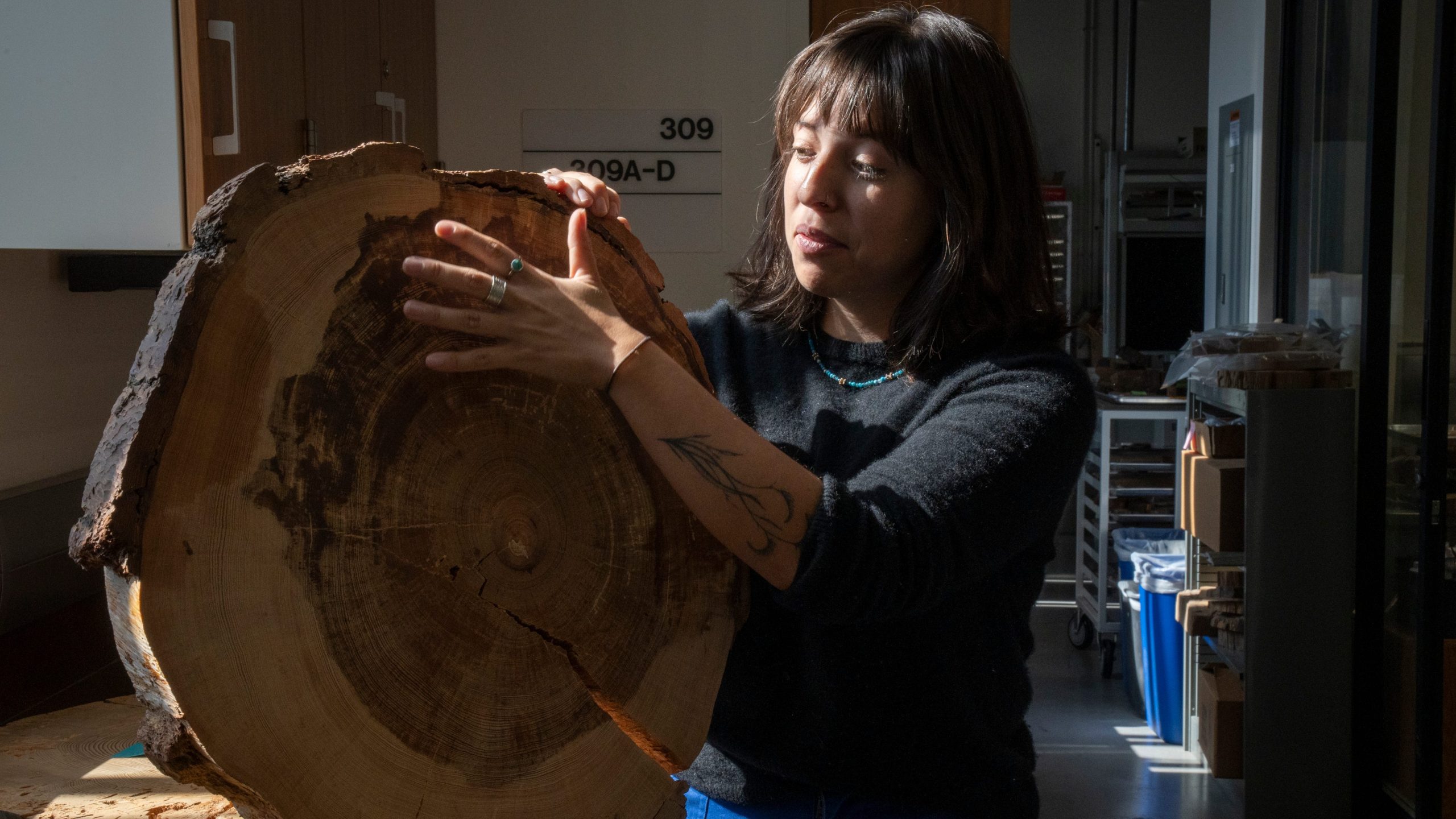
Tree cores extracted from some of the planet’s oldest trees have significantly extended historical weather records. As the 2026 hurricane season progresses, and with the influence of a strong El Niño potentially altering weather patterns globally, these trees continue to serve as natural record-keepers.
Tree scientists highlight the fascinating evidence contained within tree rings, which provides insights not only about a tree’s age but also the storms, droughts, and wildfires it has endured.
In locations such as Alaska, Arizona, and forests worldwide, scientists are amassing extensive data collections that document past natural disasters and offer clues about future events.
Understanding Tree Cores
Narrow tree cores, roughly the diameter of a pencil, have been extracted from some of Earth’s oldest trees. These samples have extended historical weather records by centuries beyond the capabilities of modern satellite imagery. Scientists analyze the width, density, and spacing in cross-sections of tree rings to understand historical floods, droughts, and hurricane impacts.
As nations celebrate historical milestones, such as the U.S. reaching its 250th anniversary, tree scientist Nicole Davi reflects on trees still alive from 1776 and the narratives they contain.
The Significance of ‘Witness Trees’
Such trees, often referred to as ‘witness trees,’ provide vital historical context. Davi, who serves as a professor at William Paterson University and an adjunct scientist at the Lamont-Doherty Earth Observatory’s Tree-Ring Laboratory, underscores their importance.
Locating the Right Trees
For Valerie Trouet, exploring forests, particularly remote mountainous areas, is a cherished aspect of her work. Trouet, a professor at the University of Arizona’s Laboratory of Tree-Ring Research, delights in encountering ancient trees amid stunning landscapes. These trees, predating many generations, hold vital historical information.
Trouet’s book, “Tree Story,” published in 2020, explores these themes. Discovering optimal trees often involves adventurous hikes into forests and mountains to locate patriarchal specimens containing centuries-old data.
Researchers focus on trees in specific regions based on their investigative goals. For drought studies, they target regions where growth is heavily influenced by moisture, such as the U.S. Southwest.
Tree growth varies largely due to seasonal moisture availability. In Tucson, for example, trees thrive in wet years but struggle to grow during dry periods, resulting in narrow rings.
Analyzing Tree Rings
Under microscopic examination, tree cores sensitive to temperature changes can reveal historical volcanic eruption impacts. Davi notes the pronounced growth effects observed from sunlight blockage and regional cooling.
Scientists studying climate trends often focus on slowly growing trees, such as those in boreal forests, which provide sensitive data.
Historical Record Building
Trouet emphasizes the importance of tree ring data in studying events like El Niño. This data fills historical gaps prior to satellite use, offering deeper insights.
With only about 50 to 60 years of satellite data, spanning a six to seven-year cycle, researchers often have fewer than ten El Niños to analyze. Expanding data by incorporating cores from other regions affected by El Niño enhances statistical analysis.
Tree ring samples from hurricane-prone regions reveal impacts from both historical and recent storms. For instance, Hurricane Harvey’s intense flooding in Texas influenced tree growth, and rings reveal how storms are intensifying.
Studies indicate a slowdown in tree growth following hurricanes. Standing trees lose leaves and branches, a trauma visible in their rings.
Davi discovered hurricane evidence in ancient, “stunted and gnarly” trees along coastal New York and New Jersey, highlighting their historical significance.
Understanding past wildfire patterns during El Niño and La Niña years through tree rings provides valuable insights into their historical prevalence.
Resilience and Scientific Discovery
The revelation that trees record stories of resilience to severe weather events is captivating. Davi finds it scientifically exciting to anticipate further insights into how trees can inform global and historical narratives.