
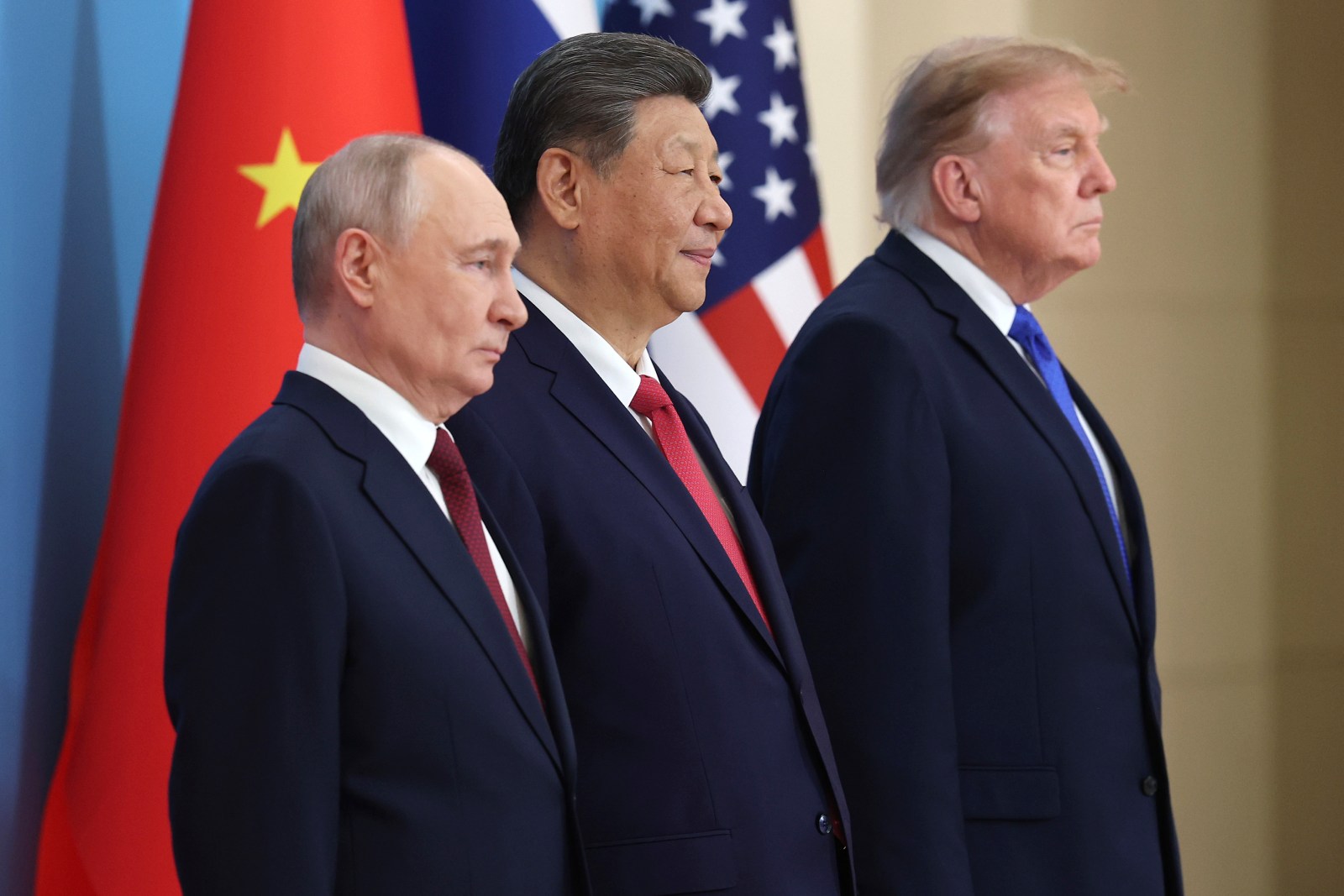
The historic trilateral meeting in Shenzhen, China, featuring Chinese President Xi Jinping, U.S. President Donald Trump, and Russian President Vladimir Putin, provided a significant stage for observing the nuanced dynamics between these world leaders. Held on the sidelines of the Asia-Pacific Economic Cooperation (APEC) summit, the meeting was analyzed by several body language experts for Newsweek.
Interpreting President Xi Jinping’s Role
British psychologist Peter Collett emphasized Xi Jinping’s central position during the summit as a demonstration of his dominant role. The leaders’ seating arrangement and Xi’s hosting of the meeting at Kylin Villa positioned him as the central figure. Collett noted the principle that individuals of lower status often approach those of higher status, which reinforced Xi’s prominence.
Body language expert Christopher Ulrich added that positioning Xi between Trump and Putin on the roundtable stressed his role as a power broker in the interactions concerning nuclear security and energy supplies. This visual arrangement bolstered Xi’s image as a key facilitator in the dialogue between the U.S. and Russia.
Donald Trump’s Presentation and Posture
Patti Wood, author of “SNAP: Making the Most of First Impressions, Body Language, and Charisma,” analyzed Trump’s body language during the meeting. She observed that Trump’s stooped posture and angled shoulders made him appear shorter and less imposing compared to his counterparts. His occasional disengagement, exemplified by turning his gaze towards cameras, further weakened his presence.
Wood remarked that Trump’s subdued vocal delivery, even when discussing successful diplomatic achievements, indicated a lack of energy in contrast to his usual demeanor. This observation was supported by body language analyst Scott Rouse, who noted Trump’s relative physical containment compared to previous encounters with Xi and Putin.
Caroline “Carrie” Keating noted a change in Trump’s posture since his 2015 campaign, as he appeared less physically commanding. Despite this, Scott Rouse mentioned that Trump’s demeanor during greetings was more relaxed and less stressed than usual, suggesting a familiarity with the setting.
The Interaction Between Trump and Xi: A Study of Movements
Trump’s gesture of extending his hand before embracing Xi Jinping at the airport sparked varied interpretations. While Collett interpreted Trump’s gestures as efforts to project closeness and familiarity, Wood saw them as attempts to assert physical dominance. Maroño added that the diplomatic hug between Trump and Xi carried an element of friendly assertion, blending personal touch with customary diplomacy.
Collett and Keating observed Xi’s restraint in relying on physical contact, contrasting with Trump’s frequent touching. This restraint underscored Xi’s steady composure and inherent status in the formal diplomatic setting.
Assessing Putin’s Expressions
Collett emphasized Putin’s smiles during the summit, cautioning against assuming they indicated complete comfort. The symbolism of Putin’s presence with Trump and Xi was significant, despite other signs of unease. Collett also noted subtle deferential behavior by Putin, acknowledging Xi’s status.
Rouse highlighted Putin’s increased animation during the interactions, associating it with heightened excitement and attentiveness to the negotiations’ importance. While not drawing firm conclusions, the behaviors indicated the weight Putin placed on the summit’s outcomes.
Interpreting Cultural Differences
Rouse and Wood stressed the importance of cultural context when interpreting the leaders’ behaviors. Xi’s restraint and Putin’s alignment with Xi in posture both illustrated cultural nuances in diplomatic engagements.
As experts examined the interplay of movements and expressions, their analysis provided a layered understanding of the interactions at the Shenzhen meeting.