
The Good Daughter launches with a severe act of violence typical of thriller flashbacks. Two masked men seeking vengeance invade a small-town Georgia lawyer’s home. They find only his wife and two daughters present. This event frames the series’ narrative and impacts the sisters’ lives into adulthood.
This trauma sets the stage for the Peacock series debuting on November 12. It underpins further traumatic events across its six episodes. The show’s exploration reveals layers of trauma and its impact on the characters.
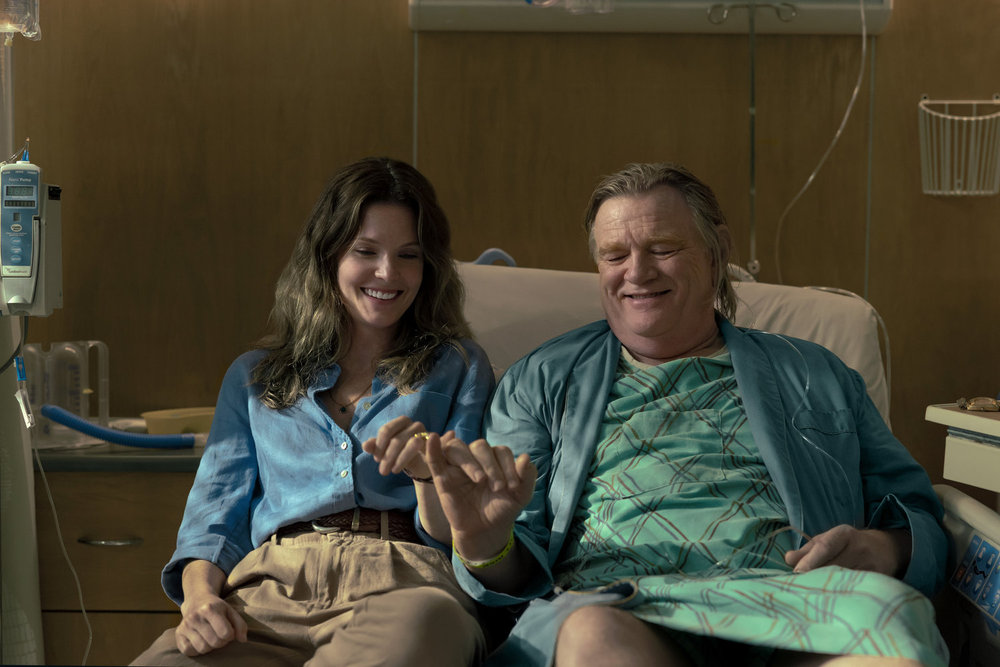
Years later, Charlie Quinn, the younger sister played by Meghann Fahy, is a lawyer working with her father, Rusty, portrayed by Brendan Gleeson. Despite Rusty’s highbrow interests, they remain outcasts in a town blaming him for perceived miscarriages of justice. Rusty struggles with age and alcoholism.
Charlie’s story unfolds as she, separated from her husband, wakes with a stranger’s phone. Her return to a familiar high school coincides with a shooting, leading to Kelly, played by Shayna Benardo, becoming Rusty’s client due to her vulnerabilities.
Twists in the narrative bring Charlie’s estranged sister, Sam, played by Rose Byrne, back into the picture. Despite her legal prowess in patents and her contrasting urban lifestyle, she becomes involved in Kelly’s case.
The performances by Byrne, Gleeson, and notably Fahy, elevate the series. Yet, script reliance on coincidence weakens the narrative. One death’s timing appears laughable. The series, adapted by Karin Slaughter from her novel, compiles female-centric horrors and explores gender brutality without new insights.
Questions linger, such as Rusty’s reasons for remaining in a damaging role. These themes are presented through heavy metaphors about control and storytelling. Slaughter’s adaptation may have benefited from entrusting the task to someone else.