
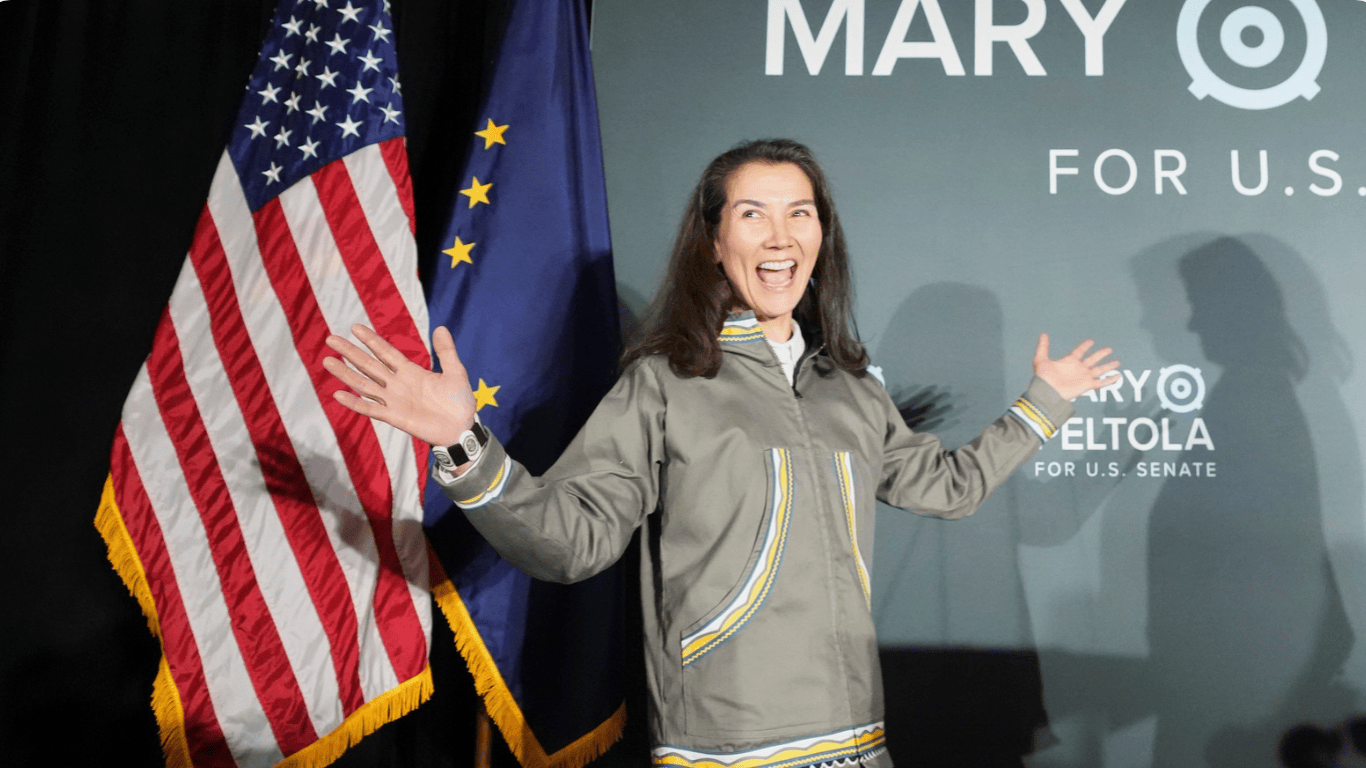
Alaska takes a unique approach in counting ballots, focusing on precision and distance. In the U.S. Senate race, Democrat Mary Peltola is close to securing a majority. As per the Division of Elections’ report, Peltola has received 140,637 first-choice votes, which equals 49.94 percent. Meanwhile, Republican Senator Dan Sullivan has collected 129,424 votes, or 45.96 percent. Other candidates like Republican Gerald L. Heikes garnered 6,002 votes and Daniel J. Sullivan Jr. got 4,652 votes, with 872 write-ins noted.
The Associated Press estimates that 97 percent of votes have been counted, but the race remains undecided. Alaska’s voting system can initiate ranked-choice tabulation if no candidate receives more than half of the first-choice votes. This process begins on November 18, eliminating the candidate with the fewest votes and redistributing them based on voters’ next choices. A candidate can still win if they exceed 50 percent in subsequent rounds.
The Vote Counting Process
Peltola’s gap of 157 votes presents a challenge. Each additional counted ballot raises the threshold for a majority. To achieve over 50 percent, she requires a significant portion of remaining votes. The AP’s 97 percent count suggests a few thousand ballots are left. Peltola will need about 52 percent of these to secure a first-round victory. This estimate depends on assumptions that all remaining ballots will count and that they have valid Senate votes.
Sullivan’s Paths to Victory
Senator Sullivan faces limitations with the first-choice count. Trailing by 11,213 votes, the projected number of remaining ballots indicates he would still be behind even if they all favored him. His chance relies on Peltola not gaining a majority, switching the focus to ranked-choice results. With ranked-choice, the ranking beyond the first choice becomes critical.
Newsweek’s analysis of ranked-choice voting using the Division’s cast vote record reveals that many ballots stay active through the rounds. Write-ins are the first eliminated. Many of these votes have shifted towards Peltola in the initial redistribution rounds. As candidates fall out, votes often move towards either Peltola or Sullivan, gradually narrowing the field.
Current Analysis
The analysis outlines that if Peltola retains her lead through ranked-choice calculations, she maintains the advantage. According to Newsweek’s model, she leads with 143,127 votes or 51.83 percent, compared to Sullivan’s 132,985 votes at 48.16 percent. Yet, these figures are only based on electronically counted ballots, not incorporating any hand-counted or remaining ballots to be tallied by the deadline.
Legal Considerations
Concerns over voting intentions and names have emerged. The presence of two candidates sharing similar names has incited accusations. The Justice Department even attempted to block the election result certification, suspecting some votes meant for Sullivan Jr. should count for the senator. However, legal efforts faced rejection due to constitutional protections of secret voting.
Future Steps
Looking ahead, the last overseas ballots must be received by November 18. Should no candidate secure a majority in the first round, ranked-choice counting commences. Certification of the results is scheduled for November 25. Voter rankings play a decisive role in determining who obtains the majority, adding depth and complexity to Alaska’s electoral process.