
Cognisee, under the leadership of Founder & CEO Ahmer Inam, leverages AI to bridge the skilled labor gap in America. This company transforms the expertise of retiring workers into digital mentors, using AI-powered training to empower new generations in industries like manufacturing, aviation, and healthcare. These digital mentors ensure expertise is shared without replacing human roles, thereby enhancing workforce efficiency.
Advancements in Robotics: Genesis AI
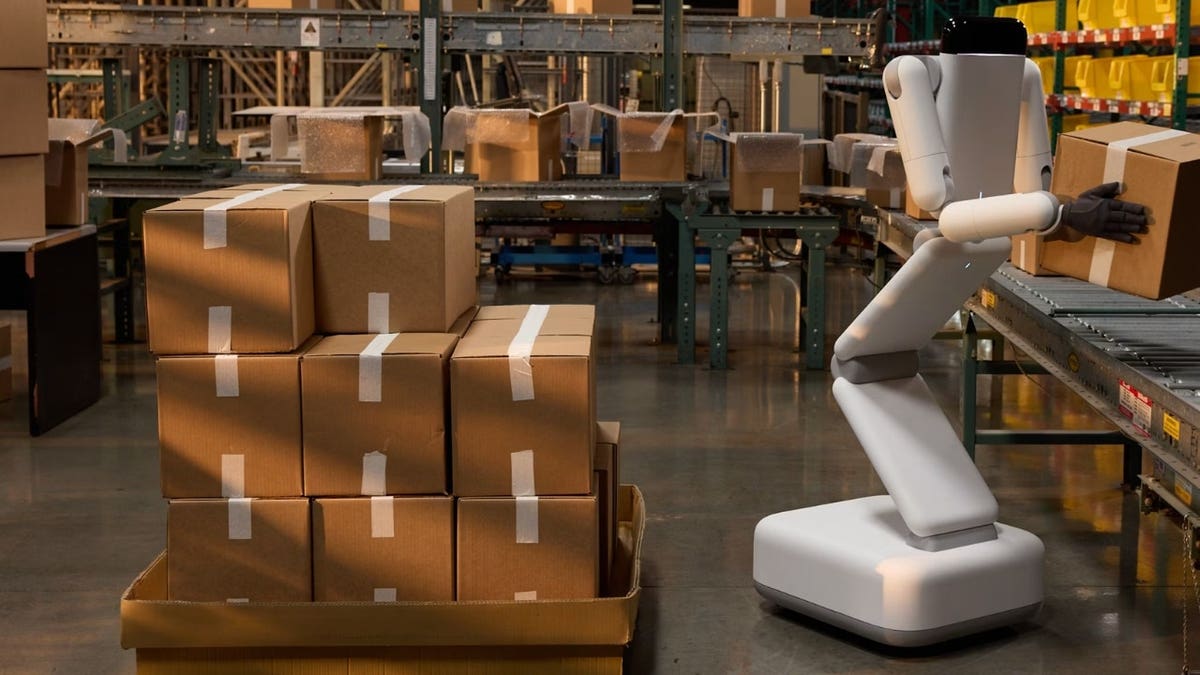
Genesis AI is advancing robotics by teaching robots to perform tasks through observation. This robotics company has secured $500 million to increase the presence of its general-purpose robot, Eno, in workplaces. The investment values Genesis at $3.5 billion, supported by major tech investors.
Eno’s learning method stands out. Workers use special electronic gloves during their tasks, capturing hand movements as training data. This data helps robots learn to execute similar tasks without requiring detailed programming. Genesis aspires for robots to manage complex activities independently, with plans to deploy Eno in industrial sites by 2027.
Genesis AI’s Funding and Development
Genesis AI’s $500 million Series A funding round, co-led by Premji Invest, Khosla Ventures, and Eclipse, also includes investors like NVIDIA, AMD Ventures, Samsung Next, and Zoom. The funding aims to enhance robot training and AI and increase production of Eno. According to Zhou Xian, co-founder and CEO, the mission is to surpass robots designed for single repetitive tasks.
Human Skills Translated to Robots
Eno robots learn intricate physical skills using electronic gloves worn by workers and wearable cameras that capture tasks from a worker’s perspective. This process generates a comprehensive dataset for GENE, Genesis AI’s foundation model, which guides robots in physical task execution.
Additionally, Genesis uses simulations in Genesis World to speed up robot learning. Here, robots practice tasks virtually, allowing efficient training free from the constraints of physical settings.
Current Capabilities and Future Goals
Currently, GENE has demonstrated various skills such as meal preparation and laboratory equipment handling through a test robot. However, Eno’s performance in real-world environments remains to be demonstrated.
Commercial deployment is planned for 2027, starting with manufacturing and logistics. A strategic partnership with LG CNS aims to expand robot usage in manufacturing settings. Future plans include robots in hospitality and healthcare, although household and outdoor applications need further development.
Data Ownership and Employment Impact
Participation in Genesis’ training program is voluntary, with participants consenting to data collection methods. Genesis affirms ownership of the data, raising questions about long-term employment effects. While robots could enhance efficiency, their integration might alter workforce dynamics.
The technology indicates a shift in physical job execution over time. Despite offering efficiencies, its implications for job security and roles need careful consideration.
Technological and Workplace Dynamics
Genesis AI needs to address the reliability of Eno robots in dynamic industrial environments. Consistent, safe operation is vital before broader workplace integration. The existing technology points to potential changes in manufacturing and lab roles, emphasizing the need for balanced integration strategies.