
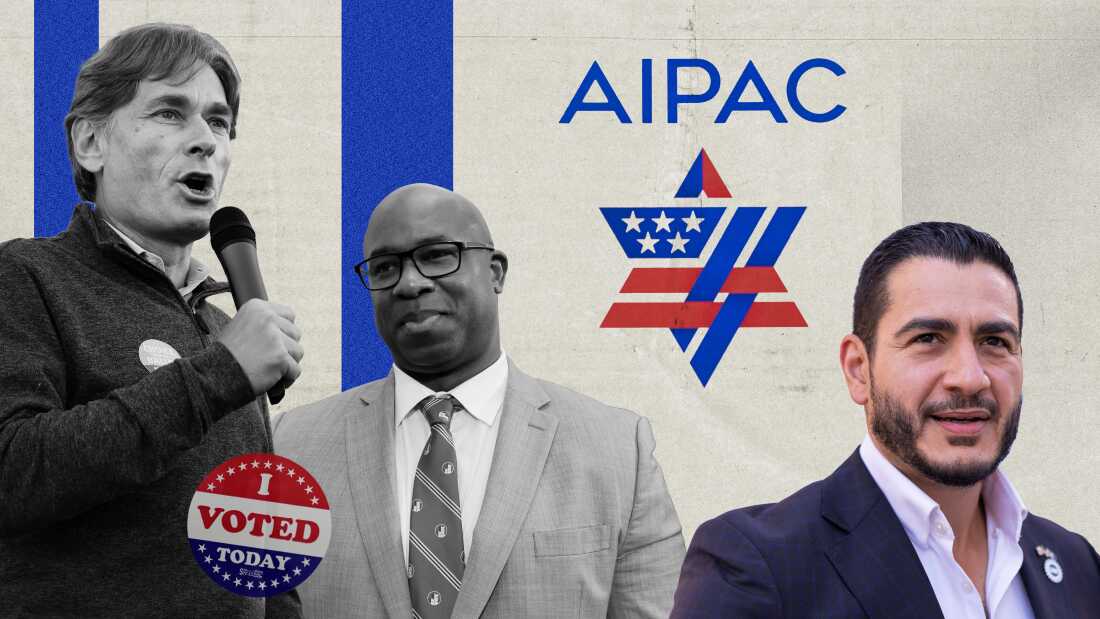
The American Israel Public Affairs Committee (AIPAC) has gained attention this election cycle. Democratic candidates have openly rejected contributions from the group. In Michigan, Abdul El-Sayed criticized Rep. Haley Stevens for accepting AIPAC’s support during their Democratic primary for the U.S. Senate. El-Sayed’s win highlighted the influence of the Democratic left and growing opposition to pro-Israel groups and political funding.
AIPAC, established in the early 1950s, aims to strengthen the U.S.-Israel alliance. It focused on maintaining bipartisan relationships. Historically, it did not endorse candidates, according to Ken Toltz, a former activist with ties to AIPAC. Ahead of the 2022 election cycle, AIPAC changed by creating a political action committee and super PAC. AIPAC’s longtime chief, Howard Kohr, explained this shift responded to a politically polarized era, anti-Israel sentiments, and increasing campaign costs.
Although AIPAC did not comment directly, Kohr told the Washington Post in 2022, “We wanted to defend our friends, and to send a message to detractors that there’s a group of individuals that will oppose them.” Toltz noted that before 2022, AIPAC was less known among the public, but awareness has now grown significantly, although understanding of its functions remains mixed.
Changing Public Opinions
Support for Israel has decreased, especially among Democrats, due to conflicts in Gaza and Iran. Ron Kampeas, former chief of the Jewish Telegraphic Agency, noted declining public support following destruction in Gaza. A Pew Research Center survey revealed 60% of U.S. adults view Israel unfavorably, up from 53% last year. For the first time, more Americans now sympathize with Palestinians than Israelis, by a 41% to 36% margin.
In a notable shift, over 100 House Democrats voted to reduce aid to Israel, signaling changing support levels and dividing the Democratic leadership. Toltz described AIPAC’s increasing campaign involvement as a “five-alarm situation.” He questioned their achievements, indicating that their branding could suffer.
Campaign Implications
AIPAC’s involvement complicates campaigns for pro-Israel Democrats. Van Jones, a political analyst, described AIPAC’s endorsement as a mixed blessing. Despite this, AIPAC seems focused on long-term success. Patrick Dorton, spokesperson for United Democracy Project, stated their goal is to ensure a strong pro-Israel majority in Congress for future election cycles.
AIPAC’s growing friction with Democrats partly stems from opposing Obama’s Iran nuclear deal and endorsing Republicans who contested the 2020 election results. Kampeas pointed to a significant campaign in New Jersey, where AIPAC funded the defeat of Tom Malinowski. Despite this, the winner, Analilia Mejia, is critical of Israel and its Prime Minister.
Spending Patterns
The United Democracy Project increased spending from $26 million in 2022 to $62 million by 2024. Their funding reached $30 million in Michigan’s Senate primary. Brendan Glavin from OpenSecrets mentioned local super PACs funded by UDP that might appear unrelated to AIPAC. He compared AIPAC’s expenditures with those of AI and crypto groups, who have also spent substantial sums this cycle.
Dany Bahar, an economist, noted AIPAC’s “win rate” is comparable to single-issue groups like the NRA or Planned Parenthood. While AIPAC mobilizes large sums, its effectiveness remains debatable.
Misperceptions and Criticisms
AIPAC faces criticism linking it unfairly to foreign agents. Jones highlighted that accusing American organizations of being foreign fronts is dangerous. He emphasized the right of American Jews to support causes aligned with their beliefs, acknowledging AIPAC’s portrayal as problematic by those opposing its financial influence on politics.
Dorton voiced concerns over AIPAC’s singular focus in primaries. He reinforced that AIPAC comprises pro-Israel U.S. voters who believe in American values. As political debates around AIPAC heat up, its mission faces significant challenges.