
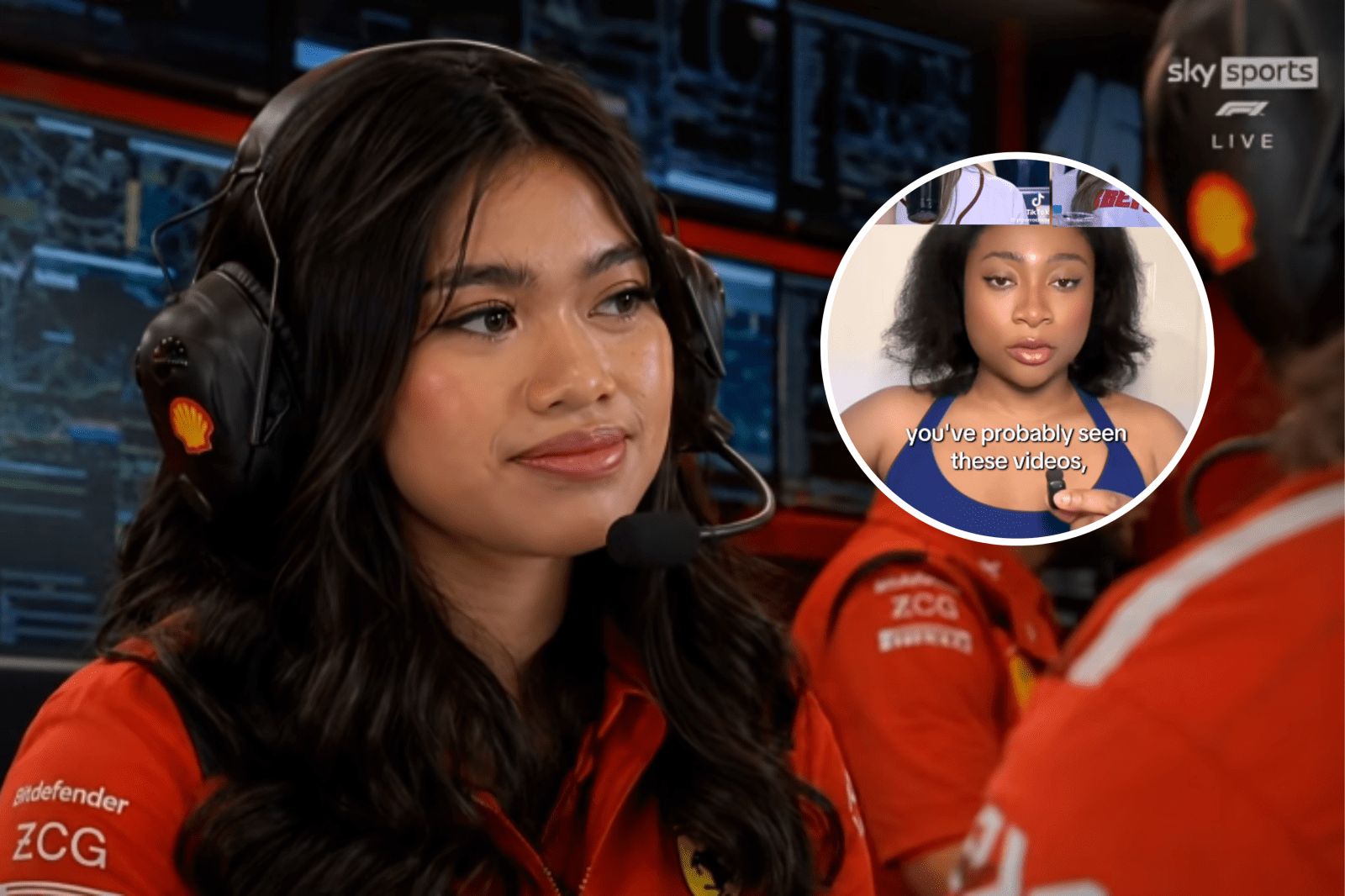
Scrolling through TikTok or Instagram reveals flashy videos of young women appearing at NBA games or backstage at elite sports events. Though they seem authentic, none are real. Many social media users employ AI tools to digitally place themselves in the luxurious world of elite sports, celebrity lifestyles, and WAG culture. This trend is growing rapidly, blending fantasy and internet identity culture.
AI Sports Fantasy Videos Gain Popularity
These videos typically resemble professional sports coverage, with AI-generated users seamlessly integrated. Some clips show individuals in Ferrari garages during Formula One races or among celebrities at basketball games. For example, Franell Mauricio, 24, featured herself in a Ferrari paddock AI video on TikTok. The clip looks like a live Formula One broadcast, with her AI self wearing Ferrari gear.
“I’m a huge Formula One fan,” said Mauricio. She appreciated how AI let people experience worlds they only fantasize about. The trend has captured young people’s interest by allowing them to envision themselves in otherwise inaccessible experiences.
The Growth of ‘WAG Fantasy’ Culture
Despite its popularity, not all see the trend positively. Critics label the videos as “cringe” or shallow. Some question the value of simulating elite experiences virtually rather than attending real events. However, supporters argue the trend is about more than AI; it encapsulates fantasy and aspiration, tied to celebrity relationships and luxury travel.
TikTok creator Naya, 24, said in a video that while some see the trend as out of touch, it’s more about the allure of WAG culture. This cultural shift highlights a romanticized vision of celebrity-driven luxury perceived through social media.
Why Formula One and Tennis Are Central
Over the years, the term WAG—wives and girlfriends of athletes—has expanded into a cultural phenomenon, especially in Formula One, soccer, and tennis. Partners of famous athletes often attract media attention and develop successful brands. This spotlight has meshed celebrity culture with sports, visible in social media content.
Social media expert Estelle Keeber, founder of Immortal Monkey, emphasizes understanding this context to comprehend the AI trend’s impact. It merges aspiration, identity, and internet culture in a unique way. For Gen Z, these AI videos serve as digital role-play, replacing traditional photo filters with immersive experiences.
Escapism Over Deception
Keeber argues these videos are not meant to deceive. Instead, they offer escapism, engaging audiences who are often aware of the AI origin. AI removes barriers that once separated users from luxurious online aesthetics, making such experiences accessible.
Gen Z and the ‘Curated Identity’ Era
Keeber explains the trend highlights a shift in how younger audiences view their online selves. Social media is now where people create desired experiences, rather than just documenting real-life moments. Though some are AI critics, many enjoy these tools for their emotional rewards, with the internet fostering fantasy and aspiration more effectively than ever.