
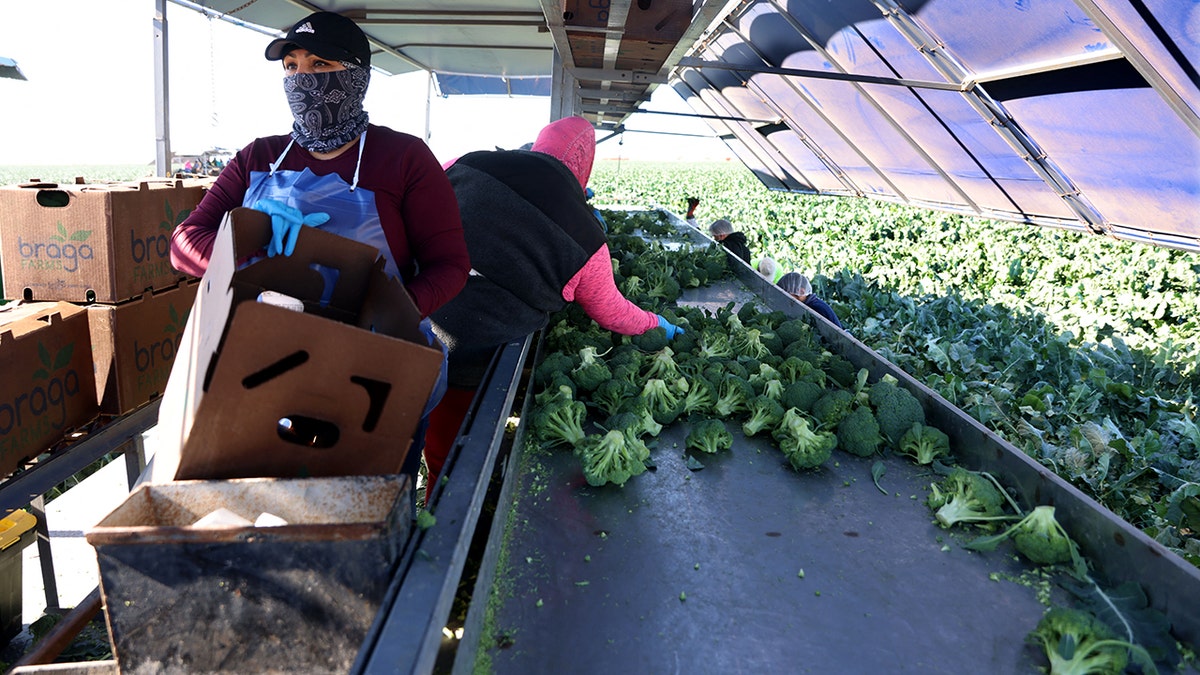
Recent research highlights a significant geography concern for America’s broccoli supply. Over 90% of the nation’s fresh broccoli originates from California, making the supply chain quite susceptible to drought conditions. This was the focus of researchers at Cornell University who explored how droughts in California impact broccoli distribution and evaluated the potential of expanding production on the East Coast to safeguard the national supply.
Drought’s Impact on Broccoli Supply
A study published in the journal Agribusiness analyzed historical shipping and drought data to simulate broccoli supply chain scenarios under normal, moderate drought, and severe drought conditions. Findings indicated that California’s broccoli shipments might decrease by nearly 9% in moderate drought and over 20% during severe drought conditions. However, this latter number is not indicative of past occurrences but rather a statistical estimate based on historical data from 2000 to 2019, according to Christopher Valadez, president and CEO of the Grower-Shipper Association of Central California.
Despite facing prolonged droughts, California’s coastal regions have maintained a steady supply of fresh broccoli through strategic irrigation, crop management, and planting decisions. These adaptive practices have sustained the broccoli production despite water shortages.
Exploring Eastern Production Opportunities
Cornell researchers propose that increasing broccoli production across ten Eastern states could serve as a buffer during California’s drought periods. Different growing seasons in the East allow production to move from Southern to Northern states as the year progresses. In severe drought scenarios, boosting Eastern output could reduce supply-chain expenses by around $10 million while cutting transportation distances to Eastern markets by approximately 20%.
While expanding Eastern production is beneficial, Valadez emphasizes that these regions also face challenges such as summer heat, humidity-related diseases, and variable seasonal weather patterns. He supports the idea of sensible diversification as a risk management strategy while praising California’s track record in adaptive capacity and product quality.
Maintaining California’s Role in Supply
Despite potential expansion, California would remain a key supplier of broccoli. Eastern production is not intended to replace Western output but to offer alternatives when drought reduces California-based shipments. This approach would provide additional options for suppliers, ensuring a steady national broccoli supply.
The ongoing research and discussions illustrate the complexity of maintaining a resilient broccoli supply chain amid changing climate conditions, underscoring the importance of strategic diversification and adaptive agriculture practices.