
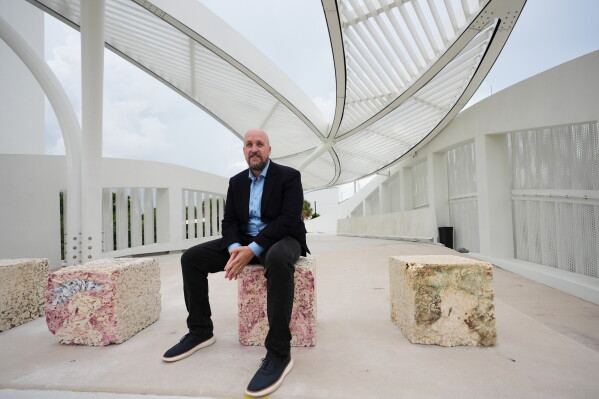
Jeffrey Huber vividly recalls when Hurricane Andrew stripped the roof from his childhood home. This disaster affected thousands across southern Florida, leaving many like Huber’s family dependent on food donations for weeks and living in trailers for over a year. Now, as a landscape architect and professor, Huber focuses on designing for resilience against increasingly common extreme weather events.
About 129 million people, or 40% of the U.S. population, reside in coastal counties. Research highlights that human-driven sea level rise is amplifying coastal flooding worldwide. In Florida, architects integrate infrastructure with urban design to create residential buildings, parks, and more, aiming to withstand the impacts of rising seas, storms, and saltwater intrusion.
Innovative Seawalls
In response to worsening storm surges and flooding, individuals like Anya Freeman are taking action. Freeman, previously a lawyer, launched Kind Designs in 2024. Her company creates 3D-printed living seawalls to protect against flooding. These seawalls are affordable, scalable, and serve as marine habitats. They’re made faster with non-toxic concrete and customized to fit local ecosystems, such as mangrove roots in Miami.
Kind Designs’ technology dissipates 45% of wave energy, reducing erosion. Researchers found 51 species living within one seawall, aiding water cleanliness. The company has installed 16 living seawalls across Florida, with plans to expand to states like California and New York and support U.S. Navy bases.
Building for Resilience
The Vista Breeze senior housing project in Miami Beach exemplifies resilient design. Elevated 10 feet above sea level, this complex withstands storm surges up to 20 feet. Its design features water-resistant concrete and zinc-coated rebar to prevent corrosion. Simple, cost-effective measures help make such buildings more resilient from the start.
In nearby Fort Lauderdale, a former parking lot transformed into DC Alexander Park demonstrates another adaptive use of space. This public area integrates flood infrastructure, complete with a maritime forest absorbing rainfall and saltwater while offering recreation.
Planning for the Future
Aaron DeMayo’s project, The Coastline, seeks to defend Southern Florida from storm surges and sea level rise. Despite its significant cost, DeMayo believes in the long-term financial benefits due to protection it offers to waterfront properties.
At the University of Miami, Thomas Klein and his team address funding challenges for lower-income communities to build climate-resilient projects. They aim to collaboratively design infrastructure that serves multiple purposes, like roads that manage stormwater alongside traffic.
These efforts in Florida, despite regulatory challenges, offer adaptable solutions for resilience applicable to other regions, demonstrating the state’s forward-thinking approach in adapting to a changing climate.
The Associated Press receives support for reporting on environmental policy. For more insights, visit their climate and environment hub: AP News.