
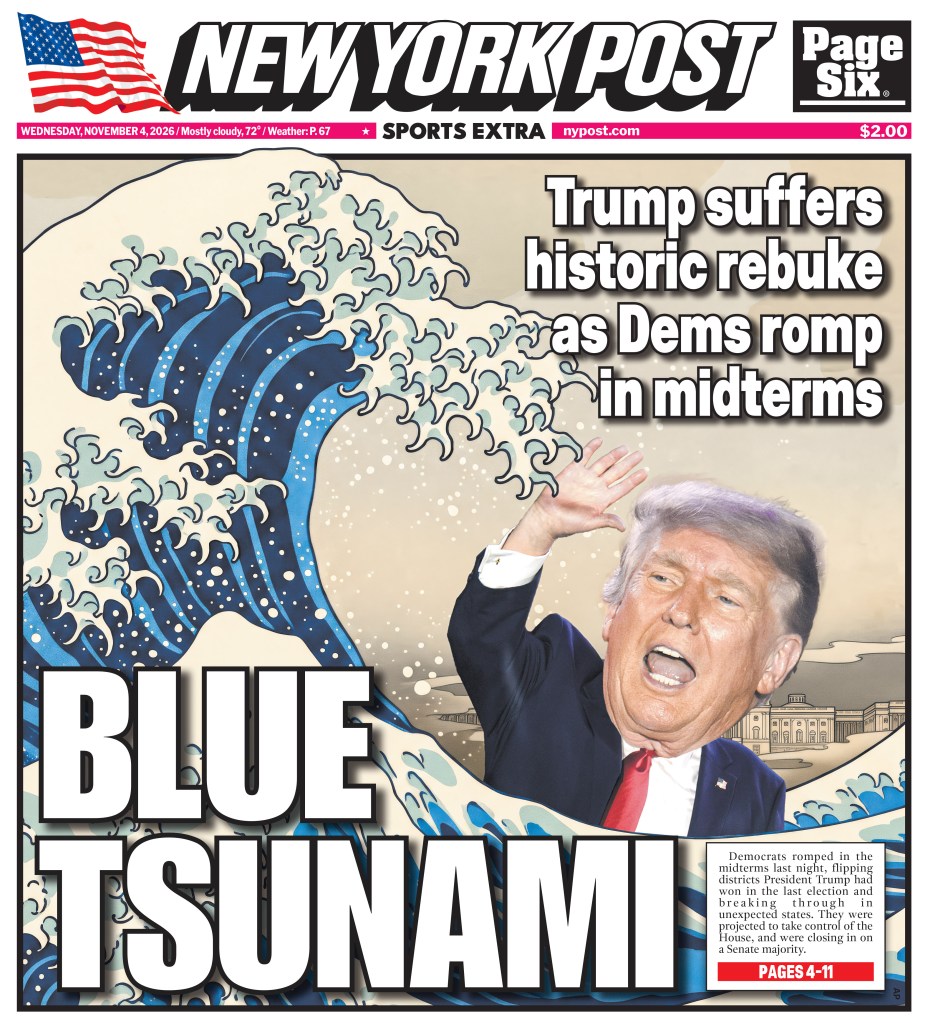
Tuesday’s election results marked a significant shift in the political landscape. Describing the results as a ‘blue wave’ fails to capture the full magnitude. It was more akin to a political tsunami, sweeping away much of the Republican power structure. Many observers were not surprised, given the polling data leading up to election day.
Surveys indicated widespread dissatisfaction with President Trump and the GOP Congress. The expectation was that the House would shift to Democratic control, and it did so decisively early in the evening. Control of the Senate also moved out of Republican hands.
President Trump had encouraged Republican voters to regard him as on the ballot, hoping to boost turnout. However, Democrats and many independents took the message to heart, turning out in large numbers to express their dissatisfaction. Consistent low approval ratings for Trump, particularly under 40%, hinted at this outcome. Voters were unhappy with his handling of economic issues, such as the impact of the Iran war on energy prices and inflation.
A poll from the Associated Press last month highlighted this discontent, showing that 65% of adults blamed Trump and his policies for high prices. Only 17% approved of his approach to cost of living concerns. The strong anti-GOP turnout was a reflection of a majority that had reached its limit with Trump.
This election was more than an ordinary referendum on a party and its leader. It signaled a strong rejection of Trump’s presidency, policies, and personality. Midterm losses are common in U.S. politics, as seen in Barack Obama’s presidency, where Republicans gained significant seats in Congress during his terms.
President Trump experienced his losses during his first term as well, with Democrats taking 41 House seats in 2018. Although Republicans picked up two Senate seats that year, proving crucial for Supreme Court nominations, the current election cycle represents a new challenge for Trump’s administration.
Despite his past success in winning the presidency twice and maintaining influence, the American public’s fatigue with his leadership is evident. For Democrats, this momentum presents an opportunity. Rep. Robert Garcia, likely the next House Oversight Committee head, signaled an aggressive stance with his ‘LAWYER UP’ message to the president.
In New York, the strength of the Democratic base was evident with Gov. Hochul’s commanding re-election. She benefitted from the support of influential figures like Gotham Mayor Mamdani. The Republican challenger, Bruce Blakeman, focused on cost of living issues in his unsuccessful bid to sway voters.
Overall, the midterm election results reflect a significant shift in political power, with the Democrats gaining control and the Republicans reeling from substantial losses.