
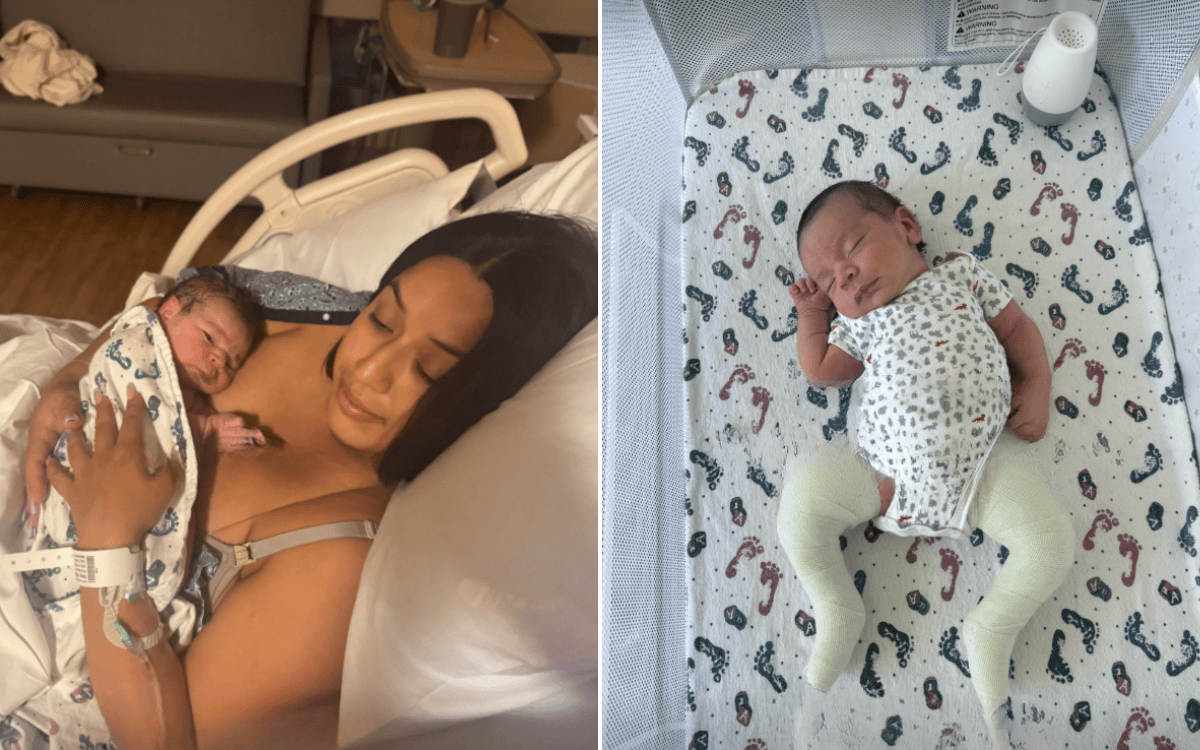
From the moment Michelle Reyes welcomed her son into the world, she sensed something unique about him. A resident of Buena Park, California, Reyes found her third pregnancy particularly challenging.
“The pregnancy with Tommy was tough on my body,” she shared with Newsweek. Struggling with long hours on her feet, she recalled, “I asked for a chair at work.” Yet, throughout her pregnancy, no medical exam or scan indicated any issues. “All my tests looked fine,” she said, expecting a healthy baby boy.
Upon giving birth to Tommy, Reyes’ concerns emerged. “His feet were severely turned inward,” she noticed. Nurses reassured her, attributing it to the baby’s position in the womb. However, a specialist soon visited her in the hospital to X-ray Tommy’s feet. “That’s when we were first informed that Tommy had severe bilateral clubfoot,” Reyes recounted.
This condition leads to both feet turning inward and downward. According to the CDC, it impacts roughly 1 in 1,000 U.S. births, with about half involving both feet. Learning of this was a shock for Reyes.
Strangely, weeks earlier, she had watched a random video online about a baby with clubfoot, an unfamiliar term to her at the time. “I just scrolled past,” she remarked. Now, it was their reality.
“I started blaming myself,” Reyes shared. “I worried it was because I wasn’t active enough during pregnancy.” Her doctor, however, clarified that the condition wasn’t due to anything she did; sometimes, clubfoot occurs without a specific cause.
While Reyes processed the news, an appointment was arranged for Tommy to see a specialist. At just six days old, both his legs were cast. “The casts went from his thighs to toes,” Reyes explained. Every two weeks, they would change the casts, gradually straightening Tommy’s feet.
After five casts, Tommy underwent an Achilles tenotomy to enhance the foot’s alignment. A final cast followed by special boots with a metal bar between them completed the treatment. Initially, Tommy wore the boots for 23 hours daily for the first six months. “Now, he wears them for 14 hours a day, typically during sleep,” Reyes noted.
The gradual plan aims to reduce the time Tommy spends in boots based on his progress. The Ponseti method has a high success rate, with the American Academy of Pediatrics noting initial correction rates between 90 and 100 percent. A study in the Journal of Pediatric Orthopaedics highlighted a 93 percent success rate for a similar treatment protocol.
“It’s been amazing to witness,” Reyes said, observing substantial improvement since Tommy’s birth. “He’s able to do everything a baby his age should do, from crawling to swimming.” Despite a difficult start, Reyes hopes Tommy’s clubfoot won’t impede his future. “I want him to know his story and the bravery he showed,” she said.
Reyes aims to share her family’s story as a beacon of hope. “I want other parents to know it’s normal to feel overwhelmed, but there’s so much hope,” she expressed. “Their baby can grow up doing all the things they dream of.”