
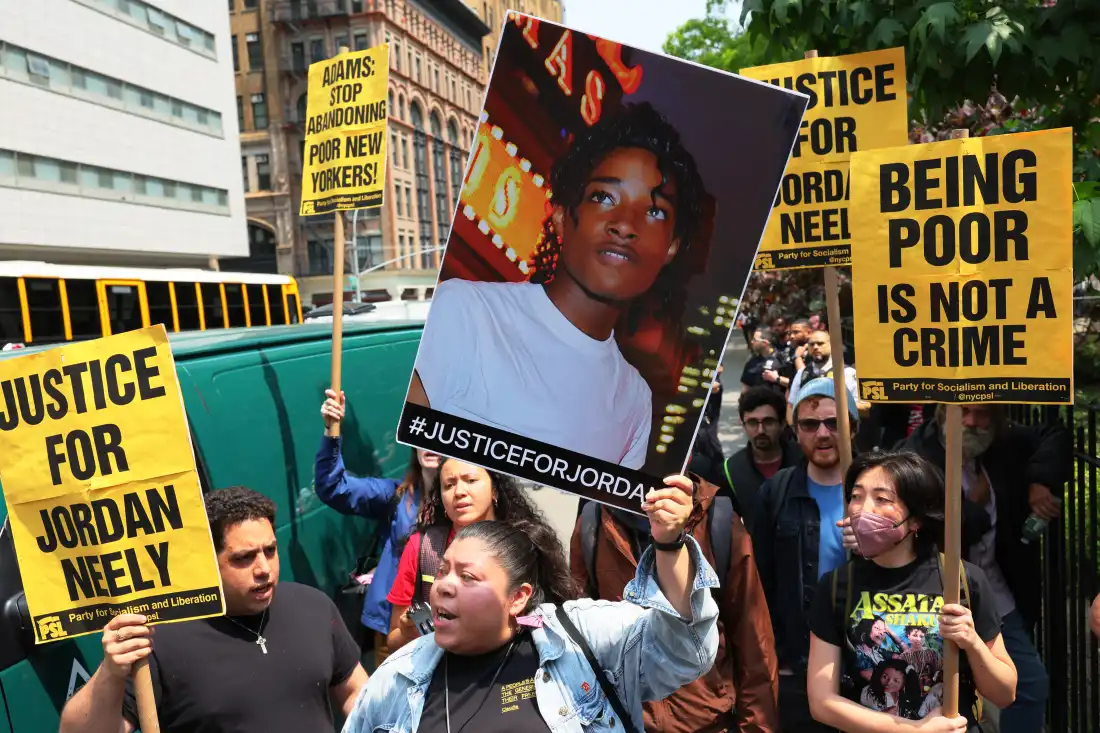
On May 1, 2023, Jordan Neely, an unhoused Black man, boarded the New York City subway. Known for his Michael Jackson impersonations, Neely found himself in crisis, shouting threats and alarming passengers. Daniel Penny, a white former Marine, intervened by restraining Neely in a chokehold for six minutes, leading to Neely’s death. A video of this incident polarized public opinion, with some viewing Penny as taking on a role abandoned by the police, while others saw Neely as a victim whose life was undervalued.
Journalist Anand Giridharadas studied this incident extensively, aiming to understand the broader American societal challenges reflected in these men’s stories. Giridharadas explained that the portrayal of individuals in tragic narratives often reduces human beings to caricatures. His book, Man in the Mirror: Hope, Struggle, and Belonging in an American City, explores how both Neely and Penny felt unsupported by societal systems.
“I think Jordan Neely had felt abandoned for a very long time,” Giridharadas says. “Daniel Penny would claim that he felt abandoned in terms of law enforcement not being there.”
This perceived abandonment can lead individuals to take drastic actions. Giridharadas emphasizes the need to address these systemic failures that create a feeling of neglect.
Jordan Neely’s Background
Neely’s criminal record revealed numerous interactions with law enforcement over a decade, initially for minor infractions typical of homelessness, such as jumping turnstiles. More recently, serious offenses, including assaults, led to his imprisonment at Rikers Island. An attempt at rehabilitation through an alternative-to-incarceration program in the Bronx proved unsuccessful when Neely left the program. After exhibiting erratic behavior at Coney Island, outreach workers were unable to manage him, resulting in further deterioration of his condition.
Daniel Penny’s Upbringing and Perspective
Penny grew up in central Long Island, a region characterized by its complex relationship with New York City. These suburbs, largely populated by those escaping NYC’s challenges, display contempt for urban issues. Penny’s interaction with Neely has been ideologically scrutinized, but his perceived ideological blankness allowed various groups to project their beliefs onto him. After the trial, Penny became a symbol embraced by political figures, gaining support and employment from influential entities.
Remorse and Case Politicization
Penny’s degree of remorse remains uncertain; he seemed indifferent to Neely’s fate even during police interrogations. Despite this, his involvement with prominent political figures and obtaining a position at a major venture capital firm reinforced his image among certain circles.
The case mirrored other societal narratives. Giridharadas compares the situation with Luigi Mangione’s actions amidst a failing healthcare system, illustrating widespread societal frustrations. Activist Hawk Newsome called for independent Black institutions as a response to systemic shortcomings.
As this story unfolded across media spectrums, the adaptation team of Anna Bauman, Thea Chaloner, Bridget Bentz, Molly Seavy-Nesper, and Beth Novey helped convey its complexity to audiences.