
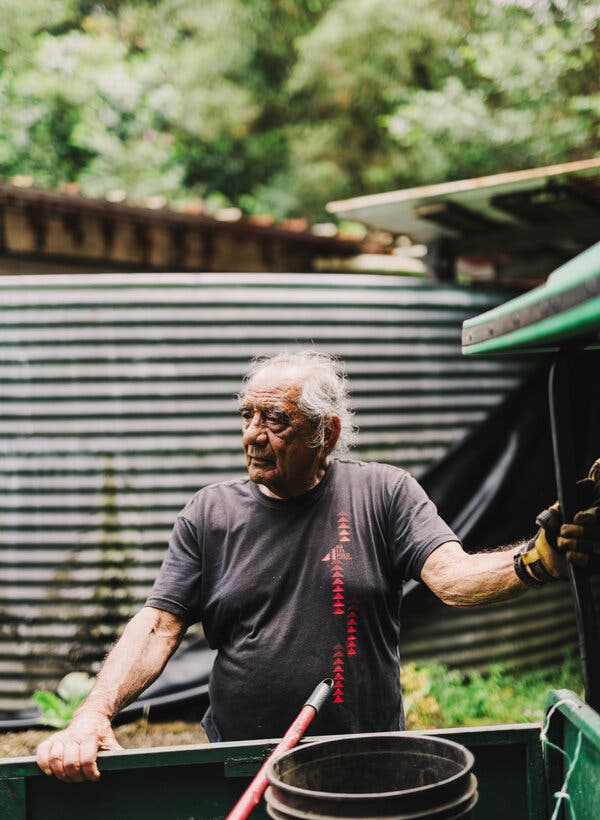
The recent earthquake on Hawaii’s Big Island created significant challenges for the Kona region, especially regarding its water catchment systems. This area is well-known for producing one of the world’s most desired coffees, and it relies heavily on rainwater collection due to the absence of county water infrastructure in parts. On the misty slopes of the island, many farmers depend on afternoon rains to fill tanks that support their homes and crops.
A 6.0-magnitude earthquake struck 10 days ago, causing substantial damage to these crucial catchment tanks. As a result, numerous farmers lost their stored water supplies, leaving them struggling to access water. KayLynne Santana, a farmer in the area, shared her experience during the quake, noting how items tumbled from shelves and structures collapsed. Her husband discovered their water tank destroyed, alongside damaged rock walls they had built on their farm.
For years, the Santanas had adapted to life without county-provided water. They learned to conserve their resources and manage with limited supplies. The quake brings new challenges to their resilient lifestyle, highlighting the urgent need for solutions in water-dependent regions.
The earthquake’s impact stretches beyond individual farms, revealing vulnerabilities in the region’s water management strategies. The Kona district faces a pressing water crisis with long-term implications. Farmers and residents must navigate these challenges as they seek to restore their basic water needs and protect their agricultural livelihoods.