
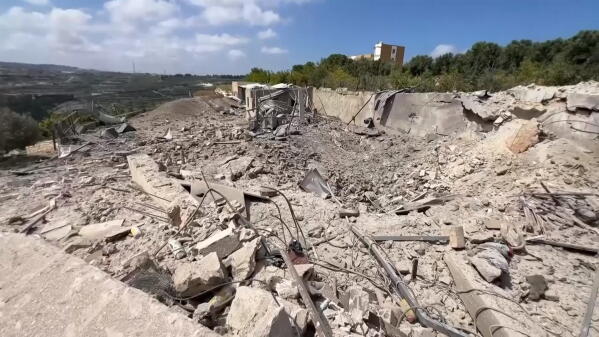
Israeli forces have taken control of a strategic mountain featuring a historic Crusader castle in southern Lebanon. This marks the deepest incursion by Israel in over 25 years. The capture of Beaufort Castle near Nabatiyeh follows days of airstrikes and fierce combat with Hezbollah forces in nearby villages.
The conflict between Israel and Hezbollah started on March 2 after Hezbollah launched rockets into northern Israel. This followed an attack by the U.S. and Israel on Iran, Hezbollah’s main supporter. Since then, Israel has launched a ground invasion, seizing numerous villages and towns close to the border. Concurrently, Hezbollah has launched thousands of missiles and drones at Israeli troops in southern Lebanon and northern Israel.
Despite a ceasefire initiated on April 17, the conflict has persisted. Diplomatic talks are scheduled between Lebanon and Israel for June 2 and 3 at the State Department. Israel’s capture of Beaufort Castle is a significant milestone in the ongoing conflict.
A Historical and Strategic Fortress
Israeli Defense Minister Israel Katz announced the capture of Beaufort Castle, highlighting its strategic and historical importance. The castle, built in the 12th century by Crusaders, has been a valuable military asset for various armies, including the Crusader, Saladin’s Jerusalem army, the Mamluks, Ottomans, the French mandate, the Palestinian Liberation Organization, and the Israeli military. It was named Beaufort, meaning ‘beautiful fortress’ in Old French.
The castle, previously captured in 1982 by Israeli forces, remained under Israeli control until their withdrawal from Lebanon in 2000. During the previous Israel-Hezbollah conflict in 2024, UNESCO protected Beaufort Castle among other cultural sites in Lebanon.
The strategic location overlooks parts of southern Lebanon and northern Israel. The castle is known in Arabic as Al-Shaqif Castle, referring to the rocky terrain. Recently, Israeli operations targeted Hezbollah infrastructure near Beaufort Ridge and Suluki Valley, aiming to mitigate threats to Israeli civilians.
Expanded Invasion and Combat Zone
Israel has broadened its operations in Lebanon, advancing past the Litani River, previously a boundary, and designating the area up to the Zahrani River as a combat zone. Intense strikes have led to resident evacuations, though many remain in southern towns and villages.
Israeli forces are progressing toward Nabatiyeh, a central city in southern Lebanon, and are urging residents to evacuate. Similar advisories have been issued for the coastal city of Tyre and its surrounding regions.
Currently, no official response has come from Hezbollah or the Lebanese government regarding the Israeli advances.
Ongoing Border Tensions
Hezbollah claimed responsibility for nighttime attacks targeting Israeli troops and a tank near Bayada, close to the border. The group continues to engage Israeli forces in several towns near Nabatiyeh and Beaufort Castle.
The Lebanese National News Agency reported casualties from Israeli airstrikes in southern villages. Hezbollah’s recent rocket attacks reached Kiryat Shmona, the largest city in northern Israel.
The use of fiber optic drones by Hezbollah has presented challenges for Israel, leading to civilian alerts across northern Israel warning of drone and missile threats. The conflict has resulted in significant loss of life and displacement. Hezbollah’s actions, including drone advancements, have posed formidable challenges for the Israeli military.
The death toll in Lebanon has reached 3,350, with over 1 million displaced. Israel reports at least 25 soldiers and a defense contractor killed, alongside two civilian deaths in northern Israel.