
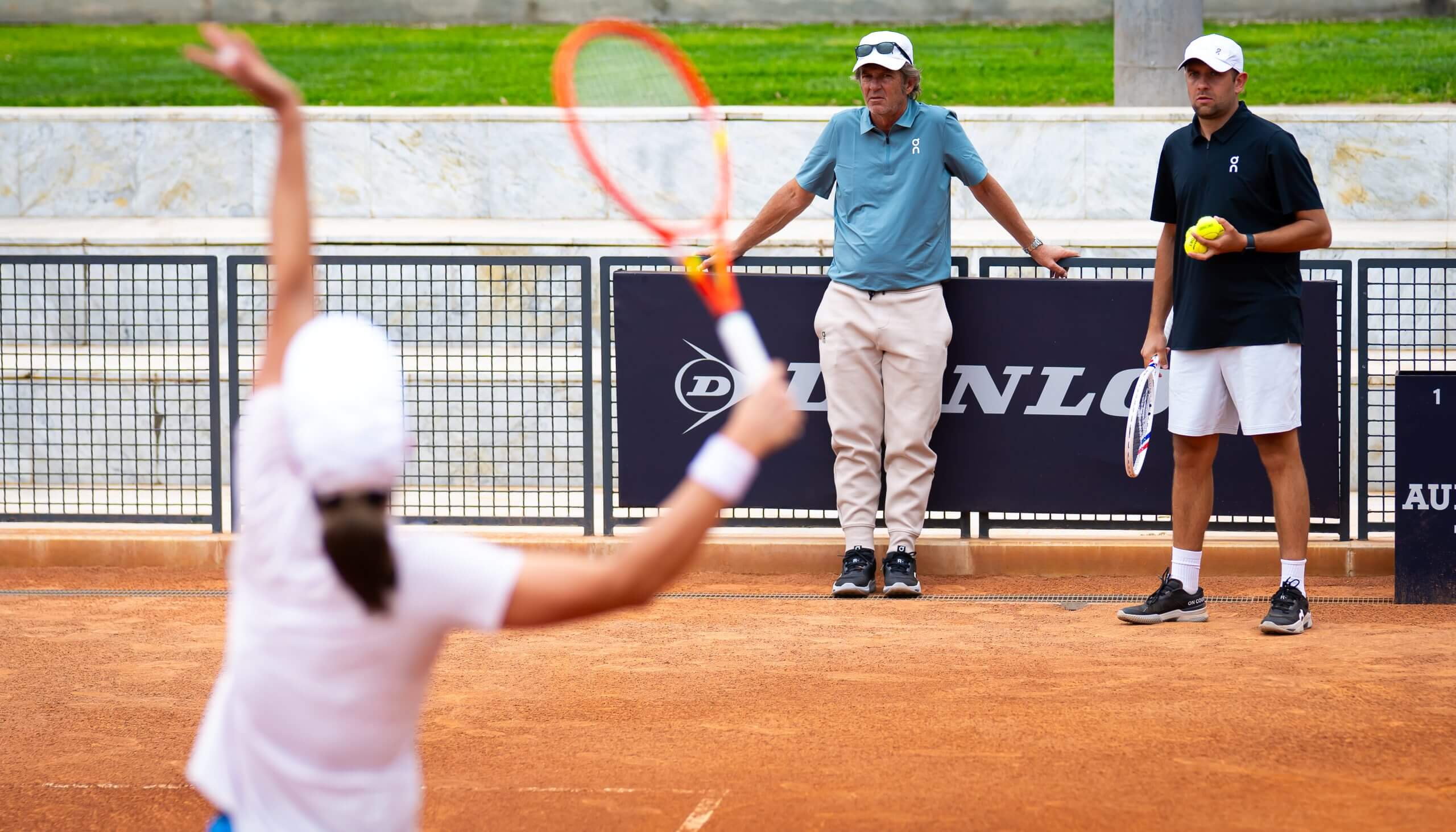
The return to red clay at the French Open has been favorable for Iga Świątek, a four-time champion at Roland Garros. The sunny weather and scorching heat have enhanced the topspin on her powerful forehand, making her game particularly impactful.
“I feel like the decision-making has been better, and that’s an improvement.”
Świątek’s path has been beneficial this week. She avoided a challenging matchup against Jelena Ostapenko as her fellow compatriot Magda Linette triumphed over Ostapenko. The draw further opened when No. 2 seed Elena Rybakina suffered an unexpected defeat against Yulia Starodubtseva, setting Świątek to potentially face No. 8 seed Mirra Andreeva in a hypothetical semifinal.
Despite feeling lost earlier this year, Świątek appears clear-headed now, ready to leverage her circumstances. She advanced to the fourth round of her first Grand Slam tournament with new coach Francisco Roig. Świątek’s next challenge will be against No. 15 seed Marta Kostyuk, whom she has defeated in their past three encounters.
Transition and Growth
Earlier, Świątek experienced mixed results across two WTA 1000 tournaments. At the BNP Paribas Open in Indian Wells, she relinquished her world No. 2 ranking after falling in the quarterfinals; then, at the Miami Open, Linette surprised her in the second round. This loss saw Linette break Świątek’s streak of 73 opening-match wins, which had been unbroken since 2021.
Post-loss, Świątek admitted tennis felt “complicated” in her mind—a stark warning for a player known for her fluid offensive-defensive balance. Troubled by indecision, she often defaulted to overhitting her shots.
Świątek seemed caught between two styles: the straightforward, aggressive tennis advocated by Tomasz Wiktorowski, and the more varied, patient approach she had started under coach Wim Fisette, who she replaced with Roig earlier this year.
Despite reaching a semifinal in the 2025 Australian Open and winning Wimbledon that summer, inconsistency plagued Świątek. Without free points from her serve, every rally became a grind, imposing pressure on her baseline game. Errors compounded, leading to lopsided defeats.
New Beginnings with Francisco Roig
Świątek terminated Fisette’s contract three days after the loss to Linette, resolving to become a “wall” on the court. She trained at Rafael Nadal’s academy in Mallorca, with Nadal observing and offering guidance during two sessions. Her connection with Roig, Nadal’s former coach, deepened. Roig impressed Świątek with his humor and positivity, building a helpful rapport with her team.
Together, they explored strategies, balancing patience with aggression. Roig introduced longer rally practices, restoring Świątek’s decision-making confidence. Świątek praised Roig’s capability to provide decisive input and adapt strategies.
Roig’s method diversifies from Fisette’s. It involved footwork adjustments, urging Świątek to maintain upright stances without leaning excessively.
During Świątek’s second-round triumph at the French Open, her match against Sara Bejlek highlighted improvements. Despite 38 unforced errors, she effectively controlled the game throughout.
“I didn’t mind,” Świątek remarked about Bejlek’s unpredictability. “I wanted to be flexible and adjust and play my game.”
Progress and Future Challenges
Świątek’s third-round victory came against Magda Linette, demonstrating her rebounding form. Her shot selection was effective, although intensity fluctuated in the second set. Świątek’s control over her play was apparent despite imperfections, with fewer internal conflicts impacting her performance.
Anticipating cooler conditions ahead of her match against Kostyuk, Świątek remains optimistic. Adjustments are expected in her approach, yet she feels confident, prepared to transform a promising week into sustained success.