
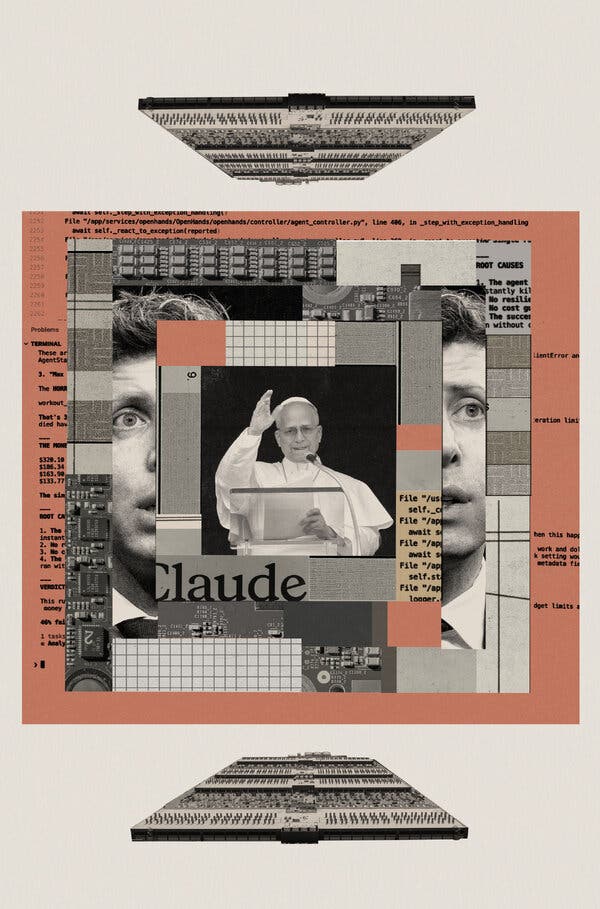
Silicon Valley has long been home to grand ambitions. These dreams date back to an era when computers occupied entire rooms. An enduring industry joke features a programmer asking a computer, “Is there a God?” The machine responds, “There is now.” The Whole Earth Catalog, a collection that greatly influenced Steve Jobs, famously stated, “We are as gods and might as well get good at it.”
Tech leaders now pour billions into artificial intelligence, signaling the realization of those early visions. Their ultimate goal appears to be transcendence. Yet, as A.I. seems poised to guide mankind’s future, a new voice from across the globe calls for a different approach.
Pope Leo XIV has emerged as a significant figure in this conversation. He is the first American pope and he recently revealed his first encyclical, Magnifica Humanitas, or “Magnificent Humanity.” This extensive 42,300-word document is both respectful and an implicit critique of Silicon Valley’s claims and ambitions.
The pope’s message urges the tech industry to slow its pace, prioritize humanity, and recognize that machines are not divine. Although the encyclical refrained from naming specific entities, it rebuked the notion that technology alone can shape the future.
Pope Leo XIV acknowledged the potential of A.I., calling it a valuable tool. However, he expressed concerns that technology tends to enhance the power of those already holding economic resources, expertise, and access to data. He emphasized the importance of oversight and transparency to prevent A.I. controllers from imposing their moral views, which could become the hidden agenda driving these systems.