
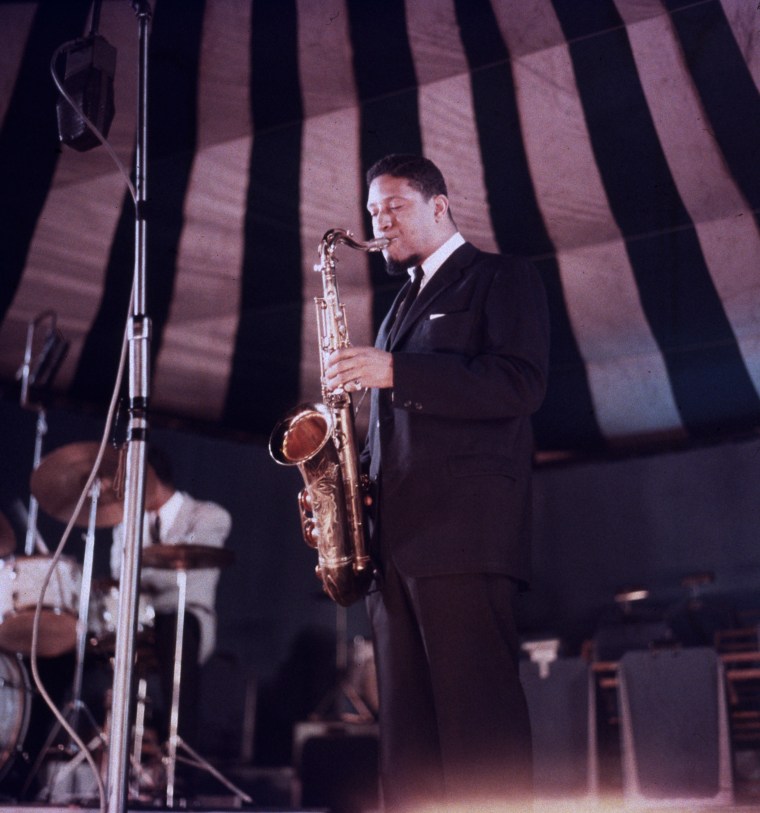
Sonny Rollins, the celebrated tenor saxophonist known for his unique sound and continuous innovation in jazz, passed away at 95. Spokesperson Terri Hinte confirmed the news, stating Rollins died at his Woodstock, New York home. While no specific cause of death was noted, Rollins had faced various health issues in recent years.
Early Career and Influences
Rollins’ journey in music began as a teenage prodigy, gaining admiration for his improvisational genius. He was one of the last remaining icons from the bebop era, influencing generations alongside legends like John Coltrane and Charlie Parker. Rollins’ saxophone skills reached rock audiences through his memorable performance on the Rolling Stones’ 1981 track “Waiting on a Friend.”
Rollins continuously evolved as an artist, embracing diverse styles and taking extended breaks. He often referred to himself as “a work in progress,” emphasizing his dedication to growth and exploration in music. Though his early bebop work remains popular, Rollins preferred not to dwell on past performances, finding flaws in his earlier recordings. “I don’t consider myself a musician that has learned as much as I want to learn,” he shared in a 2007 interview.
Notable Achievements and Challenges
Throughout the 1990s and 2000s, Rollins released a series of critically acclaimed albums, maintaining a rigorous practice schedule and touring well into his 80s. His career concluded in 2012, hindered by pulmonary fibrosis. Nevertheless, the joy of playing, not just audience approval, was his primary motivation. Rollins recalled moments of profound connection with music, such as performing outdoors and feeling part of something beyond the crowd.
Among his accolades, Rollins received Grammy Awards for the 2001 album “This is What I Do” and a solo on “Why Was I Born?” The latter was from “Without a Song: The 9/11 Concert,” performed shortly after the tragic events of September 11 and urged by his late wife and manager, Lucille.
The Journey Toward a New Sound
Rollins’ early break came when joining Thelonious Monk’s band in his late teens, followed by collaborations with Miles Davis and Bud Powell. Despite battling heroin addiction, leading to stints in jail, Rollins overcame his struggles through a spiritual awakening during recovery. His subsequent work with the Max Roach-Clifford Brown quintet and solo album “Saxophone Colossus” solidified his status as a jazz titan.
In the late 1950s, Rollins experimented with a pianoless trio format, producing influential albums such as “Way Out West,” “A Night at the Village Vanguard,” and “Freedom Suite.” Despite peak popularity, he retreated for introspection above the East River on the Williamsburg Bridge. His return in 1961 embraced the shift towards free jazz, dividing audiences but showcasing his adaptability.
Rollins’ discovery of Zen Buddhism during a trip to Japan led to another hiatus, lasting into the early 1970s. By his return to recording in 1972, Rollins was recognized as a jazz luminary, earning a Guggenheim fellowship and an induction into the Downbeat Hall of Fame.
Legacy and Personal Insights
Born Theodore Walter Rollins in Harlem on September 7, 1930, he was nurtured in a musical family. While initially pushed to learn piano, Rollins gravitated towards the saxophone. He progressed rapidly, teaching himself the tenor sax and performing in clubs as a young man. Rollins left behind numerous unreleased works without specific posthumous instructions, expressing relief from what he described as the “agony” of perfectionism in music: “After I get out of this planet I’m not going to have any say about what’s going on, so I’m not worried about that.”
Sonny Rollins’ influence in jazz remains profound, echoing through generations of musicians who continue to study and celebrate his work.