
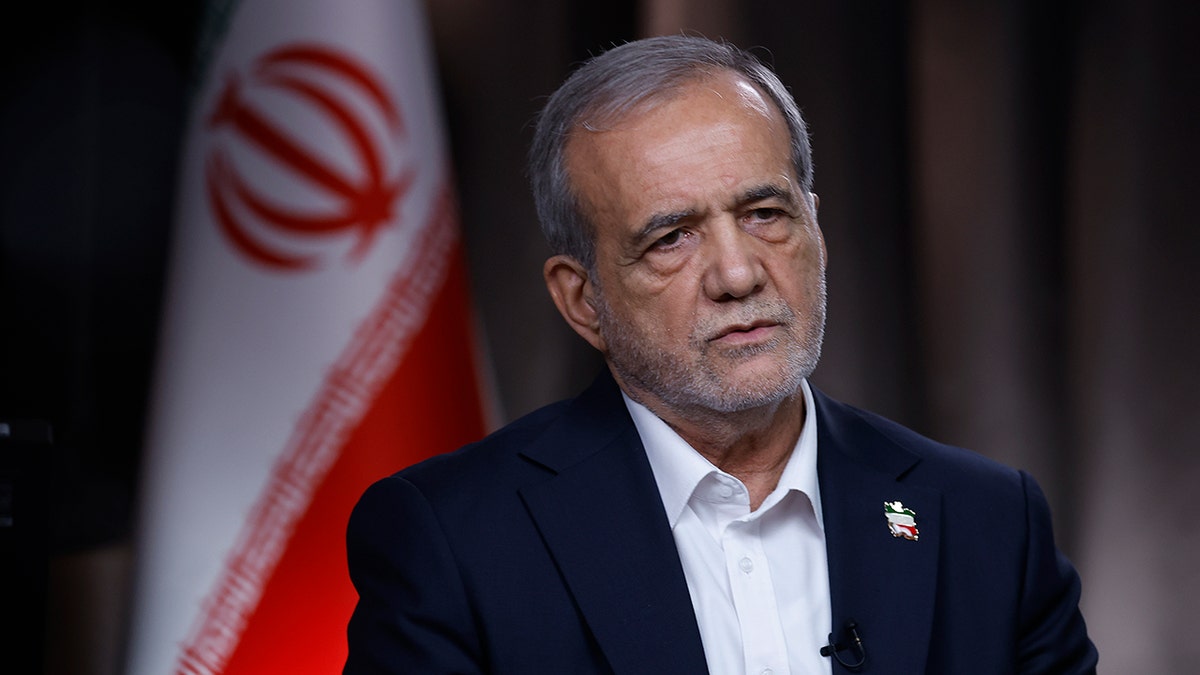
On May 24, President Masoud Pezeshkian of Iran referenced a pivotal symbol of the nation’s wartime history, emphasizing Iran’s firm stance against the U.S. and Israel. This statement, linked to the anniversary of the 1982 recapture of Khorramshahr, reflects Tehran’s commitment to defending its position in the region, according to a counterterrorism expert.
Pezeshkian’s comments come amid crucial diplomatic talks, as then-U.S. President Donald Trump claimed progress in negotiations with Iran, suggesting that a possible agreement was close. Trump asserted that the U.S. would either endorse a substantial deal or withdraw completely. Meanwhile, Iran indicated tentative agreement on several issues but stated that a finalized deal was pending ongoing discussions.
During an interview in New York City on September 25, 2025, with Fox News Channel’s Martha MacCallum, Pezeshkian highlighted, “Khorramshahr today is Iran, the Persian Gulf, and the Strait of Hormuz,” underscoring the themes of resistance and sacrifice embedded in Iran’s culture. Observers interpreted these remarks as deliberate nods to the Iran-Iraq War, a defining period of national resistance.
This is the Iran-Iraq War reference, and the timing is the point,said Dr. Omar Mohammed, director of the Antisemitism Research Initiative Program on Extremism at George Washington University.
Historically, May 24 marks the day Iranian forces reclaimed Khorramshahr from Saddam Hussein’s control after protracted urban warfare. Analysts view the invocation of this historical battle as a symbol of civilian courage and defiance against external aggression.
Mohamed equated this symbolic moment to Russia’s Great Patriotic War, noting Pezeshkian’s messaging presents Iran as being under similar attack, expecting its citizens to unite in defense. The mention of the Strait of Hormuz implies a readiness for escalation, signaling strategic tension.
According to Mohammed, Pezeshkian’s message is clear: Iran perceives the current confrontation as a battle requiring national fortitude to stave off aggression, similar to its past conflicts. Such rhetoric, he explained, frames the situation as an existential threat rather than a negotiable crisis.
Emma Bussey, a journalist at Fox News Digital, contributed to this reporting. Prior to Fox News, she gained experience at The Telegraph, handling varied topics such as international and domestic politics, sports, and cultural affairs.