
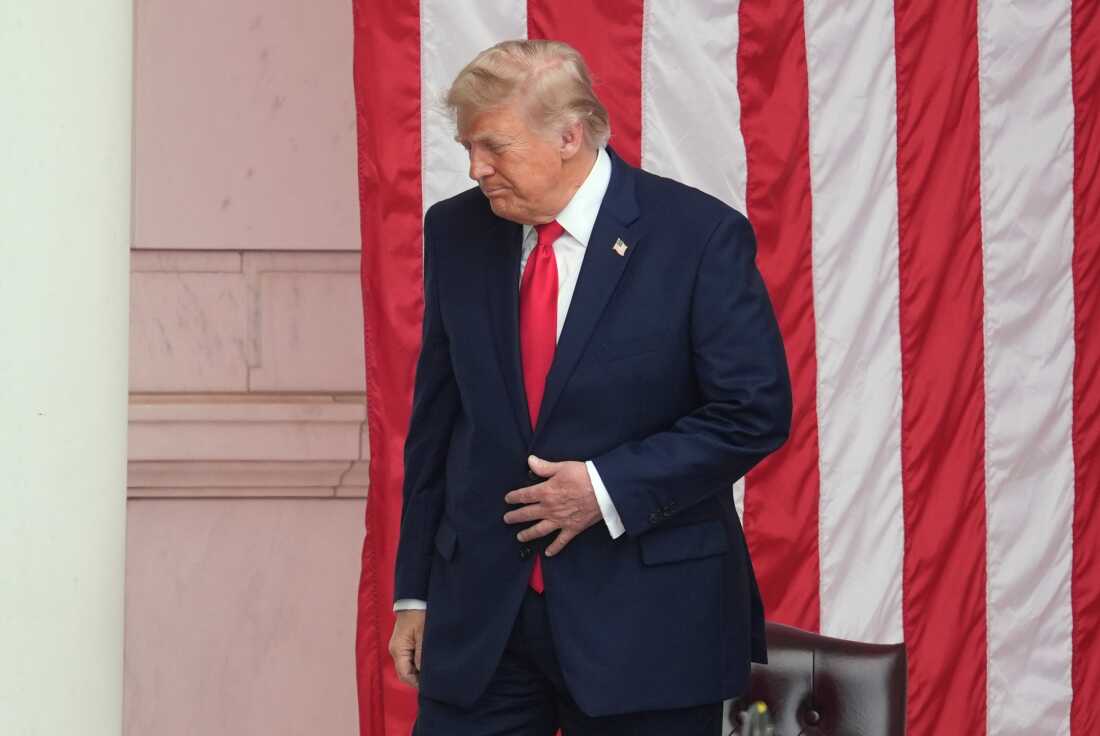
President Donald Trump’s health has become a topic of interest following his multiple visits to Walter Reed National Military Medical Center for medical evaluations. His next appointment, scheduled for Tuesday, marks his third visit in just thirteen months, prompting discussions about the state of his health.
The White House has described these visits as routine checks, encompassing both dental and medical assessments. Despite reassurances, Trump’s advanced age and physical signs, like swollen ankles and bruised hands, have fueled ongoing inquiries into his well-being.
Trump, who will be turning 80 soon, remains the second oldest president in U.S. history following President Joe Biden. These aspects have compounded concerns about his fitness for office, although he continues to demonstrate mental and physical engagement. Trump’s last physical examination occurred in April of last year, with Trump reportedly thriving in cognitive tests and described by the White House as being in “excellent health.” However, subsequent visits for assessments have only intensified the scrutiny surrounding his condition.
In a noteworthy instance, the president underwent a CT scan last December to evaluate his cardiovascular and abdominal health. White House physician Capt. Sean Barbabella reassured the public, stating the president remains in “excellent overall health.” Nonetheless, frequent footage of makeup covering bruised hands and instances of lethargy have not quelled public curiosity.
In January, Trump remarked to the Wall Street Journal that he regretted the CT scan, attributing speculation on his health to aspirin causing bruising. Trump’s age has been a focal point both for critics and his supporters. During his campaign, Trump frequently commented on Biden’s apparent slowing down and verbal slips.
The White House maintains a strong defense of Trump’s vitality, highlighting his busy schedule and interactive role in diplomatic endeavors. Over recent days, official communications underscore Trump’s energetically negotiated U.S.-Iran peace deal, showcasing his commitment.
President Trump’s cabinet, including Robert F. Kennedy Jr., have also vouched for his health. In a podcast, Kennedy mentioned CMS Administrator Dr. Mehmet Oz reviewed Trump’s health data, noting high testosterone levels for someone in Trump’s demographic.
A review of Trump’s health records reveals various selective disclosures. Trump was diagnosed with chronic venous insufficiency last summer, yet his cardiovascular condition reportedly remained “excellent.” An extensive report from April 2025 outlined “abnormalities,” such as scarring from an assassination attempt and benign findings in a colonoscopy, with recommendations for a follow-up procedure.
Other past evaluations have similarly noted weight loss and cognitive sharpness, despite chronic concerns. Historically, Trump’s medical data has been positively portrayed, emphasizing his genetic advantages.
External perspectives, such as those from Dr. Byron Lee of Stanford University, acknowledge the common practice for yearly physicals at Trump’s age. Lee recognizes the president’s demanding schedule as beneficial to his health but suggests further investigation into factors like aspirin use and leg swelling.
Lee concludes by expressing hope that Trump remains active and manages his weight, considering weight reduction beneficial for reducing heart disease risks. He points out the modern prescription trends, like GLP-1 medications, for weight management in older patients.