
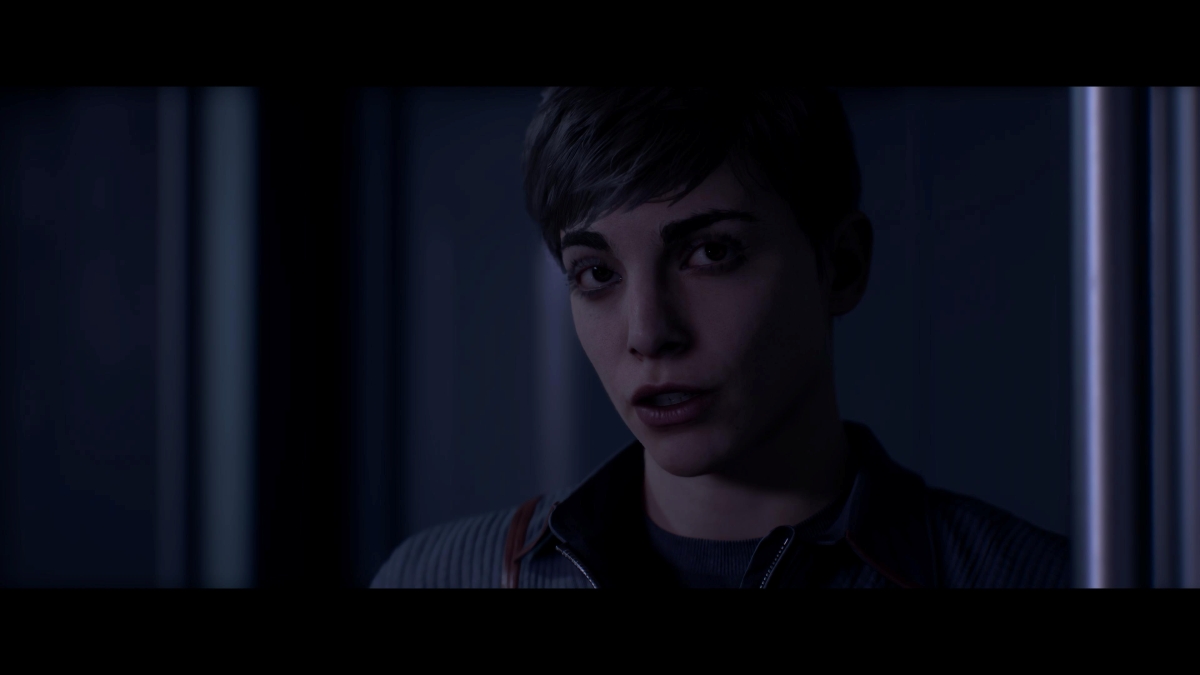
Supermassive Games has consistently sought to recreate the success of their 2015 hit, Until Dawn. The game became known for its dynamic narrative where character survival hinged on player decisions throughout the story. In 2019, Supermassive introduced The Dark Pictures Anthology with varying success. Over four years, the studio released four games, each exploring a distinct horror genre, complemented by cinematic production values and a branching narrative.
Although none of these titles matched Until Dawn‘s magic, fans appreciated the yearly release of new chilling adventures. After concluding Season 1, Supermassive paused The Dark Pictures series. Now, the series returns with Directive 8020, marking the next phase. The Curator remains present but in a reduced role. Players continue the challenge of guiding five characters through life-threatening horror scenarios.
Several tweaks attempt to redefine The Dark Pictures series. Directive 8020 begins abruptly, dropping players into the deep-space setting without The Curator’s typical introduction. Earth is no longer habitable, and the game’s protagonists form part of the Cassiopeia crew, a scout ship on a mission ahead of the colonization vessel, Andromeda. Unsurprisingly, their situation resembles plots from John Carpenter’s The Thing and Ridley Scott’s Alien, among other inspirations.
The narrative feels derivative until a late-game twist shifts perspectives in ingenious ways.
Despite this, the game remains engrossing. Supermassive Games delivers scares well, allowing authentic fear to emerge during Quick Time Events where mistakes may result in character death. Even if sequences seem drawn from other titles, participating with potential drawbacks is genuinely tense.
Innovative Mechanics
Two notable changes distinguish Directive 8020. Players now have full control of the camera, enhancing exploration and interaction beyond non-QTE segments. While this adds engagement and intimacy, frequent forced stealth sections detract from gameplay, becoming predictable as failure rates diminish.
Another fresh addition is the rewind feature, permitting players to revisit plot-altering choices at any game point. Using it from the start is discouraged; appreciating story consequences may prove more fulfilling. Post-completion gameplay can explore alternative outcomes.
This rewind capability simplifies navigating the branching narrative, aiding in uncovering diverse death scenes and exploring Easter eggs connecting to previous entries.
Digital Foundry confirms Directive 8020 exclusively uses Unreal Engine 5, running on current-gen consoles without PS4 or Xbox One versions. Visual fidelity features are available in various FPS modes, with the 60 FPS setting suggested due to fluidity concerns in the 40 FPS mode.
The cast delivers strong performances, but discrepancies appear in character animations, highlighting an industry-wide issue amplified by the game’s cinematic design. While facial capture costs may limit implementation, improved solutions are needed.
Conclusion
Directive 8020 attempts fresh ideas while retaining successful elements, albeit with extraneous stealth and exploration as filler. Fans of Supermassive Games find this installment essential, though some features, like the absence of multiplayer modes, remain lacking compared to past titles.
Ultimately, Directive 8020 sticks true to the Dark Pictures formula. Devotees will embrace these familiar elements, but detractors may remain unconvinced despite new mechanics such as the rewind feature. Although not flawless, Supermassive Games consistently offers engaging experiences, albeit temporarily. Anticipation for future Dark Pictures titles persists, ensuring annual spooky adventures. Newsweek rates the title 6/10, noting that its fond memories endure, albeit without immediate replay value.