
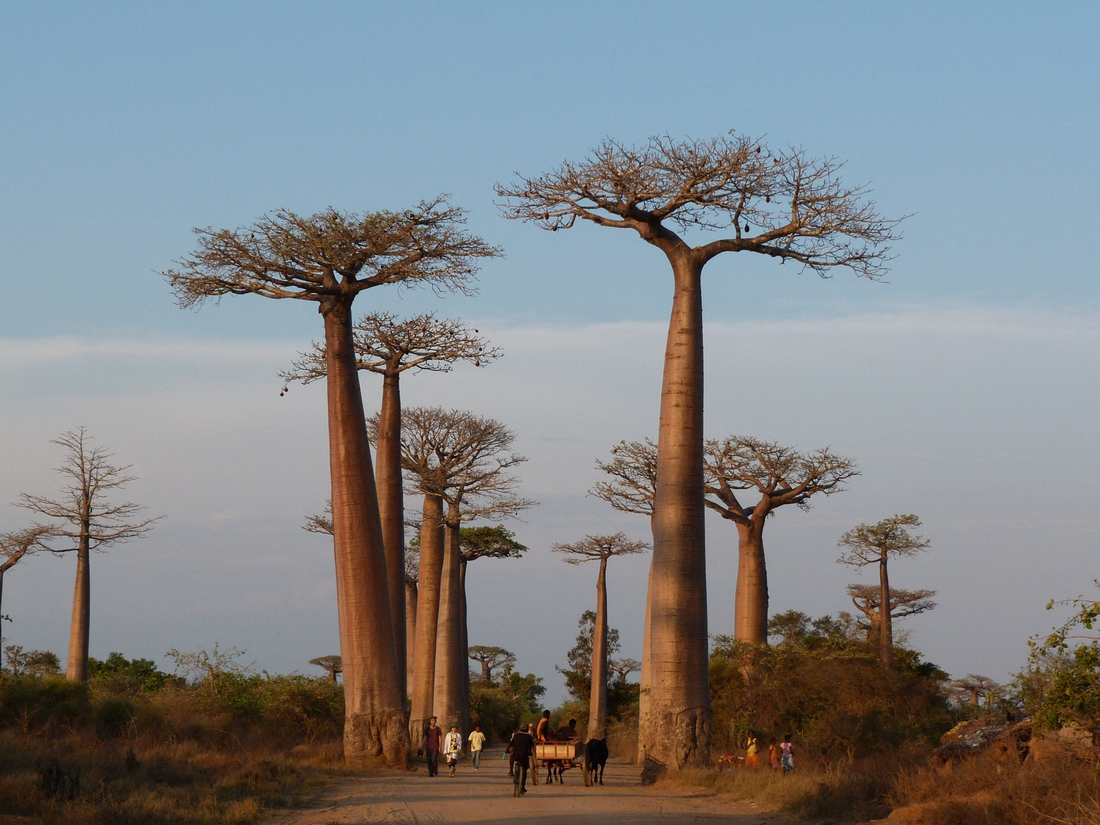
Baobab trees are often considered the “tree of life” due to their significant role in supporting ecosystems. They feature thick trunks, sprawling branches, and flowers that bloom at twilight. These characteristics inspired Rafiki’s home in ‘The Lion King.’ Comprised of eight distinct species, baobabs thrive in dry climates, providing nutrition and shelter to local wildlife and even influencing the folklore of nearby communities.
The origin of baobabs had long intrigued researchers, with theories suggesting they came from either sub-Saharan Africa, Australia’s Kimberley region, or Madagascar’s dry forests. In pursuit of answers, scientists from the Wuhan Botanical Garden at the Chinese Academy of Sciences embarked on a comprehensive study. Utilizing advanced genomic sequencing, which has become more accessible in terms of speed and cost, they analyzed data from all baobab species.
Through this study, the researchers concluded that Madagascar is the probable origin of baobabs. They propose that the fruits of baobabs were carried across oceans to Africa and Australia, leading to adaptations that resulted in new species. Their findings were recently published in the journal Nature.
“When I touched the bark of the baobab, I decided to know the evolutionary history of these special trees,” shared Wan Jun-Nan, the study’s first author, who drew inspiration from ‘The Little Prince.’
The future of baobabs raises concerns, as three Malagasy species face threats of extinction due to deforestation and rising sea levels. Adansonia perrieri is critically endangered, while Adansonia grandidieri and Adansonia suarezensis are endangered. Additionally, the environments of baobab pollinators, such as fruit bats and hawks, are at risk. Wan Jun-Nan hopes that ecologists will integrate genetic findings from this research into conservation initiatives.