
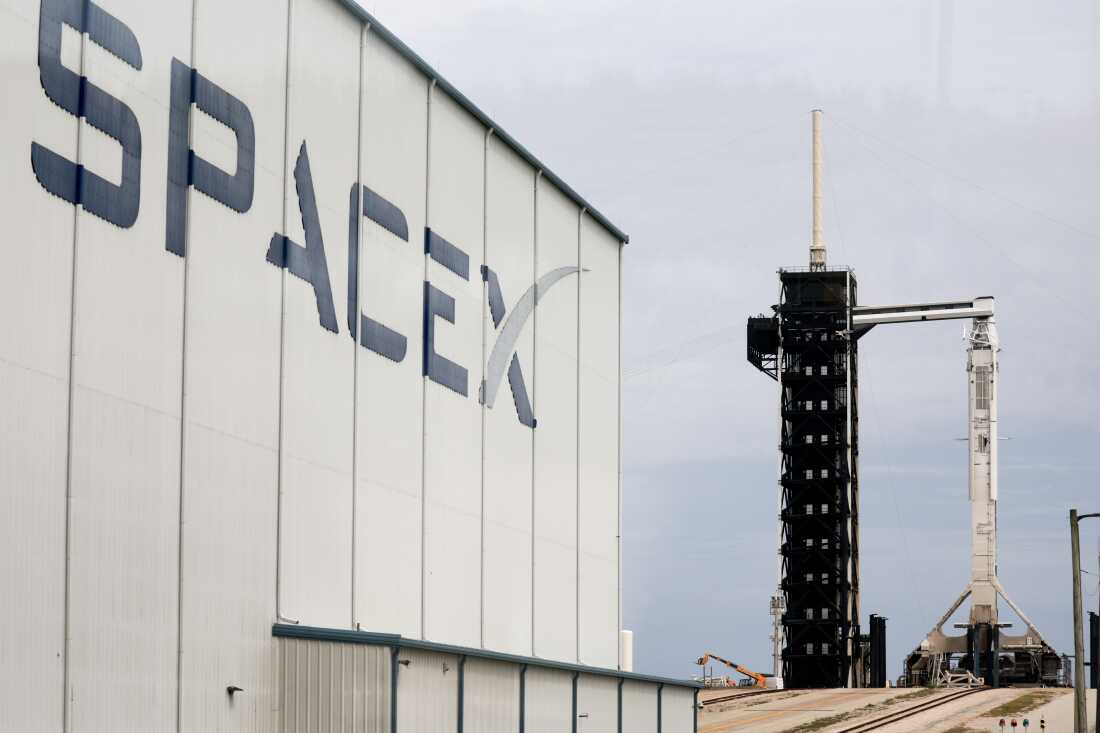
A SpaceX rocket is set to attempt another liftoff at NASA’s Kennedy Space Center in Cape Canaveral, Florida, on September 9, 2024. The Elon Musk-led company is gearing up to go public, aiming for the largest stock market listing in history.
SpaceX’s filing reveals intentions for what could be the largest initial public offering (IPO) to date. Media reports suggest the company aims to raise around $80 billion. This figure overshadows Saudi Aramco’s 2019 offering, which raised $29 billion. If successful, the IPO could value SpaceX over $1 trillion, positioning it as one of the most valuable companies globally, potentially surpassing Tesla.
The IPO is poised to further enrich Musk, already one of the wealthiest individuals, potentially making him the first trillionaire. Musk controls 85% of voting power within SpaceX, according to recent documents.
SpaceX’s Role in the AI Boom
SpaceX’s IPO has been anticipated for months. The company filed confidential paperwork with the U.S. Securities and Exchange Commission earlier in the year to begin public share sales, according to reports. This event might stimulate a notable year for Wall Street, including potential listings from AI giants OpenAI and Anthropic, known for ChatGPT and Claude. These IPOs could allow public investment in leading private tech companies within the AI sector, SpaceX among them.
SpaceX has captured the space launch market, creating reusable rockets and the satellite internet service Starlink. The merger with Musk’s AI company xAI last year reflects ambitions for orbital data centers, moon bases, and human settlement on Mars.
Financial disclosures show significant spending to achieve these goals. Last year, xAI escalated capital expenses to $12.7 billion, focusing on data center projects. SpaceX allocated $3 billion towards developing its Starship rocket. During Q1 of this year, losses were reported in SpaceX’s rocket-launching and AI sectors, with operating losses of $662 million and $2.5 billion, respectively. In contrast, the satellite communications division, Starlink, posted a $1.2 billion operating profit. The company faced a net loss of roughly $4.3 billion, despite $4.7 billion in revenue.
Understanding IPO Risks and Rewards
IPOs present opportunities for public-market investors, including individuals, to acquire shares in high-profile companies. These transactions raise substantial funds for companies and their early investors. Analysts hope the SpaceX IPO will invigorate an IPO market perceived as slow in recent years.
Investors should be mindful of the risks, however. Post-IPO companies often see share prices underperform relative to the broader market. Franco Granda, a research analyst at PitchBook, highlights the extensive scrutiny facing companies like SpaceX after going public. This scrutiny comes from financial regulators and the general public, challenging highly valued companies to justify their valuations.
The Musk Factor in SpaceX’s Valuation
SpaceX’s connection to Elon Musk is profound. Musk founded the company in 2002 with ambitions of establishing a Mars colony. His innovation in reusable rocket stages dramatically reduced costs and transformed the industry. SpaceX secured high-profile contracts for defense satellite launches and astronaut missions via the Dragon capsule.
Despite dominance, only a fraction of SpaceX’s revenue derives from space launches, according to Tim Farrar, president of TMF Associates. The Starlink division generated $11.4 billion in revenue in 2025, compared to the $4.1 billion from space launches and $3.2 billion from AI operations. Farrar argues that Starlink alone doesn’t justify a trillion-dollar valuation, emphasizing the reliance on belief in Musk himself.