
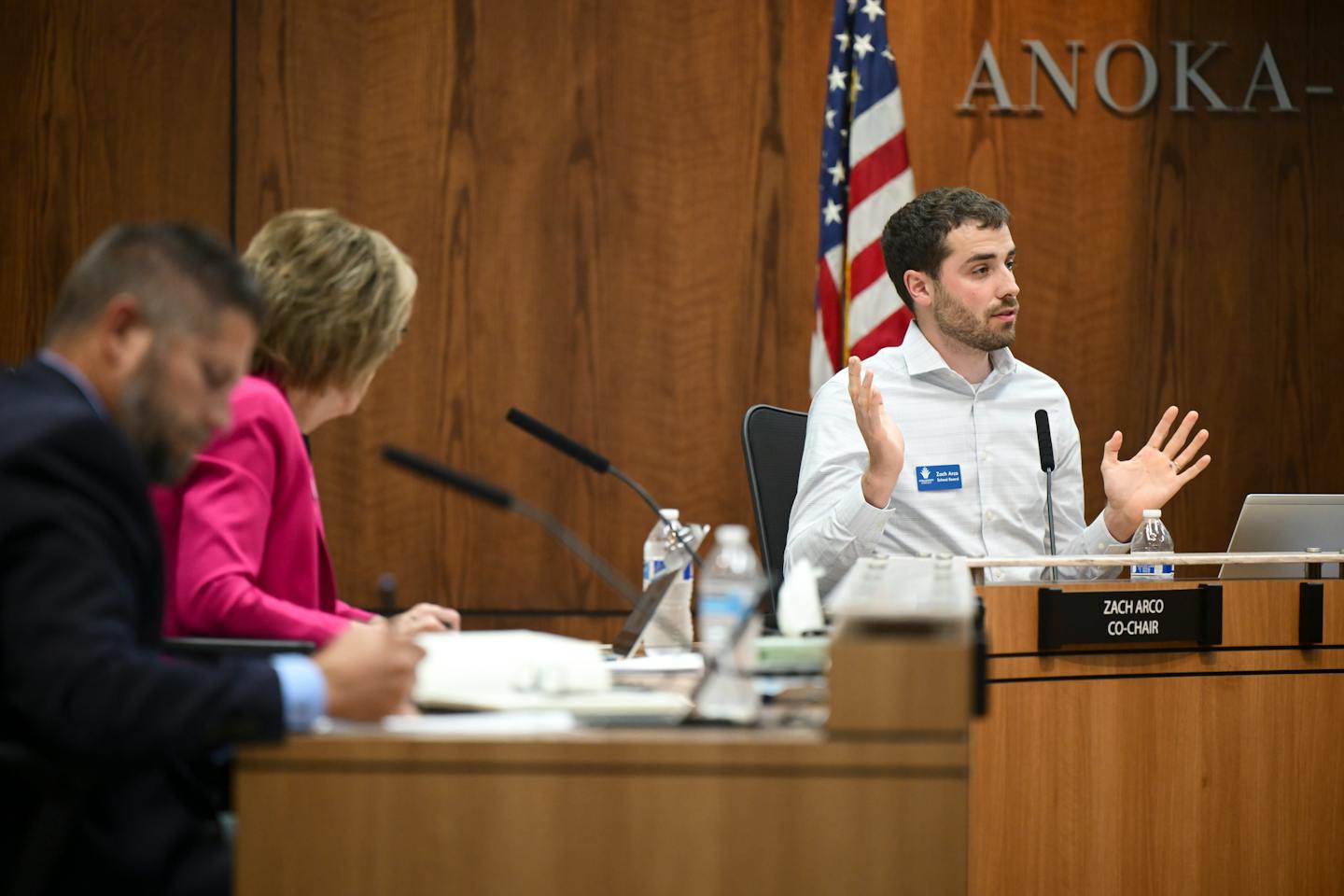
The Anoka-Hennepin School Board in Minnesota is at a standstill over teaching ethnic studies, leaving social studies teachers uncertain about implementing new state standards this fall. Teachers, community members, and administrators spent years preparing for these updates, but a politically divided board is deadlocked over ethnic studies requirements.
A recent 3-3 vote halted proposals for new curriculum materials in several subjects, including social studies and high school courses like civics and economics. “There is no clear direction for teachers on what to do in the fall,” said John Wolhaupter, president of the teachers union.
This dispute continues a pattern in the district, where past curriculum decisions in subjects like psychology and science have met resistance from teachers and the union. Conservative board members argue they are being diligent, addressing community concerns.
The curriculum recommendations were the result of lengthy planning. A study committee examined implementation since 2022, including two board members in discussions. The process incorporated feedback from educators and the community.
By mid-2024, teachers obtained permission to write pilot curriculum, intending to refine it before introducing it in classrooms. However, progress stopped when the board placed the project on hold.
Champlin Park High School teacher Dave Evensen shared, “It’s been paused since last year.” Teachers repeatedly requested clarification on the board’s concerns but received little response.
Board Member Zach Arco advised the district to be “minimally compliant” with ethnic studies standards before their fall implementation. His comments met with disapproval from teachers who see them as unclear and insufficient.
With limited time, Superintendent Cory McIntyre stressed urgency in securing new materials. Existing resources fall short of addressing half the mandated standards.
Supporters of the curriculum proposals believe the board’s role is not to contest state standards but to focus on their teaching. “The board should help determine how to teach these standards,” stated Board Member Kacy Deschene.
Arco opposed the materials as he had not completed reviewing them and criticized ethnic studies as “political,” “divisive,” and “harmful.” He argued for teaching slavery within the context of its end by Western civilization.
Evensen highlighted that new standards promote analyzing multiple perspectives, contrasting with previous focus on memorization. Students learn to form opinions and debate, even on contentious topics.
Teachers still question how the district will meet state requirements if lacking approved materials. Open-source resources may become necessary, and the Minnesota Department of Education offered no clarity on accountability.
Concern persists over teachers needing to dedicate summer time to curriculum development, should the board revisit the issue before fall. “Teachers have invested years into these efforts,” Wolhaupter said. “But political issues overshadow their dedicated work.”