
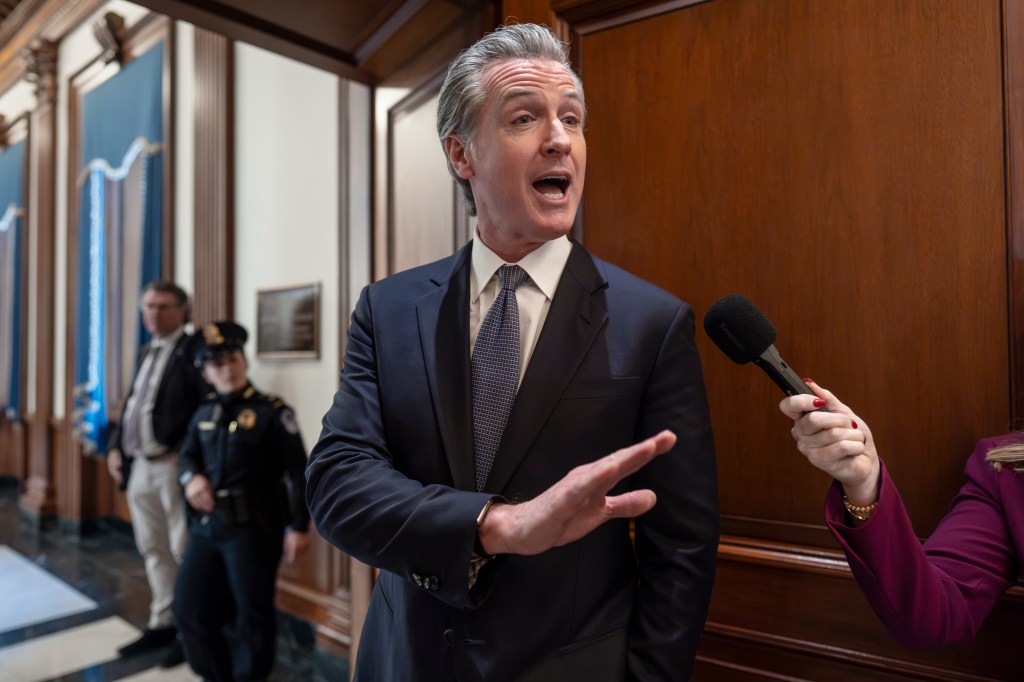
Ana Navarro, co-host of ‘The View,’ expressed surprise at Sunny Hostin’s disagreement regarding Governor Gavin Newsom’s decision to end the death sentences of 548 inmates in California without notifying the victims’ families. Navarro argued that families deserved prior notification as the individuals being released from death row were convicted murderers. She believed decisions like these should be made on a case-by-case basis and described the approach as disrespectful to the victims’ families.
Governor Newsom’s action put an end to capital punishment in the state after he had already instituted a moratorium on executions. Hostin, however, disagreed with Navarro, stating her opposition to the death penalty. She emphasized that life is a divine gift and argued that the governor has the purview to decide in a broken system where even one innocent person’s execution is unacceptable. Her stance highlighted racial disparities, noting that while Black people constitute 13.6% of the U.S. population, they disproportionately represent over half of the death row exonerees.
Hostin defended Newsom, citing the system’s racial biases and referencing the work of the Innocence Project that exposes wrongful convictions in murder cases, many of which involve African Americans. She maintained that no one should pay the ultimate price in such a flawed system.
Alyssa Farah Griffin sided with Navarro, describing the lack of notification as a betrayal to the families. She recalled instances where California voters opted to maintain capital punishment, which highlighted the contrasting views between them and the governor’s decision. Griffin posited that Newsom’s move might have political motivations, suggesting he aimed to appear more progressive as a possible contender against Kamala Harris in future elections.
Sara Haines, another co-host, agreed with Griffin, pointing out that Newsom’s approach generalized individual cases, erasing the distinctions between them. She reiterated the importance of a ballot measure if systemic changes were desired, emphasizing that families deserved more involvement in such decisions.
In response to the criticisms, Newsom issued a letter acknowledging the emotional pain his decision might have caused the victims’ families. He asserted his long-held belief against state-sanctioned killing while respecting the democratic decision to keep the death penalty on the books. Newsom recognized his action as limited clemency and affirmed that only voters and the Legislature hold the power to repeal capital punishment.
Y. David Scharf, chairman of Morrison Cohen LLP, criticized Newsom’s decision, highlighting the perceived disregard for victims’ rights. Scharf argued that the families of murder victims deserved respect and notification before the announcement, calling for more consideration for those profoundly affected by the outcome.