
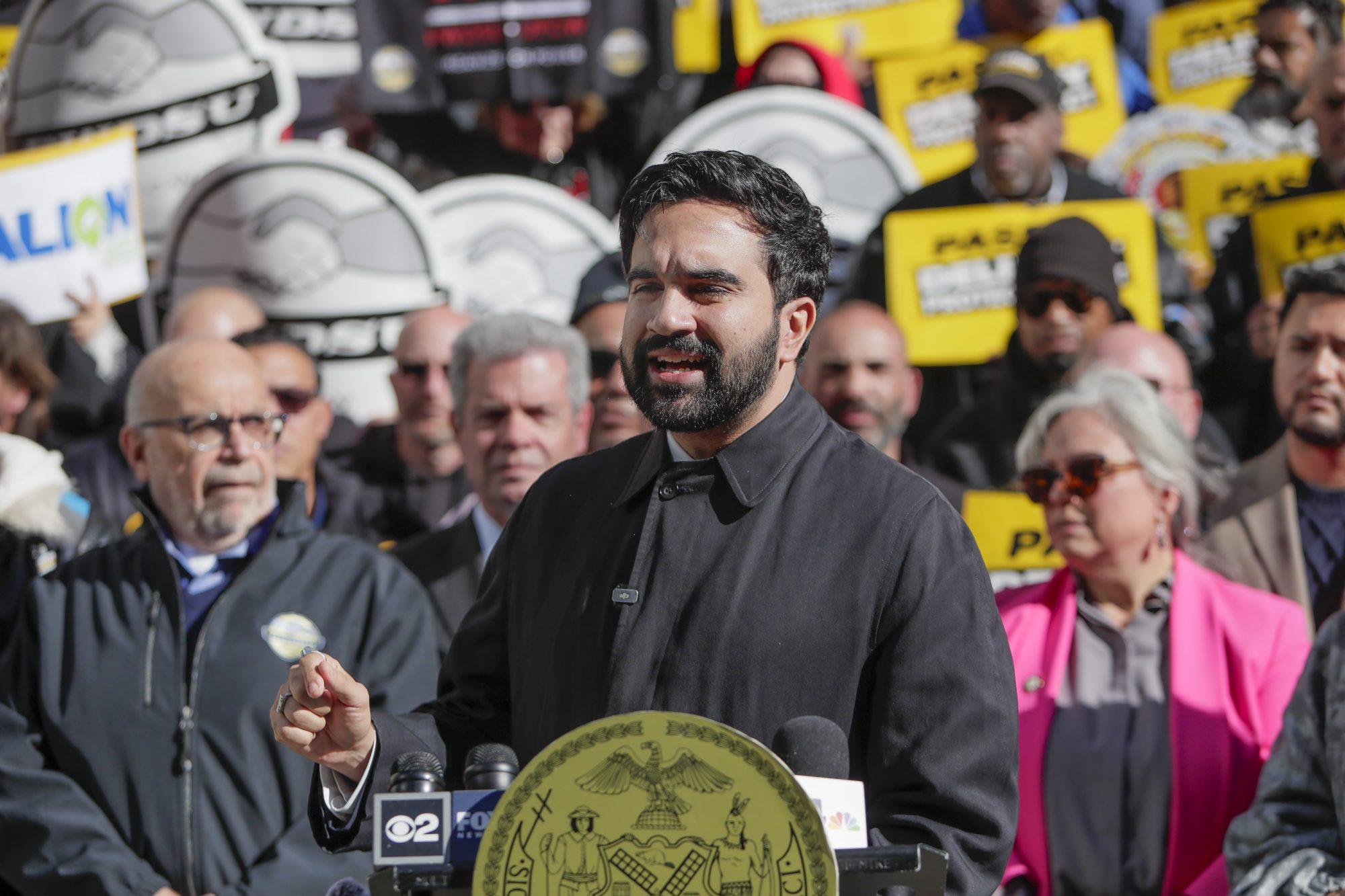
Mayor Zohran Mamdani recently spoke at a rally organized by the Teamsters outside City Hall in New York City. The rally aimed to push for the passing of the Delivery Protection Act. Proposed by the City Council, this act would significantly increase Amazon’s delivery costs in the five boroughs. The company has started informing local customers that this change would result in higher delivery prices. This announcement has stirred strong reactions among New York’s political figures.
The core of the proposed legislation requires Amazon to employ unionized drivers rather than subcontracting “last mile” deliveries. This could add up to $5 per package. Mayor Mamdani criticized Amazon, implying that any price increase would stem from the company’s greed. He pointed out Amazon’s substantial financial stature and accused founder Jeff Bezos of prioritizing profit over fairness.
Council Speaker Julie Menin condemned Amazon’s notification to customers, describing it as a deceptive move. She expressed disbelief over the idea that basic regulations and worker protections would lead to increased living costs in New York.
The bill’s author, Councilwoman Tiffany Cabán, attacked Amazon’s actions as scare tactics intended to alarm consumers. The Teamsters union echoed similar sentiments, accusing Amazon of extortion, despite the labor movement’s history of using threats of work stoppages to secure better pay.
The Delivery Protection Act, according to its proponents like Menin, is designed to establish fair wages and robust worker protections in delivery services. However, some claim this legislation is more about political maneuvering than worker well-being. Opponents argue that the bill would harm existing delivery companies by forcing them out of business, potentially leading to massive job losses.
Critics also point out that the inability to recognize the economic consequences of such regulations is a blind spot for progressive politicians. These politicians tend to promise an improved world without acknowledging the costs businesses will incur. Increased business expenses typically result in higher prices for consumers.
Amazon, dedicated to maintaining its shareholder interests, may be exaggerating potential costs or might be accurate. Either way, it won’t easily absorb these costs without passing some onto customers. The company has launched a messaging campaign to inform customers and urge them to express concerns to their council members.
Such political decisions can have significant impacts, as shown in the past when Amazon abandoned plans for a headquarters in Queens due to fiscal demands. Critics suggest current political leaders may be similarly driving Amazon away from New York.
What remains evident is the upheaval this legislation brings concerning affordability and economic principles.