
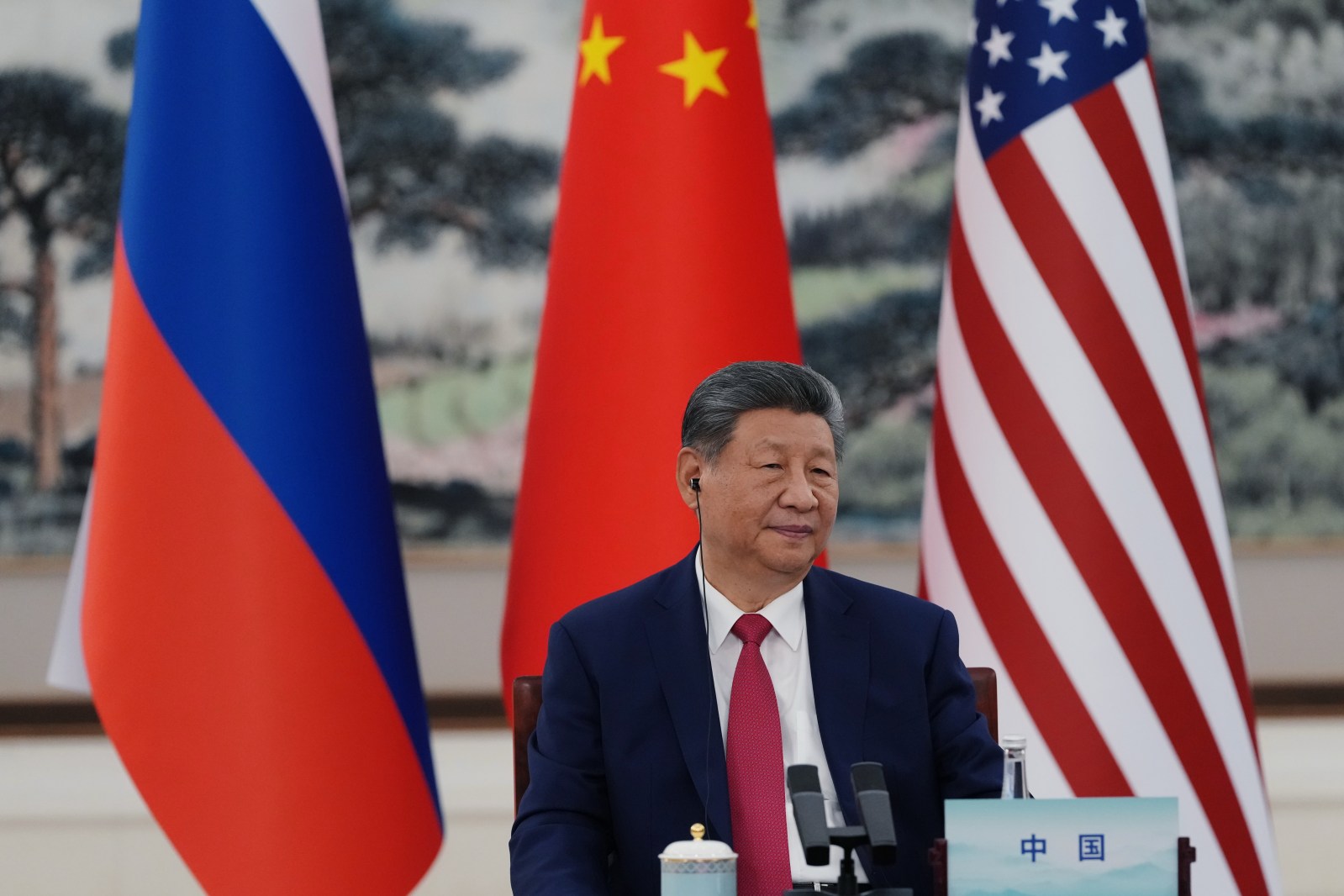
Images from the Asia-Pacific Economic Cooperation (APEC) summit in southern China raised eyebrows among Republicans. President Donald Trump emphasized his close relationship with Xi Jinping and Vladimir Putin. Democrats may use these images to criticize Trump in his remaining term. Trump appears unconcerned about the reactions from either party.
Televised footage from Shenzhen showed Xi Jinping greeting Trump warmly. They were seen focused on each other, with Trump assisting Xi on an escalator.
Some U.S. hard-liners felt uneasy as Trump shared the central spot in a photo op with Xi, a key geopolitical rival. Trump’s comfortable demeanor with Putin at the summit also drew criticism. However, Trump is keen on shaping his presidential legacy, valuing political optics and symbolism over standard protocols. Trump stated, “President Xi and I have formed an outstanding personal relationship.” Xi acknowledged this, while Marco Rubio, a prominent Beijing critic and U.S. secretary of state, remained unfazed.
During the summit, Chinese organizers dismissed a Bloomberg reporter for questioning Trump about former Nvidia boss Jensen Huang. Trump did not support the press on this occasion, favoring diplomatic spectacle over media freedom.
Earlier, Trump applauded Xi’s summit preparations, describing them as flawless. This marked a deviation from U.S. expectations amid political and economic tensions involving China.
Jennifer Kavanagh, an analyst at Defense Priorities, emphasized, “These meetings, rich in symbolism and light on substance, are crucial for strategic stability between powerful nations.”
Kavanagh defended Trump’s dialogue efforts, asserting they promote stability.
In his second term, Trump has helped rehabilitate Putin’s image. Following Russia’s annexation of Crimea and the invasion of Ukraine, Putin reemerges from international isolation. Yet, Trump’s most significant achievement may be vindicating Xi. Xi has withstood Western pressure, maintaining ties with Putin not out of altruism but as a strategic move. China has leveraged Russia’s economic state, shifting a historically imbalanced relationship.
China’s rise as a key player in Eurasia, once led by Soviet ideals, now sees Putin’s Russia taking a subordinate role to Xi’s leadership.
American views of China remain cautious. However, Trump believes economic ties have improved, benefiting U.S. agriculture. To sustain this, he minimized concerns over China’s dealings with Iran and alleged espionage in the U.S.
Xi reciprocated Trump’s efforts, placing him at a prominent table during the APEC dinner. He even addressed Trump’s interest in arms control by endorsing global nuclear disarmament, despite China’s nuclear ambitions.
Despite his unconventional style, Trump anticipates challenges from both parties. He is aware of the growing demand to intensify U.S.-China competition. Ryan Hass from the Brookings Institution warned of potential turbulence in U.S.-China relations by 2027. “Congress will reassert its voice,” Hass predicted.
These recent events highlight Trump’s enduring effort to mold a vision of global peace, even if it conflicts with his party’s future leadership strategies.
Trump channels a sentiment similar to Barack Obama’s in 2015, remarking, “I have no more campaigns to run.”