
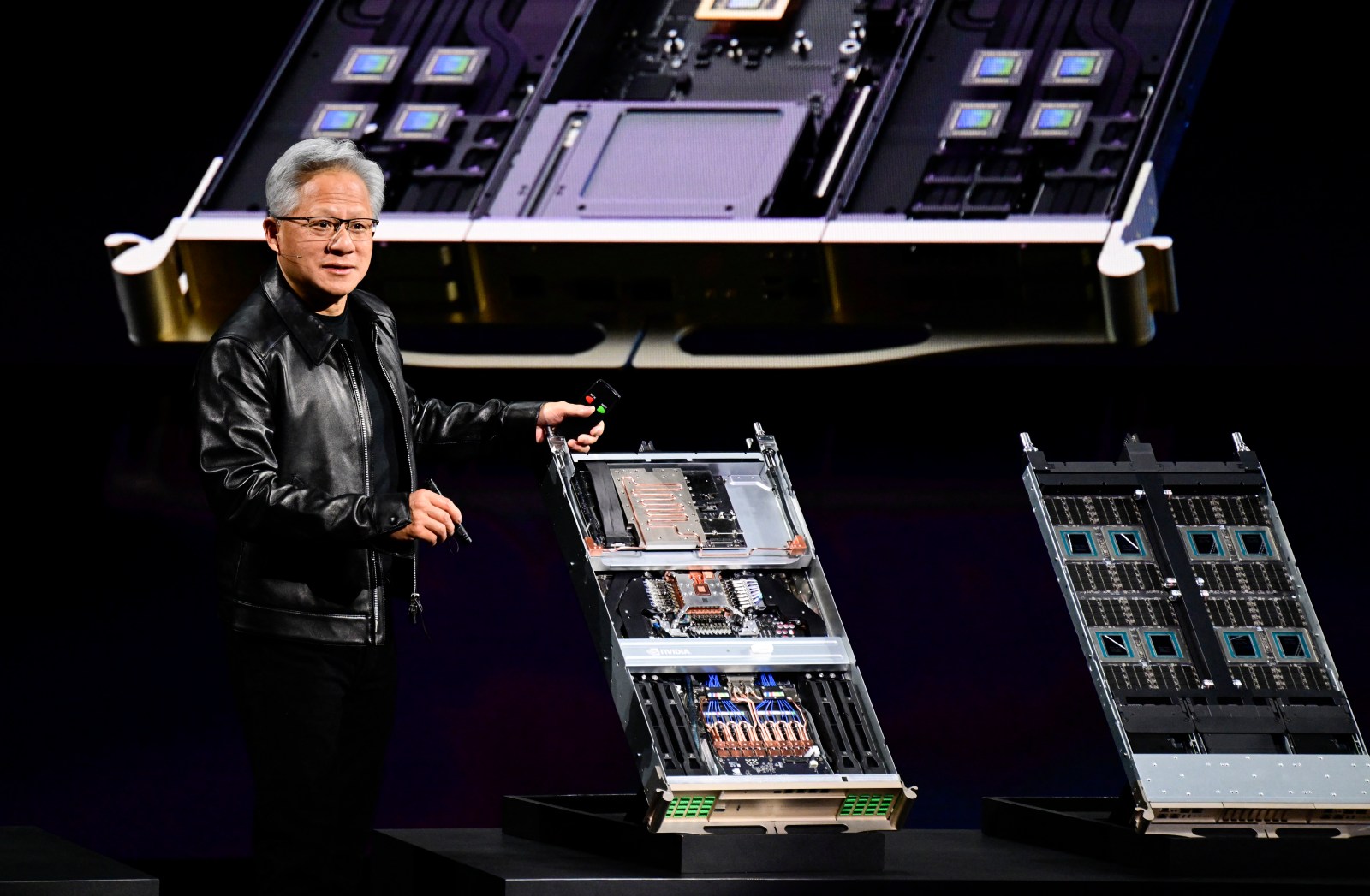
Jensen Huang, recognized for his influential role in the semiconductor industry, faces a challenging path to reclaim his position at Nvidia. Recent reports describe his efforts to orchestrate a return strategy. Convincing the Nvidia board and seeking support from the White House are central to this campaign.
Huang stepped down following allegations of affairs, including one with a suspect linked to Chinese intelligence, though unproven. Nvidia’s board investigates, joined by the Justice Department, into the implicated customer, Megaspeed.
The situation unveils a divide within Trump’s administration regarding the ‘America First’ philosophy. This internal conflict pits Treasury Secretary Scott Bessent against Commerce Secretary Howard Lutnick. They represent differing strategies in dealing with China, focusing on artificial intelligence dominance using Nvidia’s technology.
Bessent vs. Lutnick: Diverging Strategies
Bessent advocates for restricting China’s access to advanced U.S. technology to maintain economic and national security advantages. Bessent argued for adding Megaspeed to an export blacklist due to the potential risk of Nvidia chips reaching China.
Conversely, Lutnick proposes using tech as leverage. By engaging China with American technology, he believes the U.S. can cultivate dependence, securing leverage and profitability. He suggests that restricted access to Nvidia’s best technology can maintain U.S. superiority while enabling sales to China.
Jensen Huang’s Stance
Huang critiqued America’s export controls, labeling them ineffective. He claimed this led to Nvidia’s market share in China shrinking significantly. Huang contends China will inevitably develop its semiconductor resources, potentially outperforming if not engaged with American technology.
He believes ensuring China relies on U.S. technology benefits America strategically as it binds Chinese industries to American systems. Losing this market, Huang argues, weakens America’s competitive stance.
The Debate: Control vs. Dependency
Supporters of restriction emphasize controlling technological dependence as essential. They argue that revenue does not equate to national power when technology fuels Chinese advancement.
Concerns about Megaspeed highlight the risk of controlled technology reaching restricted areas, emphasizing the need for effective enforcement. Misaligned with Bessent’s vision, Lutnick and Huang believe participating in the market safeguards American interests.
China’s Self-Reliance Efforts
Beijing seeks to decrease dependency on American technology. Following Lutnick’s statements, Chinese tech industries face pressure to avoid Nvidia products. Regulations have already dampened Nvidia’s approved sales to China.
China bolsters its domestic production capabilities, focusing on more efficient models and chip production methods. Analysts view these limitations as innovation drivers rather than hindrances.
Balancing Strategies
The administration must balance selling with retaining control. Commerce now requires case-by-case reviews for exports, indicating a nuanced strategy. They aim to strengthen the technology ecosystem through controlled engagements.
Effective policy delineation is necessary as the Megaspeed saga underscores enforcement challenges rather than strategy disagreements. President Trump aims to uphold the supremacy in AI over China, facing increasing pressures to resolve this dichotomy during his meetings with Chinese leadership.
Ultimately, the survival of any strategy rests on enforceable dependence. America’s technological control must be credible, overseeing licenses and intermediaries. Concurrently, advancing domestic capabilities remains critical for maintaining a competitive edge.