
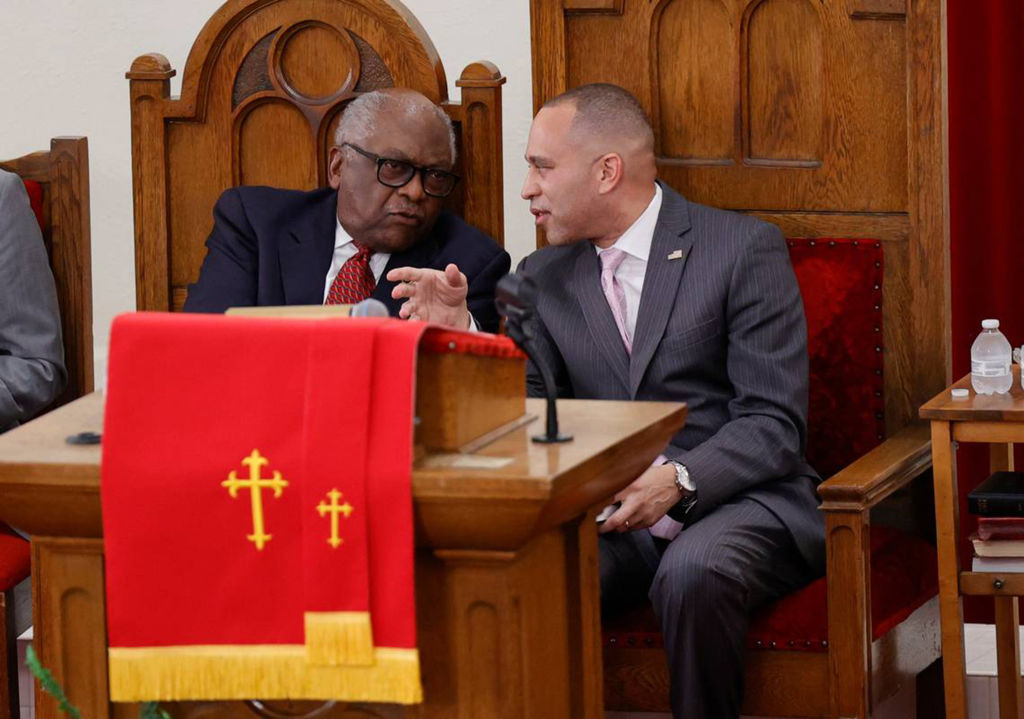
In 1870, Joseph Rainey from South Carolina became the first Black individual to serve in the U.S. House. This week marks a significant moment as House Democrats, both current and newly elected, prepare to elect Rep. Hakeem Jeffries as the first Black Speaker of the House. This event carries deep meaning and challenges for both Jeffries and the broader Black community, as highlighted by several Black leaders.
Jeffries’ potential role as Speaker puts him second in the presidential line of succession. This symbolic position reflects the ongoing struggle to transform advances in Black representation into policies that genuinely benefit voters. Rev. Frederick Haynes, a pastor and newly elected U.S. House member, emphasizes the connection to Martin Luther King Jr.’s “I have a dream” speech, noting Jeffries’ engagement with this tradition.
Jeffries’ Role and Responsibilities
As Speaker, Jeffries’ duties will include setting legislative priorities, managing federal spending negotiations, and leading opposition against policies perceived to harm civil rights. The Democratic majority in the House is at its largest since the early days of Obama’s presidency, raising hopes for economic relief and significant change.
Rep. Jim Clyburn of South Carolina, a prominent Black lawmaker, advises Jeffries to conduct himself in a way that ensures he won’t be the last to hold this position. While Clyburn keeps his advice private, he summarizes its essence, stressing the importance of maintaining the support and trust of the caucus.
Support and Skepticism
Jeffries has been preparing for this role since 2022, after being chosen to succeed Nancy Pelosi as the Democratic leader when the party was in the minority. He gained support from the Congressional Black Caucus and key progressives such as Alexandria Ocasio-Cortez. However, skepticism remains among some progressives who argue that Jeffries may not be the right leader for the current times.
Some progressive members have expressed uncertainty about supporting Jeffries as Speaker. Liberal groups have even suggested alternative candidates. Clyburn reflects on the demanding nature of the Speaker’s role, noting the challenge of managing diverse party factions and personalities.
“You’re operating behind a glass door,” says Clyburn, highlighting the transparency required in this role.
In an open letter, Jeffries conveyed his intent to include insights from all parts of the caucus. He emphasized that the goal is to achieve meaningful change beyond political rhetoric.
Jeffries’ Connection to the Black Church
Haynes recalls first meeting Jeffries at Cornerstone Baptist Church in Brooklyn, a notable Civil Rights Movement hub. Jeffries attended this church during his upbringing in Crown Heights. Haynes describes Jeffries as someone with a keen desire for knowledge and a determination to make a difference.
Jeffries’ ascent is part of a broader trend of religious leaders entering Congress. This includes incoming Senators like Adam Hamilton and James Talarico. Haynes believes that Jeffries will integrate the Black church’s moral tradition into his political work.
“Congressman Jeffries will have the opportunity to highlight democratic values rooted in the Black community, even amid challenges,” Haynes asserts.
Turning Representation into Action
Carl Heastie, New York’s first Black Speaker of the State Assembly, understands the challenges Jeffries will encounter. Heastie emphasizes the balance between leadership and legislative duties. Recognizing the importance of constituent and colleague input, Heastie notes that Jeffries’ experiences as a Black individual can inform his decisions.
Heastie highlights Jeffries’ work on a 2010 state law concerning the counting of incarcerated individuals for redistricting. This law addresses practices affecting the state’s Black population. Jeffries effectively argued against prison gerrymandering, which he claimed violated the rights of the incarcerated and disenfranchised communities without prisons.
“Hakeem was always an impressive debater,” Heastie reflects. “His speeches commanded attention and respect.”
Heastie views Jeffries’ expected promotion as more than personal pride. It signifies the persistence of the American dream amidst difficult times. “The prospect of a Black person from Brooklyn becoming the first Black Speaker in the country’s history is a moment of immense pride,” Heastie concludes.