
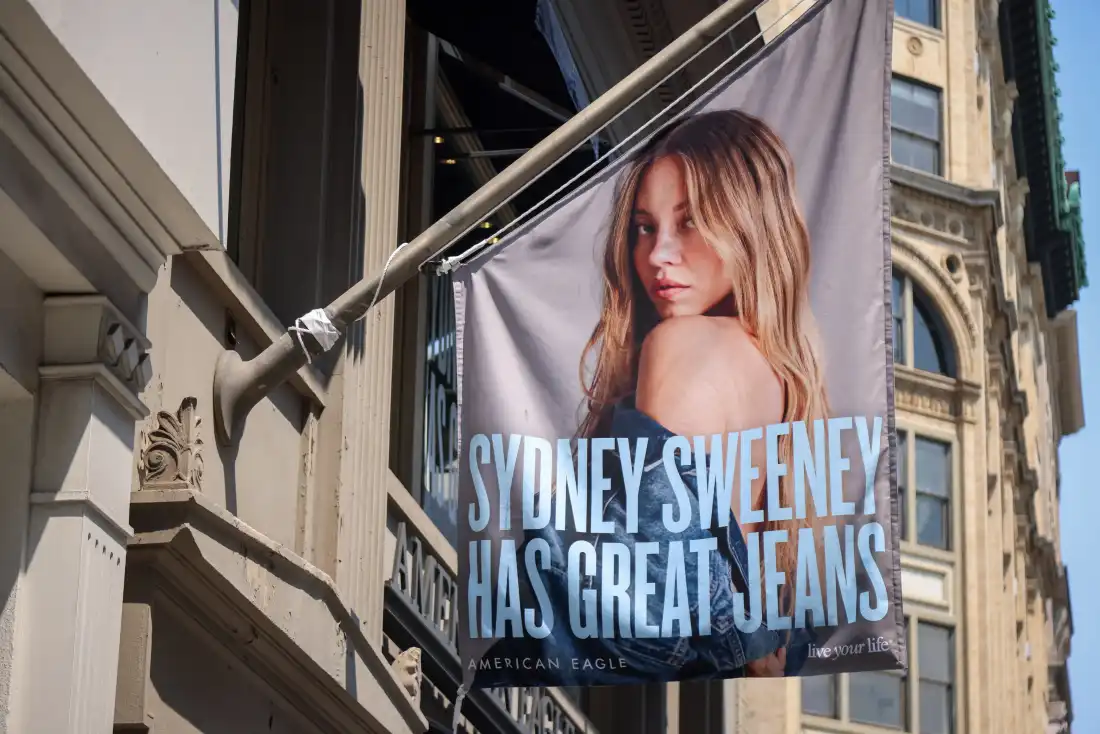
An advertisement featuring actress Sydney Sweeney outside an American Eagle store in New York sparked controversy. The tagline, “Sydney Sweeney has great jeans,” drew attention, but little focus was given to the workers behind the jeans. A significant question remains: who are the garment workers making these jeans, and how are their working conditions?
In a slum in Karachi, Pakistan, a garment worker recognized the denim styles of American Eagle featured in the ad. This woman, identified as S., wanted to remain anonymous due to fear of retribution from her factory bosses.
S. works for Artistic Garment Industries and earns about $144 monthly to support her family. When interviewed, she described working in stifling conditions, sometimes reaching 106°F. Despite feeling faint and unwell, S. must meet daily production targets and check 1,000 to 1,600 pieces of clothing.
American Eagle states it is committed to protecting the health, safety, and rights of workers. Artistic Garment Industries contests the claims of exploitative conditions, mentioning their internal complaint systems and frequent checks on factory temperatures.
The garment workers interviewed mostly remain anonymous, fearing job loss or blacklisting. In total, about 20 workers from Bangladesh and Pakistan shared their experiences. Many described conditions of oppressive heat and high production targets without adequate hydration or breaks.
The larger issue extends beyond American Eagle jeans, illustrating the broader impact of fast fashion manufacturing. Factories producing for various brands, including Levi’s, Massimo Dutti, The Gap, and H&M, often share similar working conditions.
Workers are not choosing to take these risks. They’re being forced into them by poverty.
In Bangladesh, R., a worker in Dhaka, shares her challenges. She works six days a week, at least 12 hours daily, earning $140 monthly. Her role of stitching 150 fabric pieces per hour leaves little room for breaks, even when temperatures rise.
With limited options, many workers push themselves to avoid losing income. Brands and suppliers face ongoing scrutiny as efforts like the International Accord aim to enforce worker safety standards.
Additional heat-related stressors stem from global climate change. Reports indicate that garment factories can be significantly hotter inside, exacerbating health risks.
Efforts are underway for better heat management protocols. Still, much needs to be done to protect workers globally in countries like Pakistan, where conditions remain harsh.
The disparities in worker treatment and auditing practices highlight the need for continued action and improvement. Global brands respond to these issues by emphasizing their commitment to worker safety while facing criticism for inconsistent efforts.
The dilemma reflects an industry under pressure to balance mass production with ethical practices. The workers’ perspectives suggest a deeper reflection on ensuring humane conditions in the fast fashion supply chain is necessary.