
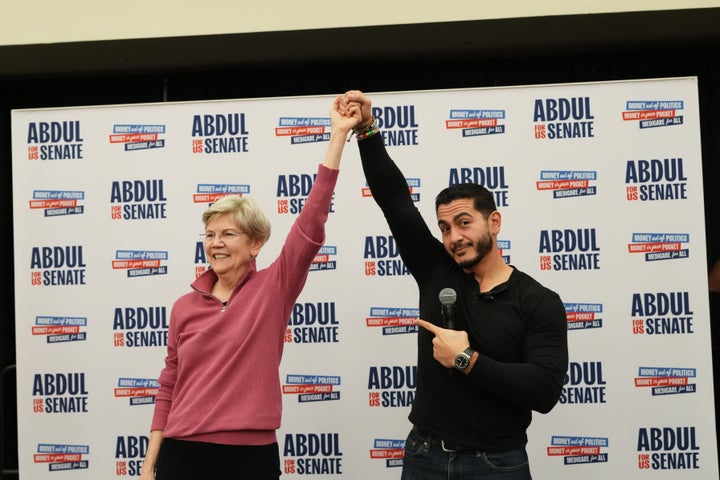
Following a significant midterm election win, Democrats have taken control of both the House and Senate. This shift has empowered progressives to assert a central position within the Democratic Party. Senator Elizabeth Warren emphasized the importance of addressing economic hardship, condemning corruption, and pledging systemic change in her speech at the Popular Mandate conference in Washington.
Warren highlighted that Democratic candidates adopted economic populist messages targeting Washington corruption, corporate concentration, and billionaires’ growing influence. These victories, revealed at the conference hosted by progressive and civil rights groups, demonstrated that the broad progressive vision of challenging corporate power and corruption is now a unifying force within the party.
Lindsay Owens, president of the Groundwork Collaborative, stated that economic populism now dominates the party’s campaign strategy. Michigan’s Sen.-elect Abdul El-Sayed, along with other Democrats, pointed out that the focus is on whether power rests with the people or the wealthy elite.
Democrats, achieving their largest election win since the post-Watergate era, are now tasked with proving their commitment to voters. Owens noted that candidates from various states and backgrounds all campaigned on economic populism, and it’s crucial they govern in the same manner. The question highlighted at the conference was whether Democrats would fulfill voters’ desires concerning cost-of-living issues and the expanding power of the affluent.
Senator Warren encouraged Democrats to use the next two years to fight for working people, despite facing a divided government. Owens argued that significant legislation has historically emerged even under divided governance. Owens suggested starting with ending funding for the Iran war, repealing Trump’s tariffs, and redirecting funds from immigration enforcement to Medicaid. Democratic strategist Brian Fallon recommended utilizing legislative opportunities that force Trump to veto popular bills, illustrating stark political differences.
Rep. Jamie Raskin indicated no separation between addressing affordability and investigating Trump’s administration. Oversight should spotlight how abuses of power have incurred costs for the public. The conference speakers urged investigations into issues like the Iran conflict driving price increases, and Trump’s corruption tied to corporate power.
Targeting tech leaders like Nvidia’s Jensen Huang and Tesla’s Elon Musk, Fallon emphasized prioritizing investigations with direct affordability ties. Lessons from the Epstein files should influence oversight efforts to connect Trump’s corruption with broader corporate concerns. Owens suggested that proper oversight might even lead to consumer relief, citing Moderna’s vaccine pricing after congressional scrutiny.
Beyond Congress, state governments controlled by Democrats have opportunities to address the cost-of-living crisis. Wilkins of Roosevelt Forward highlighted that new governors and trifectas could enact meaningful reforms against influential health care and AI companies. These state actions could mirror reforms initiated during FDR’s governorship.
The Popular Mandate coalition stresses to Democratic leaders that the election victory offers an opportunity to deliver on economic populism. Wilkins advised that the mandate from voters should not be squandered by failing to deliver on promises.