
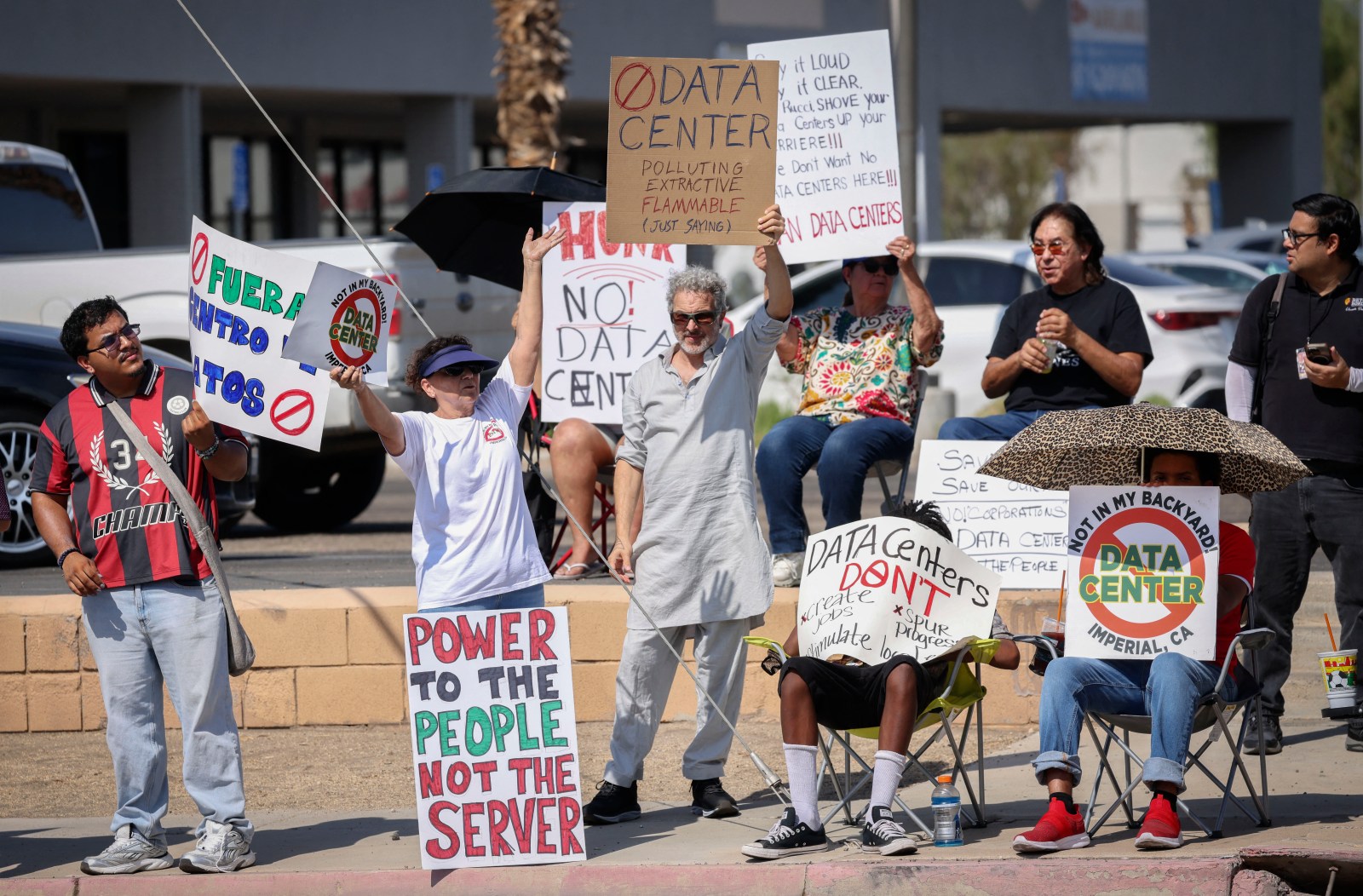
Following the midterm elections, Democrats gained control of both Congressional chambers. This shift has led to growing interest in regulating the expanding data center industry. Data centers became a focal point in multiple races and ballot measures nationwide. Numerous Democrats campaigned on proposals to limit development or increase operators’ financial responsibilities.
Data centers can drive job creation, infrastructure investment, and tax revenue. However, concerns have arisen about electricity costs, water usage, and noise impacting residents. Experts engaged by Newsweek discuss potential Democratic approaches, with House and Senate leadership also contacted for comments.
New Political Reality
“Americans have voiced concerns over data center expansion,” Kathryn Kline Tyndall of the Bipartisan Policy Center told Newsweek. These worries were evident in election results. A Newsweek analysis indicated lawmakers promoting rapid data center growth were often defeated.
Data centers featured in 41 ballot measures across ten states, such as California, Florida, Illinois, and New Jersey. Voters favored restrictions or bans in almost every case. John Ashford of the Hawthorn Group noted the industry faces a “new political reality.” He emphasized the necessity for collaboration with communities and effective communication with lawmakers.
Potential Democratic Proposals
Ed Tarnowski from the R Street Institute observed that while it’s early to predict specific Congressional actions, some proposals have emerged. Vermont Senator Bernie Sanders and New York Representative Alexandria Ocasio-Cortez proposed halting new AI data centers. New Jersey Representative Frank Pallone Jr. also supported a related moratorium. Tarnowski remarked it remains uncertain how much traction these ideas will gain.
Democratic opposition blocked the Ratepayer Protection Act. Instead, they backed the GRID Savings Act, demanding data centers using at least 150 megawatts cover grid costs, and the bipartisan GRID Act, which restricts new centers exceeding 20 megawatts from grid connection.
Broader Strategies and Actions
Lauren Bridges from the University of Virginia indicated that Democrats might address three key voter concerns. These include protecting ratepayers via distinct rate structures, prohibiting cost-shifting, and revising tax incentives.
Environmental safeguards, such as water impact assessments or emissions oversight, may receive attention. Additionally, efforts might focus on eliminating non-disclosure agreements and mandating public disclosures and independent studies.
Tim Profeta from Duke University’s Nicholas Institute anticipates a pause in development for evaluations balancing community, environmental, and economic needs. Recent actions in Virginia and New Jersey suggest paths for responsible development, potentially fostering investment in clean energy and grid technologies.
These developments offer a critical opportunity. Effective policies could promote clean energy investments while ensuring data centers support economic growth without harming environmental standards.