
The 2026 midterm elections have led to surprising shifts in U.S. Congress, setting the stage for potential conflicts with President Donald Trump. The results not only affect Congress but also threaten the Supreme Court’s independence. As Democrats gain legislative power, they plan to push for reforms that may impact core American institutions. Expanding the Supreme Court is one such reform, posing risks to the system of limited government and natural rights.
Democrats’ Victory
The Democrats’ landslide victory caught many by surprise, particularly for a midterm election during a president’s second term. They have taken control of the House, winning 254 seats compared to the Republicans’ 157, out of the 435 available. In the Senate, Democrats flipped at least seven seats, holding a 54-44 majority, with two races still pending. Remarkably, these victories occurred in traditionally Republican states such as Kansas, Texas, Iowa, South Carolina, and Ohio.
Supreme Court Concerns
The shift in Senate control raises alarms for conservatives about their Supreme Court majority. Six conservative justices were appointed by Presidents George H.W. Bush, George W. Bush, and Donald Trump, contrasting with three liberal justices appointed by Presidents Obama and Biden. This 6-3 majority has supported key conservative goals, such as overturning Roe v. Wade, advocating for Second Amendment rights, and ending racial preferences in admissions.
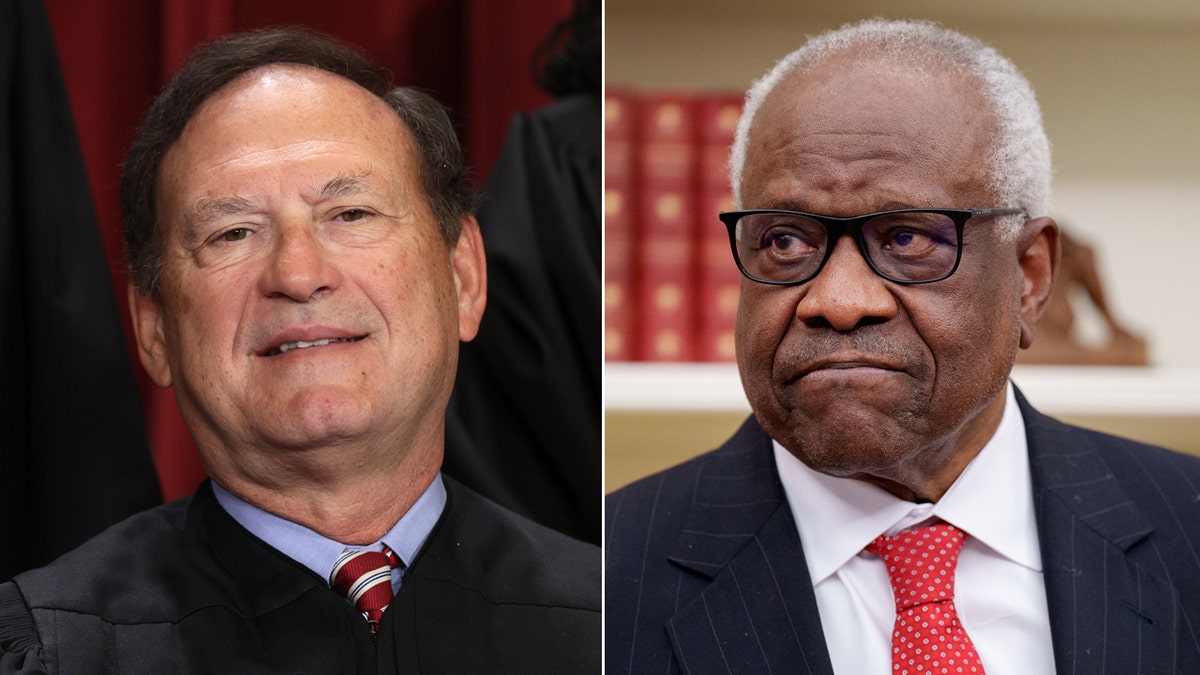
The Senate’s control implies that no conservative justice is likely to retire until at least 2028. The retirement of Justices Clarence Thomas, aged 78, and Samuel Alito, aged 76, is particularly concerning. Both are nearing the average retirement age of 79.8 for justices appointed since 1980. Should either retire in the next two years, the Democratic majority could delay confirming a successor.
Political Implications
Experts suggest the Democrats might win the 2028 presidential election, following historical patterns where the incumbent party loses at the end of a president’s second term. If Democrats win both the presidency and Congress, they could broaden the Court beyond its current nine justices.
Efforts to expand the Court have grown, with Democrats such as Rep. Jerry Nadler and Sen. Adam Schiff proposing bills to increase the number of justices. Although President Trump would likely veto such measures, they serve to publicly challenge House and Senate members, preparing for a future Democratic presidency potentially in 2028.
Future of the Court
If Democrats control both Congress and the presidency, they could easily pass court-packing legislation. Such changes would undermine the judiciary’s independence. Both parties could add seats whenever they hold both branches, weakening the federal judiciary’s role as a check against majority tyranny.
These electoral shifts suggest a future of significant changes for American institutions. While reforms may aim to promote justice and equality, their impact on government balance and power dynamics warrants careful consideration.
John Yoo, a respected legal scholar, provides these insights, emphasizing the profound implications of the midterm results on the American political landscape.