
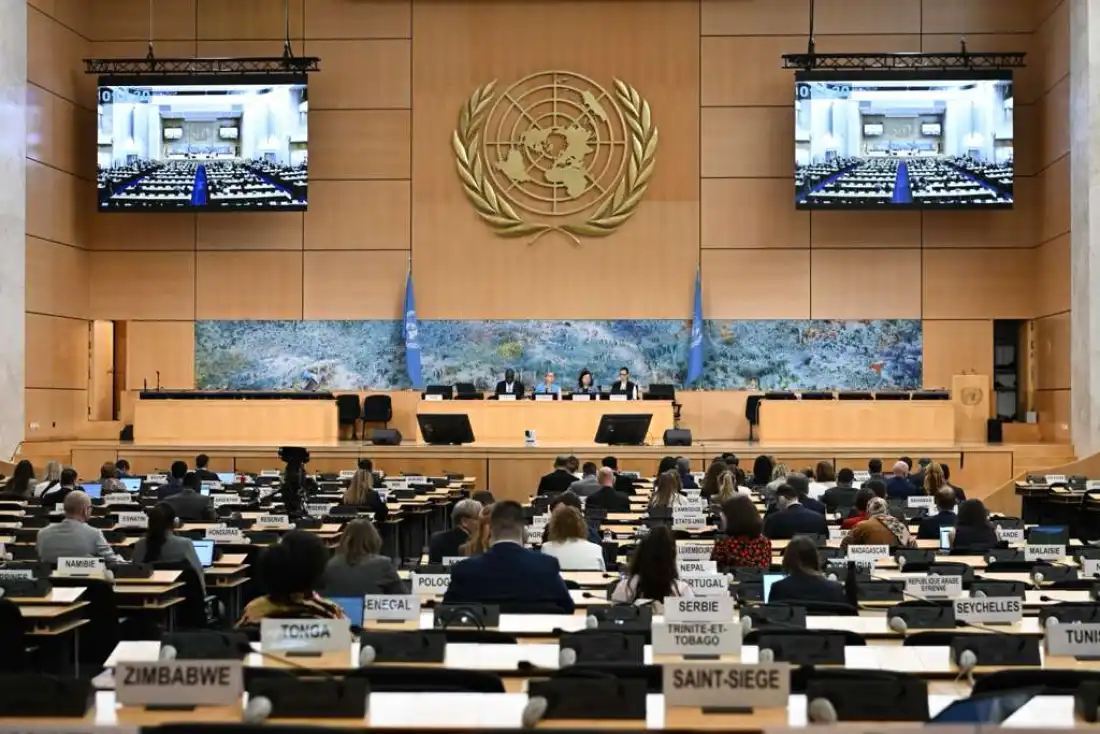
The U.N. Human Rights Council convened at the Palais des Nations in Geneva on September 30, 2026. Notably absent was the United States, marking its second consecutive year of boycotting the human rights review. This move has drawn significant attention as the U.S. becomes the only U.N. member to abstain from this crucial process.
The universal periodic review (UPR) aims to evaluate the human rights records of all member states every four to five years. This process includes participation from both diplomats of the reviewed countries and civil society groups. For this session, the American Civil Liberties Union (ACLU) was present, led by Jamil Dakwar, its human rights director. Addressing journalists, Dakwar criticized the current U.S. administration for ongoing human rights violations, such as the treatment of immigrants, student protesters, and the LGBTQ community. He urged the U.N. to hold the U.S. accountable, cautioning that the Trump administration sought to undermine human rights.
Responding to these accusations, the U.S. State Department highlighted Washington’s previous withdrawal from the U.N. Human Rights Council. The department accused the council of harboring anti-American sentiments. Despite this withdrawal, participation in the review process remains mandatory for all 193 U.N. member states.
Washington’s stance is perceived by human rights groups as part of a broader trend of resistance to multilateral organizations. This perception is further fueled by U.S. actions like imposing sanctions on the International Criminal Court and exiting the World Health Organization. The U.N. faces a dilemma, as it lacks strong measures to enforce cooperation in the review process. Israel also once skipped a review in 2013 due to perceived biases, but rejoined after the U.N. made adjustments.
Currently, the U.S.’s refusal to participate in two consecutive reviews is unprecedented. Human rights groups advocate for proceeding with the review regardless of U.S. presence, suggesting that evidence of alleged violations in the U.S. be considered. Member states had prepared questions for the U.S., touching on issues like the death penalty and abortion restrictions. U.N. officials worry about whether conducting the review without U.S. representation could set a problematic example. Even North Korea, known for its authoritarian regime, participates in these reviews.
The potential for other nations to follow the U.S.’s lead and boycott reviews is a pressing concern—such actions could undermine the process. For now, the U.N. has chosen to defer any decisive action until early next year. Meanwhile, U.S. citizens deprived of this review experience a gap in accountability and protection, creating what one activist described as “a crisis of accountability.”