
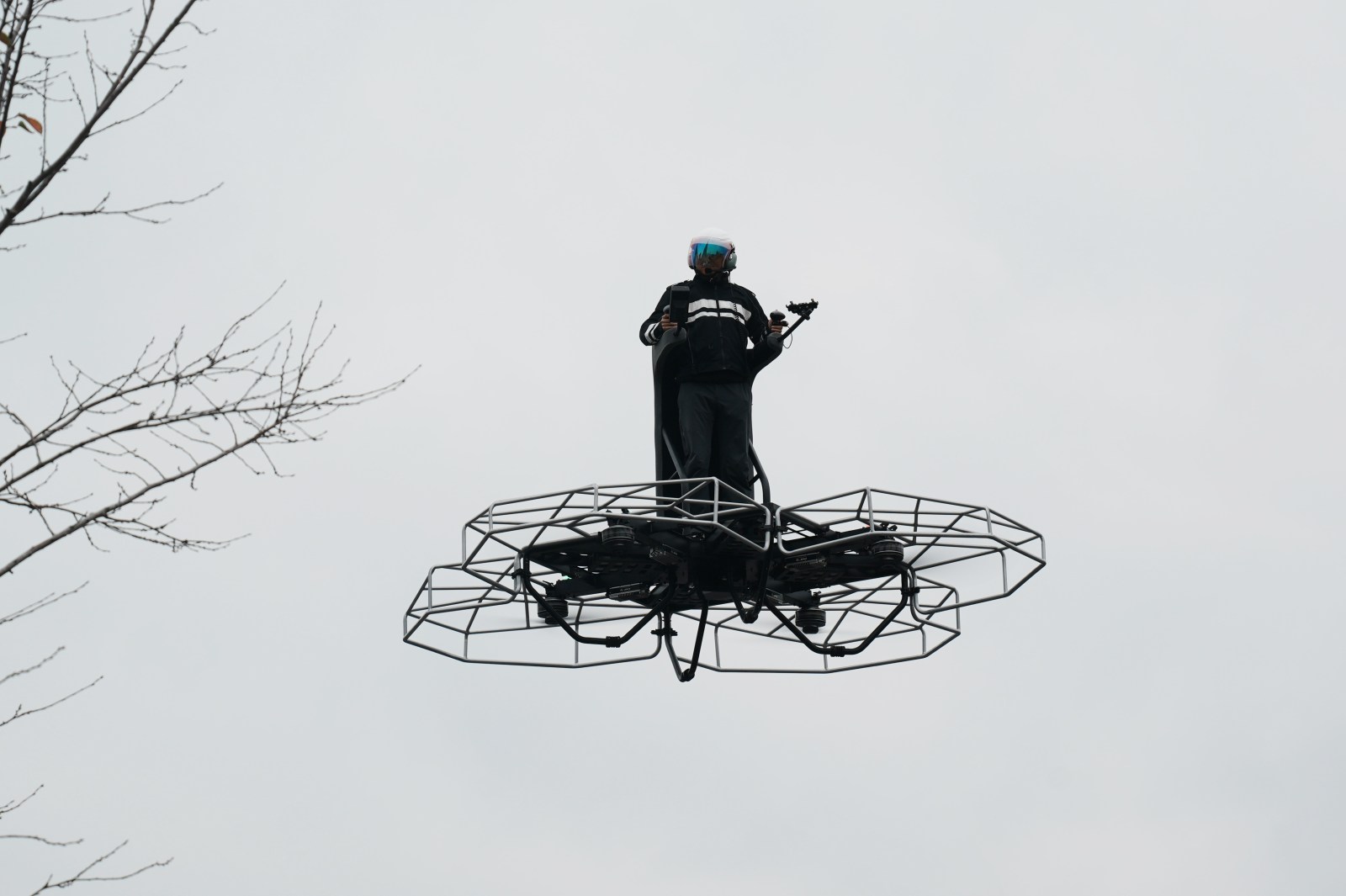
The Trump administration is enhancing its efforts to coordinate among federal agencies in detecting and countering potentially dangerous drones. Recent conflicts have shown that these relatively inexpensive unmanned aircraft can pose significant threats to military bases, critical infrastructure, and civilian airspace.
The Department of Transportation announced on Monday the establishment of an interagency process. This initiative focuses on evaluating and deploying technology to detect, track, disable, or take control of unauthorized drones while minimizing risks to civilian aviation. Transportation Secretary Sean Duffy emphasized the administration’s proactive, comprehensive approach to safeguarding American airspace from new threats.
According to Duffy, uniting federal partners strengthens the ability to address rogue drone threats, thereby ensuring public safety in the skies. The statement revealed that over 1 million drones were legally registered with the Federal Aviation Administration by December 2024. Thousands of commercial, recreational, and law-enforcement drones are in operation daily across the nation.
Despite widespread legal activity, the rise in drone use presents challenges for authorities distinguishing routine flights from those conducted carelessly, illegally, or with malicious intent. Notably, the conflict with Iran underscored the military threat of drones. An Associated Press analysis identified over 115 drone or missile strikes, attributed to Iran or its allies, damaging or destroying structures at 26 military bases and sites containing U.S. equipment from the beginning of the year through August.
The Threat Landscape
The domestic initiative does not pinpoint a specific new or immediate drone threat. Instead, it aims to enhance federal agencies’ ability to identify suspicious activities. The initiative also determines when and how counter-drone technology can be safely deployed.
Brandon Archuleta, a former U.S. Army officer, noted that a coordinated federal response is wise to address this security challenge. He cited Ukraine’s 2025 Operation Spiderweb, where over 100 drones were covertly moved into Russia for precise targeting at airbases, as a demonstration of potential threats.
Lorenz Meier, CEO of Auterion, remarked that drone use in combat has raised concerns, with small drones being armed and posing greater threats than before. Potential threats include unauthorized airspace use for surveillance, smuggling, or attacks. Drones near airports can interfere with aircraft, and those near military bases or energy facilities pose security risks.
Recent conflicts further illustrate drone threats. During this year’s conflict involving the U.S., Israel, and Iran, Iran deployed attack drones alongside missiles across the Middle East. These attacks targeted aircraft hangars and detection systems, causing extensive damage and highlighting regional defense vulnerabilities. Drones have emerged as central tools in modern air campaigns.
Within the U.S., authorities prepare for a range of threats, from unauthorized airport flights to potentially weaponized drones. Attorney General Todd Blanche mentioned the FBI’s arrest of five individuals accused of planning to use explosive-equipped drones near a public event at the White House. This highlights the challenge of distinguishing between harmless drones and genuine threats.
Mystery Drones in New Jersey
Concerns over government capability in differentiating between drone types gained attention in late 2024. Residents in New Jersey and nearby states reported mysterious flying objects. Sightings near military sites prompted demands for federal action.
The FBI investigated with state and local agencies, while New Jersey officials stated there was no safety threat. Federal agencies later said reports included lawful drones, planes, and even stars mistaken for drones, with thorough assessment proving no security risk over the region.
Implementing New Measures
A new agreement standardizes researching, testing, and deploying counter-drone technologies across federal entities. Agencies will collaborate on technical needs and data sharing for detecting and controlling unauthorized drones. The FAA’s safety assessments will recommend measures to avoid new airspace hazards.
This builds on past efforts, such as temporary flight restrictions on the southern border and FAA assessments of high-energy counter-drone lasers. The goal is enabling authorities to respond effectively to threats without adding new dangers to civilian flights.
Effect on Recreational Use
The initiative does not impose a blanket ban on recreational drones or introduce new restrictions on lawful hobbyists. Recreational pilots must comply with existing FAA regulations regarding registration, altitude, and airspace operations. The focus remains on addressing unsafe or unauthorized drones near sensitive sites and public events.
The administration’s focus is clear: countering potential threats while respecting lawful recreational activity.