
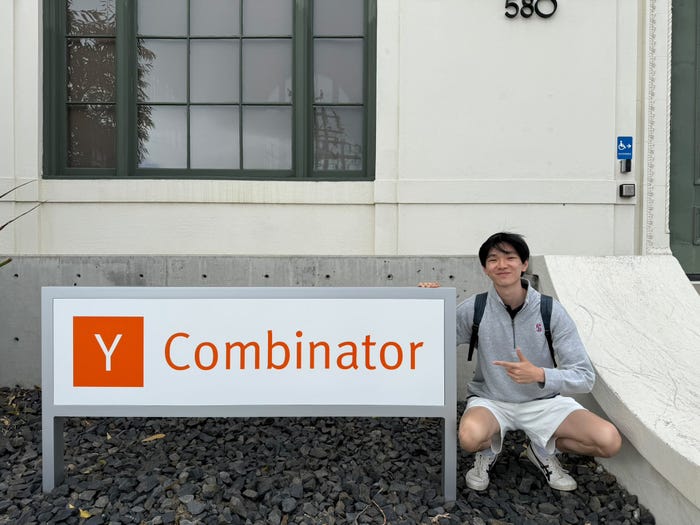
Anderson Chen, at 22, is making waves with his AI startup Operon Solutions. Based in San Francisco and supported by Y Combinator, Chen’s venture targets the industrial sector. With competitors often much older, Chen’s story is one of ambition and innovation.
Chen is currently on his second gap year from Nanyang Technological University in Singapore, where he was studying chemical engineering and business. Originally planning to return to school, the growth of Operon changed his course. The startup, which automates tasks in industries like manufacturing, oil and gas, and construction, saw exponential growth, prompting Chen to extend his gap year.
“During that year, I realized that even if you graduate, it doesn’t mean you’ll figure things out,” Chen shared.
Initial fears about leaving school were compounded by traditional expectations. In many Asian cultures, earning a bachelor’s degree is a standard goal. Expressing concern, his parents were initially skeptical, thinking his academic performance was lacking. However, the fellowship covering his gap-year expenses reassured them. Now, they support his decision.
Adapting to AI’s Transformative Power
Chen believes that AI’s rapid progress is altering the perception of higher education. He cites OpenAI’s resolution of the Navier-Stokes problem in fluid dynamics—a challenge once deemed insurmountable by his professor—as evidence of AI’s potential.
Through internships in manufacturing, Chen identified how AI could transform heavy industries. He observed problems when engineers used tools like ChatGPT to interpret complex engineering documents, which current AI models struggled to understand due to their lack of training on such data.
Operon was born from this need. It structures complex industrial data, creating a context layer that facilitates AI-driven workflows. The startup’s vision captured the attention of investors, securing a $700,000 pre-seed funding round, completed swiftly over three days.
Investing in the Future
Before acquiring external funding, Chen heavily invested in his startup, using $80,000 of his savings. This money was earned through previous entrepreneurial pursuits, including selling sneakers and running an Amazon dropshipping business at age 14. Later, he launched a tutoring agency linking Malaysian students with international schools in Singapore, handling its marketing and recruitment.
Young Leaders in Traditional Industries
Operon’s team consists of five members, all under 30, with the youngest being 16. The team’s youth provides an edge in the traditionally aged-heavy industry space. Although skepticism arises due to their age, Chen views this as beneficial. Public curiosity is piqued, drawing attention and curiosity to Operon’s innovative approach.
Anderson Chen’s journey exemplifies how young entrepreneurs can successfully engage in and transform traditional sectors through innovation and resilience.