
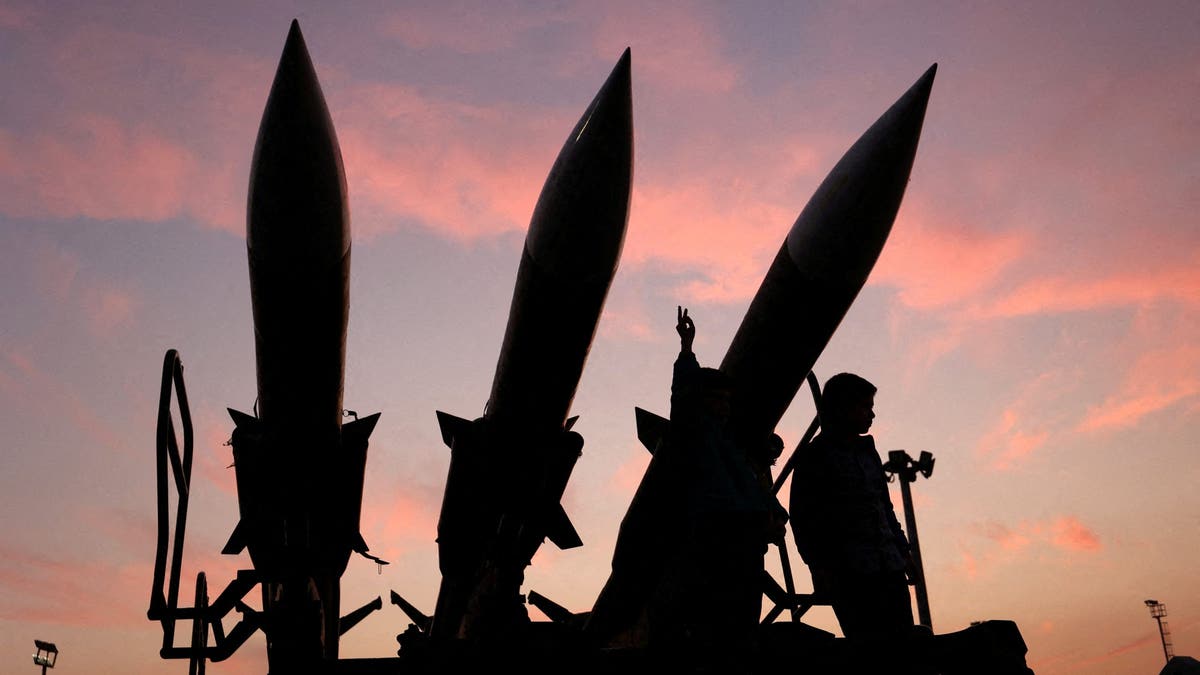
Recent reports indicate that Iran has resumed production of ballistic missiles, coinciding with attacks by Iranian proxies on a major Saudi Arabian oil pipeline. This escalation surfaces as new efforts by the U.S. to counteract Tehran’s weapon shipments come into play.
U.S. Initiatives and Iranian Response
The U.S. military announced the formation of “Task Force Iron Gate”, aimed at curbing the transport of Iran’s advanced weapon systems and illegal trade across its borders. This involves collaboration between U.S. Central Command and various interagency partners, focusing on restricting Iran’s capacity to finance terrorism and restore weapon factories.
The move comes in the wake of Iran announcing its withdrawal from a self-imposed restriction on ballistic missile range. Iranian officials, including Islamic Revolutionary Guard Corps (IRGC) spokesperson Brig. Gen. Hossein Mohebbi, have confirmed the removal of the 2,000-kilometer range limit.
Iran’s response to the U.S. initiative has been dismissive, with IRGC labeling it as “wordplay.” Meanwhile, Iran claims preparedness against additional international pressures and warns of potential developments that could “astonish the world” if tensions with the U.S. and Israel escalate.
Iran’s Strategic Developments
Iran is reportedly advancing plans for new missiles and military facilities, including “missile cities” meant to protect against potential attacks. This self-sufficiency in weapons production is seen as a critical achievement by Iranian officials, despite constraints resultant from ongoing international tensions.
Military spokespersons also highlight Iran’s aims to produce military hardware without external assistance. The focus is on maintaining continuity of production through domestic capabilities during periods of conflict.
Regional Implications and U.S. Diplomatic Efforts
The U.S. is pressing Iraq, a crucial link in Iran’s regional trade network, to tighten border controls. Despite American pressures, only one crossing has been closed, signifying challenges in balancing Iraq’s political ties with the U.S. and Iran.
The push for stricter border regulations by the U.S. illustrates ongoing efforts to destabilize Iran’s economic channels used to withstand international sanctions. However, Iran continues vying for influence in Iraq through diplomatic channels, reflecting the intricate geopolitical landscape.
The ongoing developments underscore the complexity of Middle Eastern geopolitics, with various actors engaging in strategic maneuvers to protect their national interests amid increasing international pressures.