
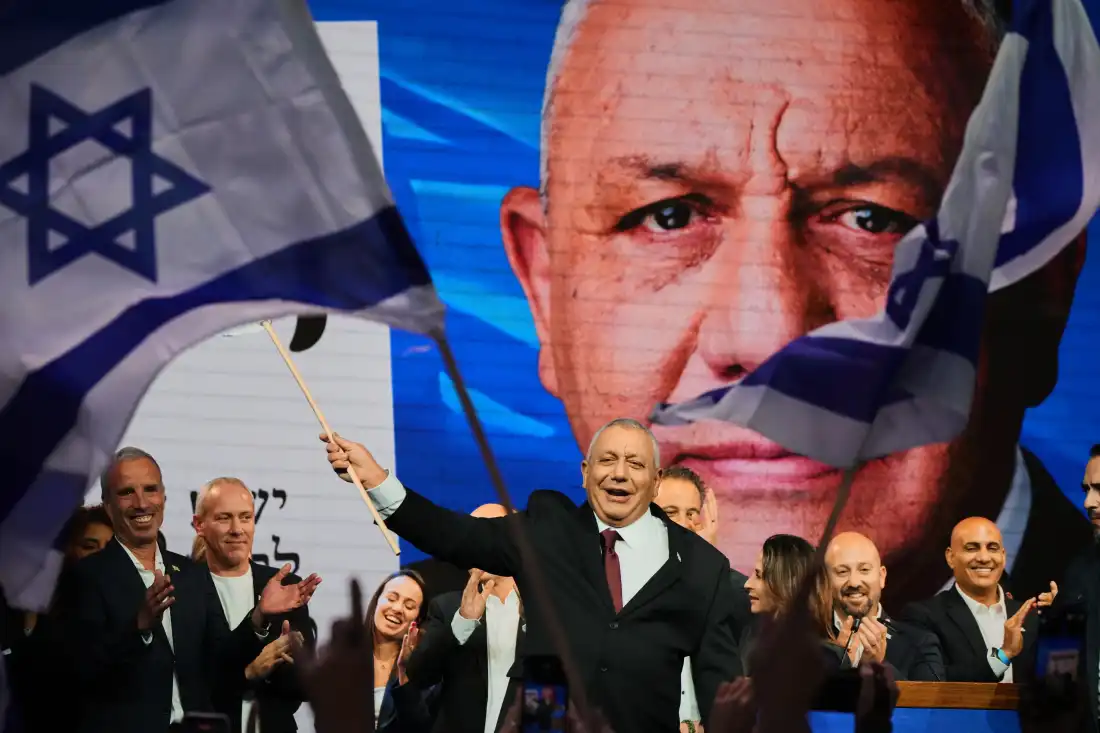
Israeli President Isaac Herzog has given opposition candidate Gadi Eisenkot the task of forming a new government. The decision came after elections on October 27, where neither Eisenkot nor Prime Minister Benjamin Netanyahu secured a clear majority. Eisenkot, a former military chief, leads a coalition of parties aiming to replace Netanyahu, Israel’s longest-serving leader.
Discussions between Herzog and representatives from most of Israel’s main parties resulted in broad support for Eisenkot to assemble the government. This announcement was expected to follow Netanyahu’s call for a ‘national unity government’ and his warnings against creating a government with ‘terrorist supporters,’ a likely reference to Arab-led parties.
Netanyahu and his allies often depict Arab-led parties as national security threats. In contrast, Eisenkot has expressed openness to working with them under specific conditions, including their agreement that Hamas is a terrorist group in need of eradication.
Eisenkot’s party, Yashar, responded to Netanyahu’s statement with a message on the social media platform X. They urged Likud party members to distance themselves from ‘radical parties,’ referencing the extreme elements within Netanyahu’s religious-nationalist coalition. Yashar’s stance is to only include those who recognize Hamas as a terrorist organization in any potential government coalition.
This political maneuvering unfolds as Eisenkot seeks to gather support for his vision of governance, relying on party and parliament members who share core principles against terrorism.