
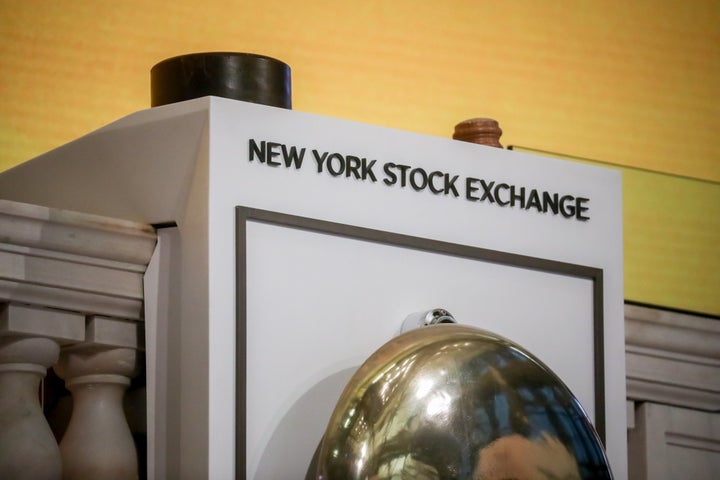
On Thursday, Wall Street experienced a substantial sell-off, primarily driven by stocks associated with AI data centers. This downturn wiped out gains from the previous day, which was the stock market’s best performance in three months.
The Decline in Major Indices
The S&P 500 dropped 4.4%, marking its worst day since a market shake-up in April 2025. The Dow Jones Industrial Average fell by 1,833 points, or 3.4%, while the tech-heavy Nasdaq composite decreased by 5.5%. Notably, the Nasdaq index fell 11.9% from its all-time high reached last month, entering what traders describe as a “correction” phase.
Globally, stock markets felt the effects, with South Korea’s Kospi index dropping 5.3%. This reflects continued concerns over companies that benefited from AI technology advancements. Rising borrowing costs and speculation of an AI stock price bubble contributed to the market swings.
Political Impact and Economic Concerns
The recent U.S. midterm elections added another layer of uncertainty. Democratic victories raised the possibility of halted data center construction, aligning with public concerns about increasing power bills due to these centers. Slower data center growth could reduce demand for AI chips, electricity, and other related products, impacting the broader U.S. economy.
Specifically, Nvidia, a prominent player in the AI chip industry, saw its stock plummet 9.3%, heavily weighing on the S&P 500. As a consequence, its year-to-date performance is now down 2.6% compared to substantial gains in previous years.
Significant Movements in AI Chip Stocks
Advanced Micro Devices experienced a 17.3% fall, while CoreWeave, a cloud service provider for AI chips, declined by 9.8%. GE Vernova, which supplies power for data centers, decreased by 7.5%. The influence of AI chip stocks on broader market performance is notable, given their considerable size on Wall Street.
Despite widespread losses during the morning trading session being rapidly reversed, a few stocks managed to perform well. AppLovin climbed 31% following the announcement of better-than-expected revenue and profits, coupled with a stock buyback plan. Tapestry, the company behind the Coach and Kate Spade brands, also saw a 7.1% rise due to strong profits and raised forecasts.
Other Market Responses
The S&P 500 closed at 7,353.73, down 334.89 points. The Dow ended at 51,523.06, down 1,833.06 points, and the Nasdaq composite finished at 24,315.00, down 1,421.52 points.
In the oil market, Brent crude prices increased 3.9% to $98.29, partially recovering from a previous 9% drop. This uncertainty is tied to the ongoing conflict with Iran, affecting the energy sector globally.
Bond markets also reacted, with Treasury yields continuing to drop. The 10-year Treasury yield fell to 4.84% from 4.90%. Investors’ move towards safer U.S. Treasury bonds mirrored concerns over stock volatility. This shift occurred despite favorable economic indicators, such as fewer unemployment claims and improved productivity predictions.
Global Market Trends
European and Asian stock markets showed mixed results. South Korea and Japan, affected by tech and AI stock drops, demonstrated declines, with Japan’s Nikkei 225 falling 1.8%. The UK’s FTSE 100 saw a slight 0.4% decrease following the Bank of England’s interest rate hike, intended to combat inflation influenced by the Iran conflict.