
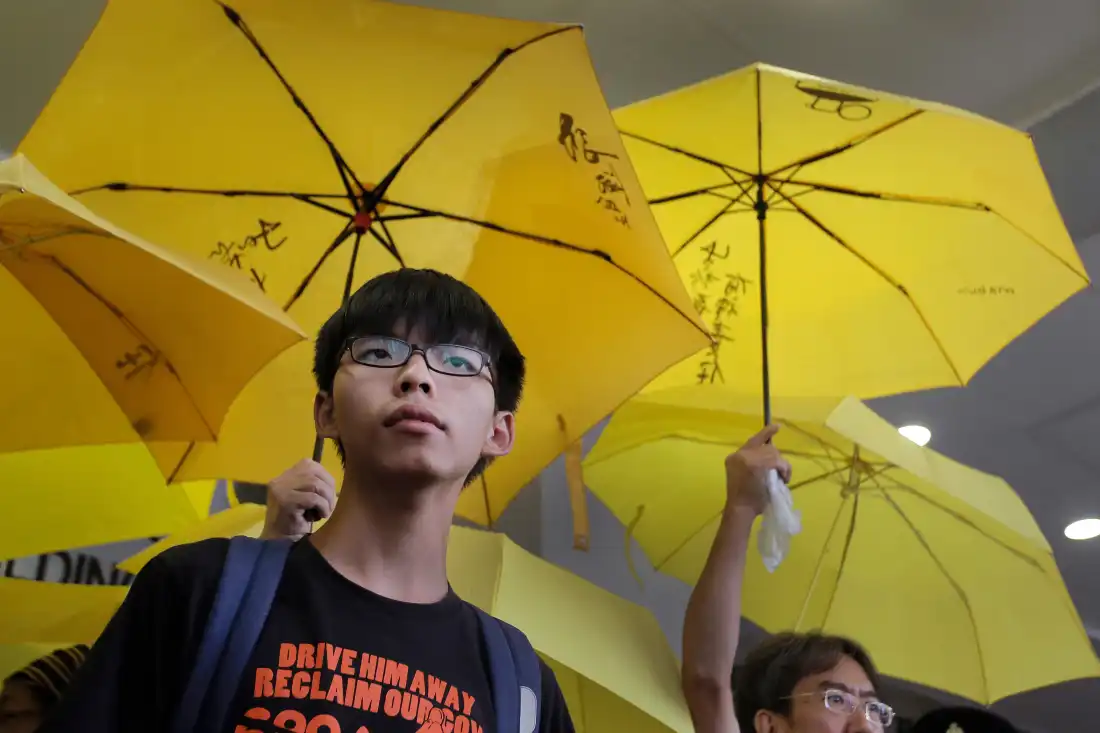
Hong Kong — Notable activist Joshua Wong received a 10-year prison sentence due to his second conviction under a national security law enforced by Beijing. Critics view this as a sign of the intensified suppression of the city’s previously flourishing pro-democracy movement.
In 2025, Wong faced charges for conspiring with foreign forces to threaten national security under this controversial law. By pleading guilty, he aimed to reduce his sentence. At 30, Wong is already serving a separate four-year, eight-month term tied to an unofficial primary, also related to national security.
Judge William Tam described Wong’s actions as severe and did not accept arguments about Wong’s limited involvement. Although the initial sentence was considered to be 13 years, it was reduced due to Wong’s admission of guilt. Despite the circumstances, Wong appeared composed and expressed gratitude to his supporters in court. Among those present, an emotional Tiffany Chin, a past member of Scholarism, showed deep distress at the judgment.
Resident ET Wong commented on Joshua’s foresight and dedication to Hong Kong’s future, human rights, and the student movement, mourning any day in imprisonment, she said.
Discouraging Dissent in Hong Kong
Before the crackdown in 2019, Hong Kong was known for its dynamic public protests and media. Yet following major anti-government demonstrations that year, authorities have curtailed electoral options and taken many activists into custody. Consequently, many critical news outlets and civil groups have ceased to operate.
Analysts argue Wong’s sentencing is reflective of a broader aim to detain prominent dissidents, thereby discouraging civic activism. Eric Lai from Georgetown Center for Asian Law pointed out how national security charges seem strategically applied to ensure long-term imprisonment if deemed necessary by the authorities.
While Beijing regards Wong as a proponent of Hong Kong independence, which it strictly opposes, local officials insist the security law is vital for stability post-2019 protests, asserting the legitimate basis of their law enforcement measures.
Prosecution’s Focus on Wong’s Political Activities
The prosecution argued that since around 2016, Wong, alongside activist Nathan Law, engaged in international advocacy for democratic self-determination. Wong specifically had met with key U.S. politicians, including Nancy Pelosi and Marco Rubio, urging for sanctions against both Hong Kong and China. After the law’s establishment, Wong continued to support his cause from Hong Kong via international media and online platforms.
During his prison term, Wong’s lawyer, Derek Chan, appealed for a sentence offering a glimpse of hope, with Wong expressing a wish to care for his parents upon release. Meanwhile, friends noted Wong’s continuous self-development through reading, exercise, and learning guitar during his incarceration, illustrating his evolving perspectives.
Wong continues to be an influential figure, emblematic of a new generation that witnessed Hong Kong’s transition from British colonization. His significance remains apparent, as concern persists within pro-Beijing circles. This was highlighted when a pro-Beijing paper criticized a 2017 Netflix documentary on Wong for allegedly glorifying his deeds, which nonetheless gained popularity in Hong Kong.