
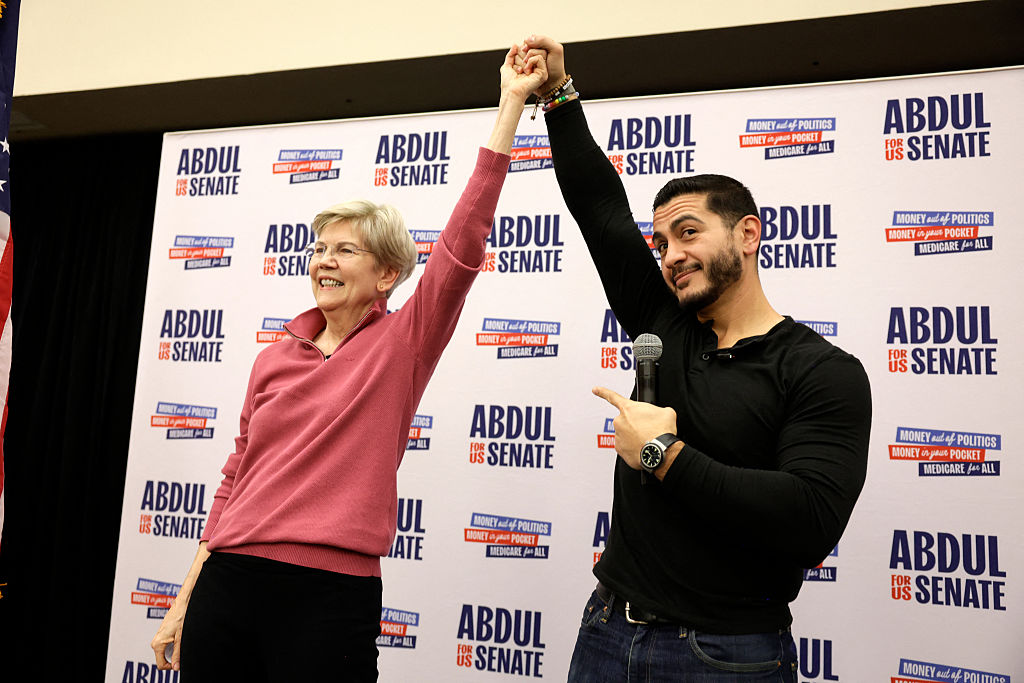
Dr. Abdul El-Sayed, a progressive Democrat with a notable background in public health, won the Michigan Senate race by defeating former Representative Mike Rogers. According to The Associated Press, El-Sayed becomes the first Muslim elected to the United States Senate.
This victory keeps the Senate seat within the Democratic fold, denying Republicans a key opportunity to counter the Democratic wave in this year’s midterm elections. Senator Gary Peters’ retirement set up one of the most competitive Senate contests in Michigan, historically a key battleground state. President Trump had previously won Michigan by two percentage points in 2024.
El-Sayed, 42, is the son of Egyptian immigrants and was raised in suburban Detroit. His election marks a significant moment in American politics and reflects a shift in the Democratic Party. Known for his ambitious progressive agenda, El-Sayed joins a growing number of left-wing Democrats prevailing in elections this year. Distinct from other progressive victories in reliably Democratic districts, his win occurred in a closely contested statewide race drawing interest from a diverse electorate.
Challenging Conventional Views
El-Sayed’s triumph offers a counterpoint to claims that progressive candidates struggle in battleground states. Despite a contentious campaign that highlighted divisions over Israel and included significant spending from pro-Israel groups, El-Sayed succeeded.
The campaign experienced intense personal attacks, marked by Islamophobic rhetoric from Trump and other Republicans, accusing El-Sayed of being a security threat. These accusations were fueled by his association with Hasan Piker, an anti-Israel commentator. Despite criticism from Jewish voters regarding his stance on Israel, El-Sayed has consistently rejected antisemitism claims, stating his critique of the Israeli government is not against Jewish people.
El-Sayed’s Political Journey
El-Sayed began his political journey early, engaging with notable political figures such as former President Bill Clinton. His educational background includes degrees from the University of Michigan, the University of Oxford, and Columbia University. Instead of practicing medicine, he worked in public health leadership roles in Detroit and Wayne County. His first major political effort was an unsuccessful gubernatorial bid in 2018.
In his Senate campaign, El-Sayed opposed Trump’s policies, highlighting the President’s declining approval in Michigan since his earlier win. Polls, including one from The New York Times and Siena University, showed only 34% of likely voters supporting Trump’s performance.
Campaign Issues and Republican Strategies
Rogers, trying to distance himself from unpopular Trump policies in Michigan like Canadian tariffs, could not escape the national political environment affecting Republicans. His defeat signals a backlash against Trump extending into Michigan.
El-Sayed advocated for Medicare for All, higher taxes on the wealthy, and reducing the influence of corporate money in politics. His campaign connected economic challenges with the political establishment’s financial interests. His progressive views, especially toward Israel, brought criticism from entities like AIPAC, which heavily opposed him.
Community Dynamics and Election Impact
The election highlighted the significant roles of Muslim and Jewish communities in Michigan politics. Each has had differing perceptions of recent events, affecting Democratic dynamics. Following a 2024 movement against Biden’s support of Israel, El-Sayed gave many voters an alternative representing their stance.
His rhetoric on Gaza and related attacks sparked controversy, particularly after a violent incident at a Michigan synagogue. Although El-Sayed condemned the attack, his remarks created tension within Jewish voters, further complicating Democratic unity.
Challenges Within the Democratic Party
Efforts to unify Democrats post-primary faced obstacles, evidenced by tensions with primary opponent Haley Stevens, who eventually endorsed Rogers. This intra-party division reflected broader challenges in accommodating the growing progressive faction within the Democratic Party.
El-Sayed’s victory signifies a potential turning point for the Democratic Party, as debates over foreign policy, economic inequality, and other issues come to the forefront. This outcome may become a key reference in discussions about the party’s future direction.