
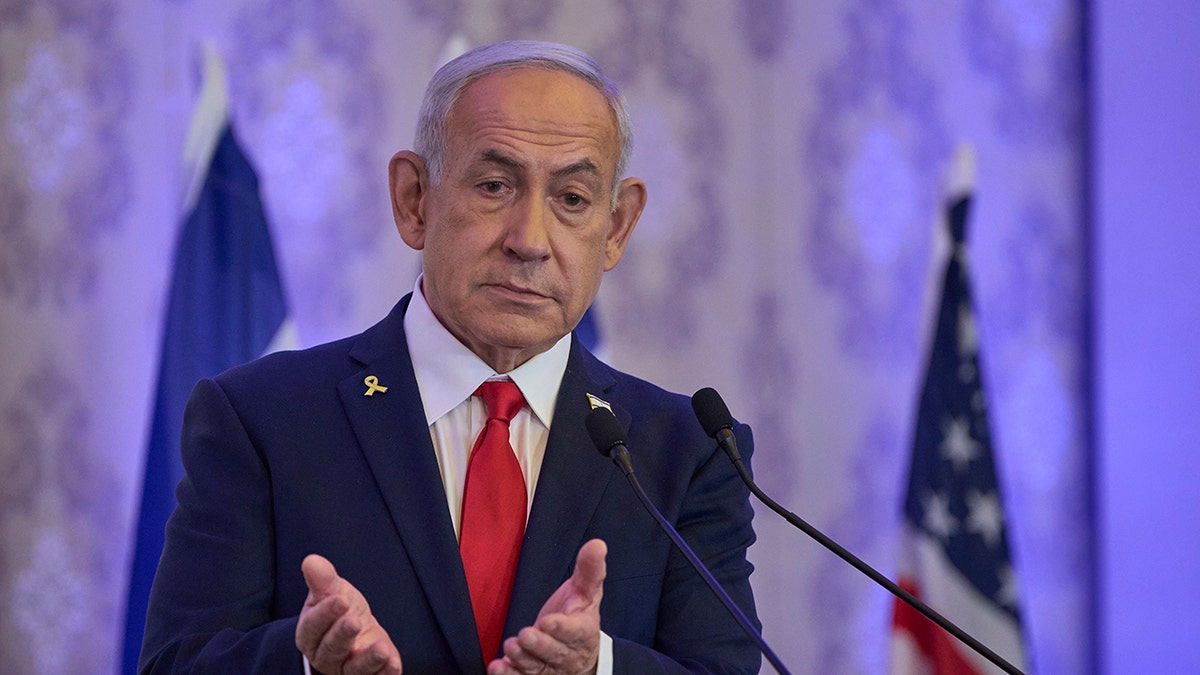
The United States plans to halt aid to Israel at the end of the year, according to President Donald Trump. This move coincides with ongoing political maneuvering in Israel, where Prime Minister Benjamin Netanyahu’s leadership faces challenges.
Israeli President Isaac Herzog is consulting with party leaders in the Knesset to decide who will attempt to form the next government. Netanyahu’s bloc secured 53 seats, while the opposition, led by Gadi Eisenkot, gained 48. Forming a government requires 61 seats.
Netanyahu recently declared on social media the public’s preference against forming a government with parties like Ra’am and the Joint List, which hold 19 seats combined. These parties are considered potential kingmakers.
Skepticism surrounds the potential success of Eisenkot in forming a coalition due to diverse party interests. Some speculate about a minority government, an arrangement existing during Netanyahu’s term when an ultra-Orthodox party supported from outside the coalition.
Defense commentator Amir Oren highlighted Herzog’s discretion in appointing a candidate but noted a preference for those supported by a Knesset majority. Eisenkot might face difficulties due to opposition from key figures like Naftali Bennett and Avigdor Liberman, who oppose reliance on pro-Palestinian parties.
The possibility of a national unity government remains, despite recent endorsements suggesting a move away from such an arrangement. The 26th Knesset is due to be sworn in soon, potentially complicating Netanyahu’s position.
Some parties already confirmed their support for Netanyahu. Yet, the changing dynamics might prompt unexpected alliances or arrangements. Former Knesset member Dov Lipman predicts Eisenkot’s initial attempt to form a government, likely followed by a failed effort from Netanyahu.
If both attempts fail, any Knesset member could try to form a government during a subsequent 21-day period. Lipman speculated on Eisenkot potentially serving under Netanyahu to prevent further elections.
Prof. Gideon Rahat noted potential precedents like Israel’s 1984-1988 national unity agreement. For such a coalition to work, major challenges, including judicial reforms and security investigations, must be addressed.
The political landscape in Israel remains tense, with ongoing discussions on forming a stable government. Further developments will unfold as deadlines approach for government formation.