
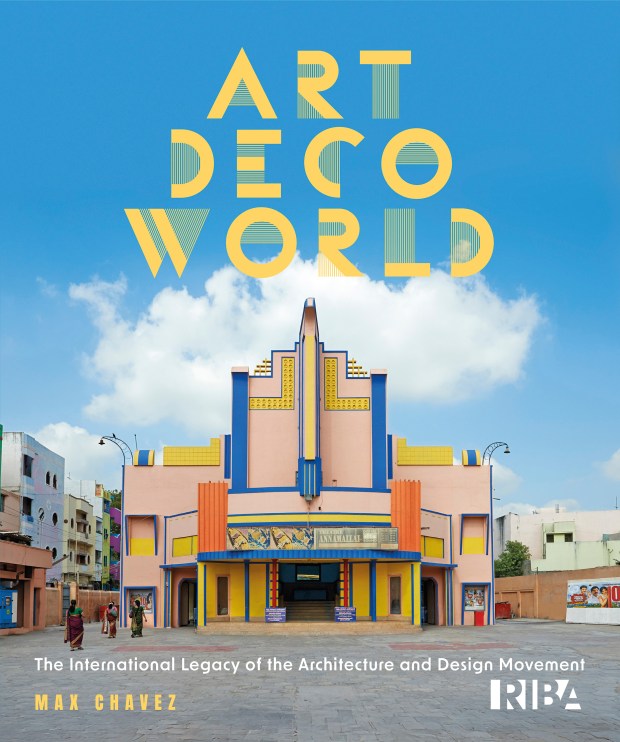
When discussing home decor and furnishings today, mid-century modern styles often take center stage. A century ago, though, the Art Deco style enjoyed prominence across architecture, interior design, artwork, and even fonts. Renowned Chicago architectural historian Max Chavez explores this vibrant style in his new 218-page coffee table book, “Art Deco World.”
The Origins of Art Deco
The term Art Deco originates from the French phrase “arts décoratifs.” The style first gained attention during a 1925 exhibition of modern decorative and industrial arts. During this era, people were moving away from the heavier Victorian aesthetics. According to Chavez, the initial decades of the 20th century represented a time of exploration. Individuals sought to define modernity, showcasing a fascination with technology, industry, and machinery.
The architecture from Art Deco’s early period was marked by geometric designs with vertical emphasis. Iconic skyscrapers like Chicago’s Carbide & Carbon Building and the Empire State Building stand as testament to this style. In this period, skyscrapers embodied engineering marvels. Art Deco emphasized their grandeur.
Chicago’s Art Deco Landscape
Chicago hosts numerous Art Deco landmarks, such as the Civic Opera House, the Chicago Board of Trade building, and the One North LaSalle building. Chavez describes Art Deco as a style of excess, influenced by the prosperous 1920s. Hollywood contributed to promoting this gleaming and bright style during a time characterized by optimism post-World War I.
Despite downtown’s prominent examples, Chavez notes the existence of strong Art Deco designs in Chicago’s neighborhoods. Churches and storefronts often showcase this style. One notable example is the First Church of Deliverance in the Bronzeville neighborhood. Originally built as a hat factory in 1923, it transformed into a church a decade later. In 1939, it underwent renovations, embracing a sleek terra cotta facade.
The church features glass block windows, a key Art Deco element derived from industrial settings. These windows offer diffused light, introducing this material into Art Deco designs.
Art Deco’s Cultural Impact
Chicago’s “big Art Deco moment” took place during the 1933 World’s Fair, “A Century of Progress.” This fair embodied Art Deco’s ethos, showcasing technology and modern life. Though the structures were temporary and eventually dismantled, including the Electric Building’s water gate, their cultural impact persists.
The Electric Building’s water gate, designed by Lee Lawrie, represents a blend of ancient and modern styles. Influences include Egyptian and Assyrian-Babylonian elements, illustrating Art Deco’s diverse inspirations.
Revival in the Late 20th Century
The revitalization of Art Deco in the 1970s coincided with gaining its name. Previously labeled as “modernistic,” Art Deco’s designation stemmed from the efforts of art historian Bevis Hillier. Hillier’s contributions included several books and a major exhibition in 1971, revealing Art Deco’s significance.
During the 1970s, Art Deco transitioned from a kitsch motif to a style revered for cultural value. This revival aligned with pop culture influences, exemplified by the 1974 film adaptation of “The Great Gatsby.” The 1980s witnessed a resurgence of opulence, with the completion of structures like Chicago’s NBC Tower in 1989.
Art Deco aesthetics re-emerged in TV series such as “Miami Vice.” From title fonts to South Beach architecture, all aspects reflected a reinterpretation of Art Deco. This period emphasized indulgent designs, resonating with the ’80s excess.
The Present and Future of Art Deco
Art Deco’s influence waned by the late 1990s, coinciding with the popularity of Scandinavian simplicity promoted by brands like IKEA. Chavez suggests Art Deco interiors may seem over-the-top for many. Simplified versions of Art Deco, featured by retailers, risk compromising the style’s legacy.
Despite modern times lacking exuberance, the joyful aesthetics of Art Deco continue to inspire. Chavez hopes readers recognize Art Deco’s multifaceted nature. Beyond skyscrapers, Art Deco elements appeared in neighborhood storefronts and even gas stations.
Chavez concludes that Art Deco embodies futurism and optimism, characteristics perhaps opposing contemporary sentiments. As discovered in “Art Deco World,” the style presents varied identities, encouraging recognition and appreciation of its subtle instances throughout cities.