
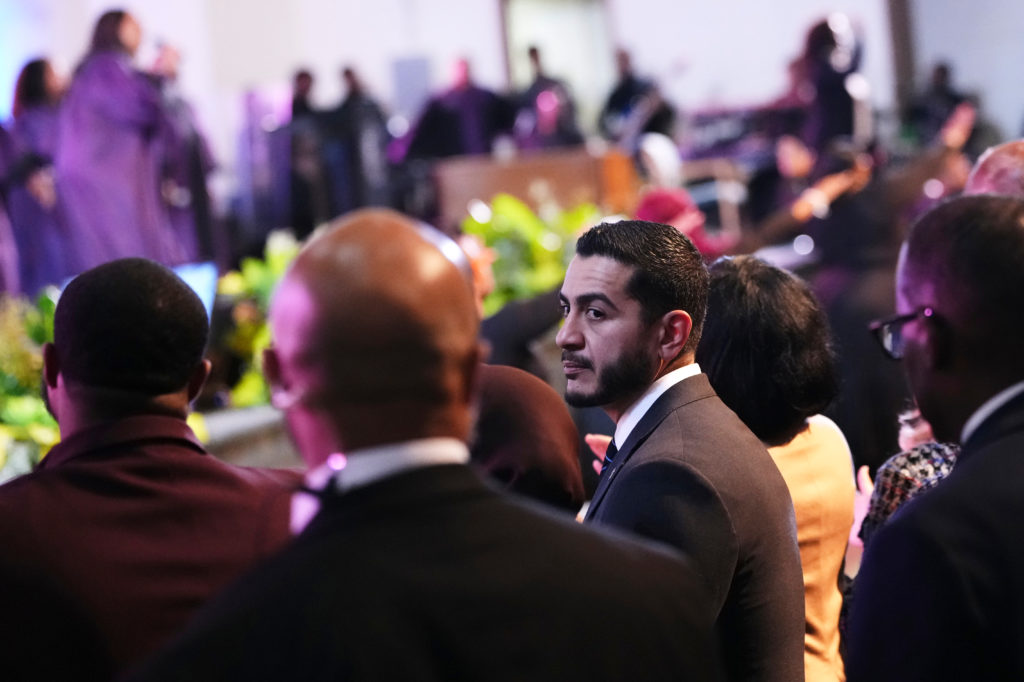
In a surprising development, former U.S. Senate primary candidate Haley Stevens endorsed Republican Mike Rogers. This decision came after Stevens, a Michigan Democrat, attended a Detroit church service with Rogers, causing a stir among party officials. Tensions within the Democratic Party surfaced just days before an election that could impact the balance of power in Congress.
Abdul El-Sayed, the Democratic nominee who previously defeated Stevens in the primary, expressed discontent over her endorsement of a candidate backed by President Donald Trump. Stevens, on the other hand, released a video explaining her decision. She stated, “Our Democratic nominee for Senate said I was no longer welcome in his campaign. And he’s right. That’s why I am endorsing Mike Rogers for the United States Senate today.”
Stevens had previously expressed criticism of El-Sayed’s stance on Israel. Despite her endorsement of Rogers, tensions rose further when her chief of staff resigned and others were expected to follow. This information was shared by an anonymous source familiar with the internal issues.
“United we stand, divided we fall.” – Rep. Debbie Dingell
The drama unfolded across two church services attended by key political figures. El-Sayed attempted to project unity among Democrats, attending a service with fellow party members a few miles away from where Stevens sided with Rogers. This infighting came as Democrats strived to boost turnout among Black and Jewish voters in critical regions. El-Sayed, a former public health official, and Rogers, a former congressman, are vying for a seat left vacant by retiring Democrat Gary Peters.
During the church service, El-Sayed was accompanied by prominent Democrats such as Rep. Jim Clyburn and state Sen. Mallory McMorrow. Stevens was expected to attend a different event with El-Sayed but declined following disputes over Israel and an advertisement by an outside group that escalated tensions.
Stevens’ fiancé, Jason Turkish, also voiced his support for Rogers, arguing that El-Sayed had not sufficiently addressed concerns within the Jewish community. This statement came just days after Stevens publicly reiterated her vote for El-Sayed.
Despite calls for unity, acrimony continued as Stevens and El-Sayed addressed the controversies through public statements. While Stevens urged a focus away from past grievances, El-Sayed responded by emphasizing the need to address voter issues moving forward.
In Wayne County, an area including Detroit and crucial for Democratic success, the divisions between Stevens and El-Sayed remained evident. Efforts by prominent Democrats to mend rifts and consolidate voter support persist, as early voting started on October 24.
As the internal strife unfolds, Democrats remain focused on maintaining Michigan as a Democratic stronghold. With early voting underway, the party recognizes the challenges but insists on a unified closing message to secure victory in key regions.