
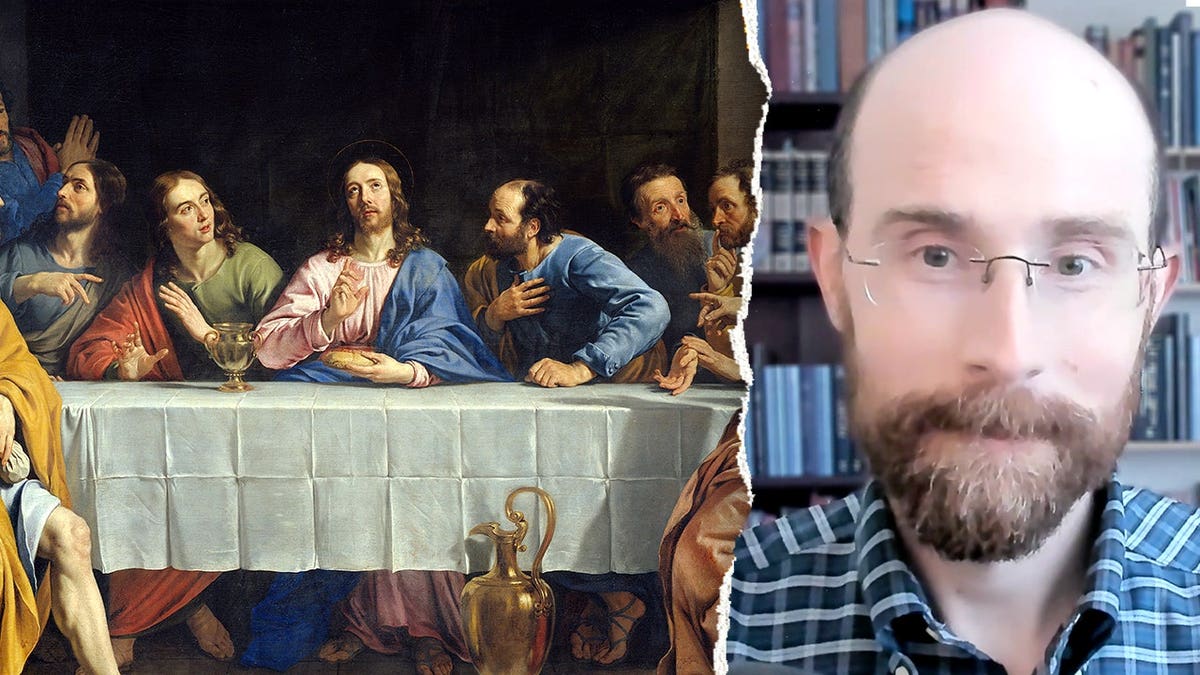
A scholar posits that a nearly 2,000-year-old account of Jesus may be more historically reliable than previously believed, challenging longstanding doubts about one of the earliest non-Christian records of his life. T.C. Schmidt, an associate professor of religious studies at Fairfield University in Connecticut, authored a 2025 book titled Josephus and Jesus: New Evidence for the One Called Christ. It examines a contentious passage about Jesus penned by the ancient Jewish historian Josephus.
Josephus, who lived from around 37 to 100 A.D., wrote about Jesus in his work Antiquities of the Jews, providing one of the few surviving non-Christian accounts of his life. In this passage, Josephus describes Jesus as a wise man with followers, sentenced to crucifixion under Pontius Pilate. It also includes reports that Jesus appeared alive following his death. For centuries, scholars have debated whether Christian scribes altered this passage, as some historians argue that it contains statements unusual for a non-Christian Jewish writer.
Schmidt argues the passage may be authentic, suggesting linguistic analysis and comparisons with Josephus’ other writings support this claim. Schmidt examined ancient versions of Josephus’ account across Greek, Latin, Syriac, Arabic, and Armenian. He used textual comparisons and computer-assisted stylistic analysis to argue that the disputed passage aligns with Josephus’ writing style.
“I show that every single phrase from the passage can be indexed back to Josephus. It all sounds like Josephus,” Schmidt told Fox News Digital. “What this passage does is solidify Jesus in history.”
Schmidt also contends that some interpretations of Josephus’ descriptions of Jesus have skewed the passage, making it seem more supportive of Christianity than originally intended. For instance, while Josephus describes Jesus performing supernatural deeds, Schmidt argues this does not imply the historian believed those powers were divine. Instead, the language used is more ambiguous, leaving open the interpretation of divine or demonic sources.
“This actually sounds like something a non-Christian Jew would have said,” Schmidt noted. “We have other accounts of later Jews saying similar things about Jesus.” He explained that phrases within the disputed passage are consistent with language found elsewhere in Josephus’ writings. According to Schmidt, both the style and the substance of the message are characteristic of Josephus as a non-Christian Jew.
Schmidt suggests his findings could bolster historical evidence about Jesus’ life. He points out that Josephus’ account corroborates elements found in the Gospels, including Jesus’ followers, reputation for miracles, and crucifixion under Pontius Pilate. Additionally, the passage references Jesus’ resurrection, offering insight into the beliefs of his early followers. Although Josephus does not affirm the resurrection himself, he confirms that Jesus’ disciples believed in it.
Schmidt mentioned that his book has received positive feedback, prompting reconsideration of views on the passage’s authenticity. Despite this, the genuineness of Josephus’ account remains debated among scholars. Some continue to argue that later Christian scribes may have altered parts of the text.
Looking forward, Schmidt has identified additional possible links between Josephus and figures related to Jesus’ crucifixion, which he plans to explore in future research. He encourages readers to assess historical sources independently, revealing that his own research made him question prior teachings.
“I was taught that Josephus’ paragraph was not authentic. And I believed that,” Schmidt said. “But as I examined the evidence, things increasingly pointed to its authenticity.”