
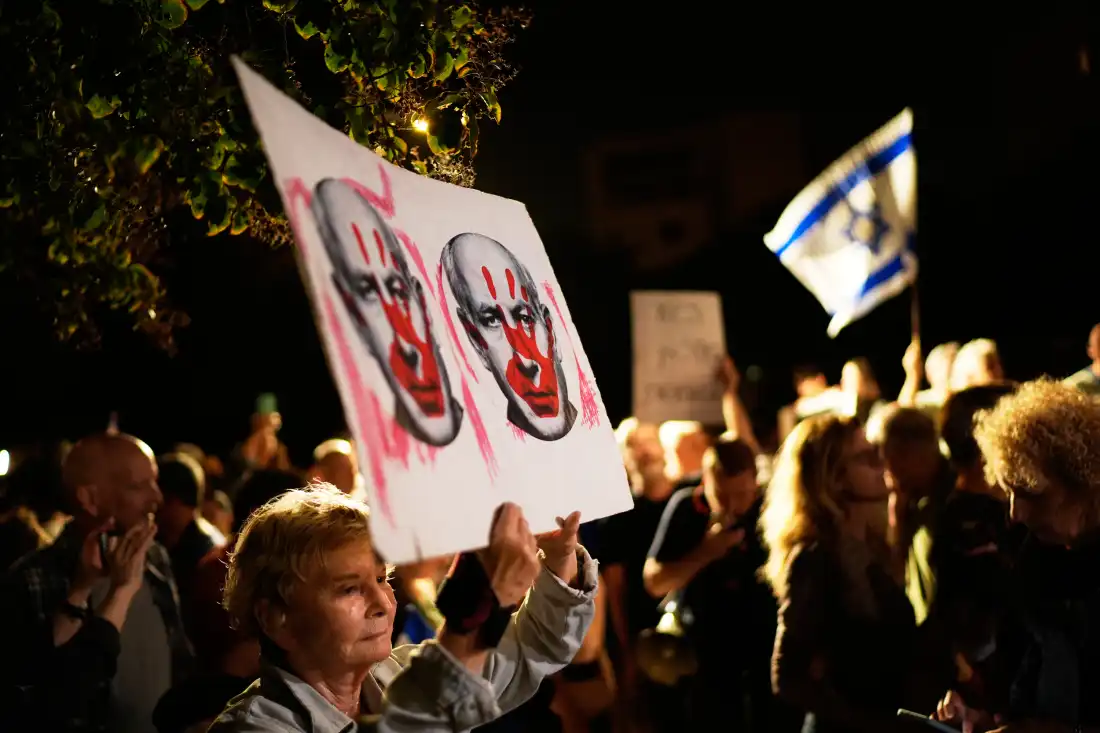
TEL AVIV, Israel — The recent election in Israel has led to a political impasse, leaving Prime Minister Benjamin Netanyahu and his main rival, Gadi Eisenkot, with no clear path to form a government. The opposition parties secured more seats than Netanyahu’s right-wing bloc. However, Eisenkot, a center-right former military chief of staff, lacks a majority without support from the predominantly Arab parties. During the campaign, his allies ruled out this option.
Netanyahu’s Likud party won the most votes, but his coalition of right-wing, far-right, and ultra-Orthodox parties remains short of the 61 seats needed for a majority in the Knesset, Israel’s 120-seat parliament.
What are the next steps for forming a new Israeli government?
Over the next few days, Israel’s president will consult with party leaders to determine who should have the first chance to form a coalition. The president chooses the candidate seen as most likely to secure the support of at least 61 lawmakers. Initially, the candidate has 28 days to form a government, with a possible extension of 14 days. If unsuccessful, another candidate might be given the opportunity. This process might take weeks, months, or might end without a majority being formed.
Who is likely to form a coalition first?
Eisenkot could receive more recommendations than Netanyahu from the newly elected lawmakers. However, his bloc lacks majority without Arab-led parties’ support, whom Eisenkot promised not to partner with due to their positions on Hamas and the Gaza conflict. Similarly, Netanyahu is unable to return to power as his coalition partners do not have sufficient seats.
Possible outcomes for forming a government:
1. Unity Government: There could be a unity government involving Netanyahu and Eisenkot, potentially favored by President Trump for regional cooperation. However, Eisenkot resists joining a government led by Netanyahu, raising practical issues regarding prime ministerial duties.
2. Eisenkot Government Supported by Arab Parties: Such a coalition would exceed 67 seats comfortably, but Eisenkot and allies reject this due to campaign promises.
3. Another Election: President encourages avoiding another election after high turnout, but if no coalition forms, it remains possible.
4. Defections: If lawmakers from opposing sides switch allegiances, one bloc might achieve a majority, though this appears challenging.
Undermining Netanyahu During Stalemate
Eisenkot’s bloc, possibly with Arab lawmakers, could advance legislation before a government forms. This includes replacing the Knesset speaker and establishing a commission of inquiry into political failures preceding Hamas-led attacks. Additionally, reversing Netanyahu’s legislation seen as weakening democratic institutions might be pursued.
Could Iran Conflict Impact Political Negotiations?
Netanyahu indicated an ongoing mission against Iran, while Eisenkot cautioned him against using security for political needs. Renewed conflict might disrupt legislative efforts and could press Eisenkot into an emergency unity government. Past dynamics post-October 7 attacks show Eisenkot joining, then leaving, Netanyahu’s government.
Analyst Danny Citrinowicz suggests Netanyahu has an incentive to renew conflict with Iran to push for an emergency government while negotiations lag.
Reported by Daniel Estrin in Tel Aviv.