
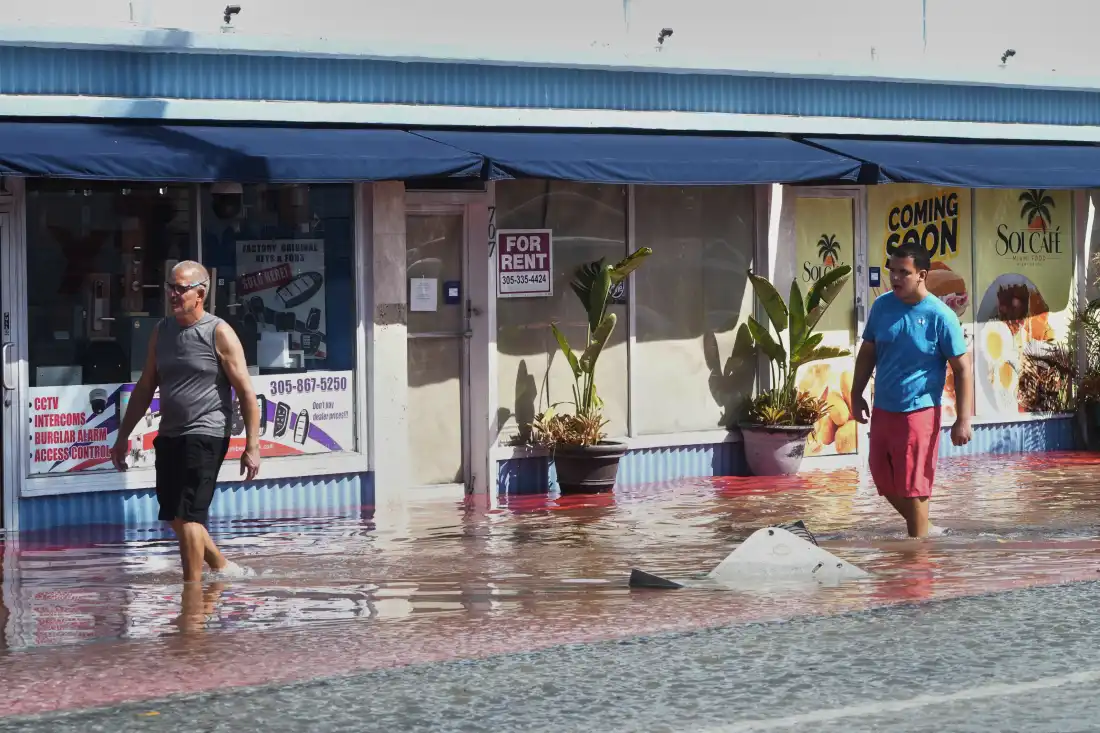
This winter may be warmer and wetter due to a ‘Super El Niño’ affecting global weather patterns. The National Oceanic and Atmospheric Administration (NOAA) forecasts warmer temperatures across most of the U.S. Along with those temperatures, above-average precipitation is expected in several regions.
Impact on the U.S. Weather
El Niño years often bring coastal flooding on the East and West Coasts. Ken Graham, NOAA’s National Weather Service director, described the El Niño as strong and historic. Though these forecasts are predictions, Graham emphasized their importance in preparation for potential impacts and risk mitigation.
There might be some benefits. Forecasters believe El Niño could bring rain to drought-stricken areas. The pattern begins in the tropical Pacific, warming large bodies of water near the equator and affecting global weather patterns. This year’s El Niño could be the strongest recorded.
Climate Change Interactions
This El Niño coincides with warming due to fossil fuel emissions, trapping more atmospheric heat. NASA climate scientist Josh Willis likens El Niño to a ‘Godzilla,’ stretching ocean-wide. It influences severe droughts and wildfires in Southeast Asia, while hurricanes and strong tides affect the Pacific.
Previous strong El Niños caused major events like 2015-16 floods in South Carolina and blizzards on the East Coast. This year, similar impacts are expected.
Regional Outlooks
West Coast
Northern California will have warmer temperatures and Southern California will experience above-average precipitation. Higher snowfall is anticipated in Nevada, Southern Rockies, and San Bernardino Mountains. Coastal flooding risks have risen due to Kelvin waves elevating sea levels along the coast.
Pacific Northwest
Researchers predict warmer temperatures with below-average precipitation, likely resulting in a smaller snowpack. Years of drought have increased fire risks. Communities are preparing for potential flooding.
Southwest
The region experiences wetter-than-average conditions. Severe flooding has already occurred in the Four Corners. Climate scientist Daniel Swain attributes the floods to accumulated atmospheric moisture but warns this doesn’t end the Colorado River basin’s water crisis.
East Coast
The Northeast will likely see warmer temperatures and more precipitation. El Niño may increase nor’easters’ strength and frequency. High tides can lead to coastal erosion. Predictions indicate potential flooding and snow comparable to past El Niño events.
Southern U.S.
Above-average precipitation is expected, including snow in uncommon areas like northern Texas. Florida anticipates substantial rain. Past El Niños raised tornado risks, such as the deadly 1998 outbreak.
Midwest
The Midwest, particularly the Upper Midwest, might have reduced snowpacks due to warmer conditions. Drought concerns persist, with potential worsening across the region.