
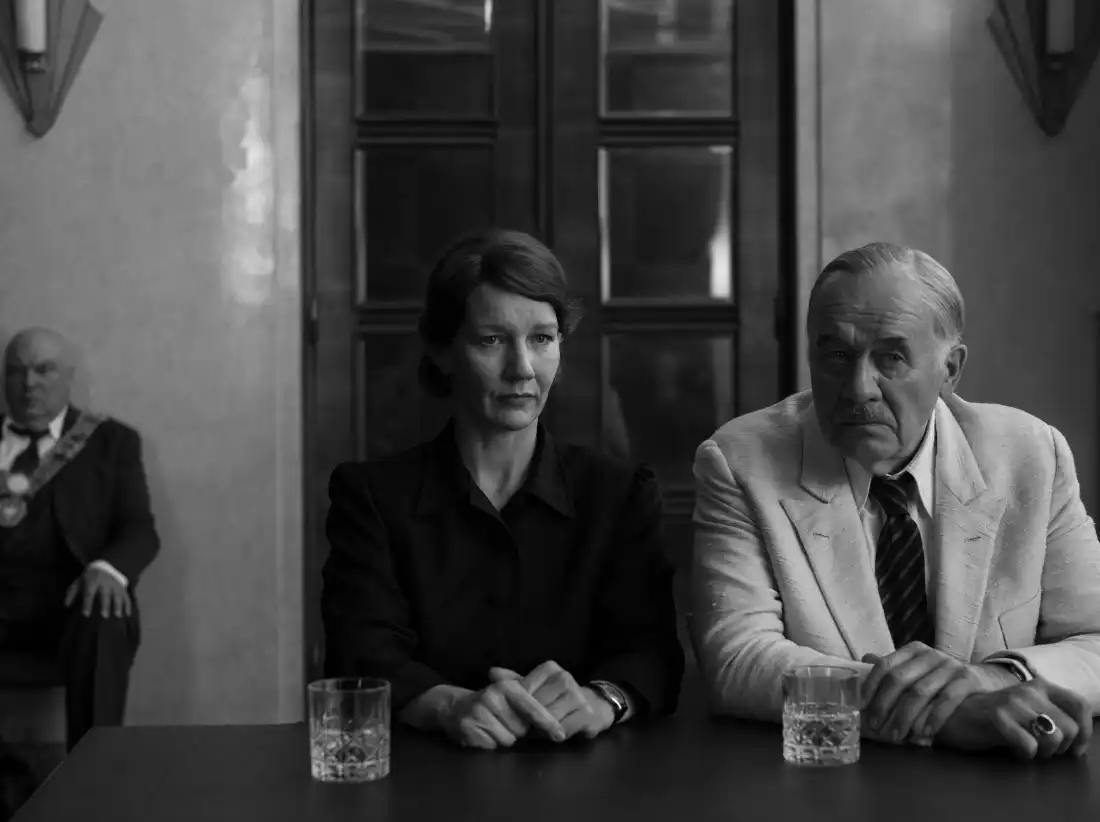
Fatherland is a film by Paweł Pawlikowski that delves into the 1949 return to Germany of the renowned German writer Thomas Mann after spending 11 years in America distancing himself from the Nazis. This film is the third installment of Pawlikowski’s trilogy set in mid-century Mitteleuropa, and follows the Oscar-winning Ida. With a runtime of 82 minutes, Fatherland skillfully intertwines family drama, post-war Germany’s portrait, Cold War tensions, and the blending of personal and historical guilt.
Central Characters
In the film, Mann is portrayed by Hanns Zischler, while his daughter Erika is played by Sandra Hüller. Erika is depicted as a pivotal figure alongside her brother Klaus, portrayed by August Diehl. This narrative begins with an intimate phone conversation from Erika’s California residence to Klaus in Cannes. Erika urges Klaus to accompany Mann on his upcoming visit to Germany to accept the Goethe Prize. However, Klaus’s feelings toward their father are complex, adding emotional depth to the storyline.
Mann’s Homage and Exploration of Germany
Mann embarks on a journey through Germany, assisted by Erika who assumes roles of editor, assistant, and caretaker. Despite historical accuracy indicating that Mann was accompanied by his wife during the trip, the film opts for Erika to emphasize her dynamic with Mann. The travels from Frankfurt to Weimar embody the film’s title, capturing bombed-out German locations through archival footage merged with new material.
Political Interests and Cultural Exploration
Both the Eastern and Western regions of Germany seek Mann’s alliance, wanting to claim him for ideological purposes. In the American-influenced Frankfurt, Mann lectures and encounters individuals who previously supported Nazism. Conversely, in the Soviet-influenced East, Mann interacts with devoted communists and explores concepts central to Goethe’s ideas of German culture.
Personal Challenges and Artistic Perspectives
Despite a family tragedy, Mann’s focus remains on the tour, leading to tensions between him and Erika. Erika’s character evolves, embodying her real-life accomplishments of being an anti-Nazi author and D-Day reporter. Mann’s struggle with emotional expressions is contrasted with his high culture pursuits, a concept explored by Pawlikowski’s filmmaking techniques which blend aesthetic perfection with narratives centered around powerful emotions.
Conclusion and Cinematic Excellence
Filmed meticulously in black and white by Łukasz Żal, Fatherland eschews excessive narrative and emotional cues. Pawlikowski’s film presents an engaging structure reminiscent of concise literary works, such as those by Chekhov or Joyce, despite Mann’s history of elaborate novels. The film concludes with an epiphany accompanied by the music of Johann Sebastian Bach, offering a fleeting revelation of Mann’s inner vulnerability.