
The Cook Political Report has re-evaluated governors’ races in Nebraska and Kansas, favoring Democrats a week before the midterm elections. These changes come in states where President Donald Trump previously won decisively during the 2024 presidential election.
The Nebraska gubernatorial race now leans Republican instead of likely Republican, while the Kansas contest has moved to a toss-up from lean Republican. Midterm elections traditionally serve as a referendum on the current political climate, often resulting in the president’s party losing seats.
President Trump secured victories in both Kansas and Nebraska against then-Vice President Kamala Harris in the 2024 election. Recently, Trump’s approval ratings on various issues, such as the economy and the war in Iran, have declined amidst growing affordability concerns among American households.
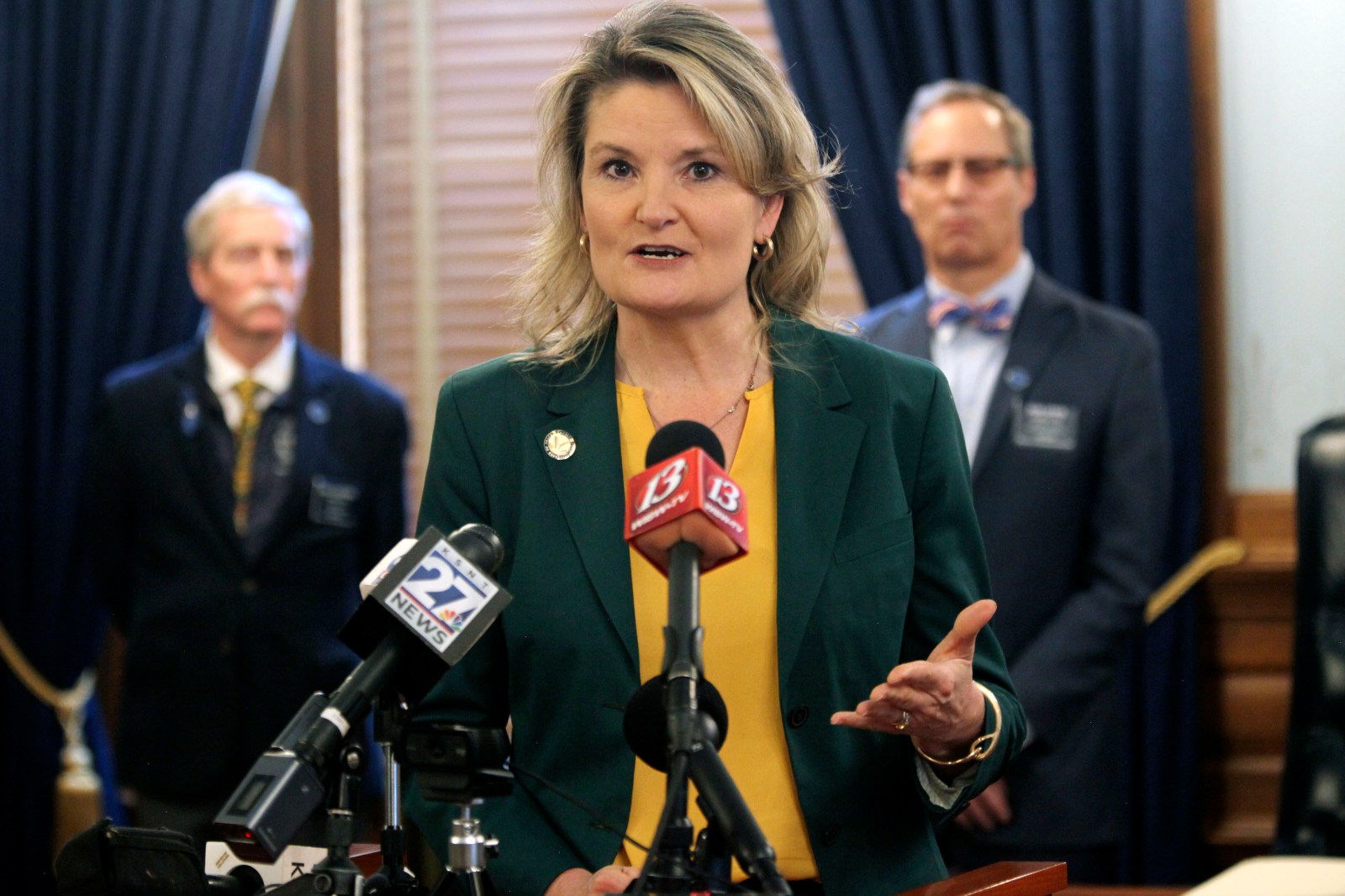
Trump has been actively rallying support for GOP candidates ahead of the November 3 elections. Newsweek reached out to campaigns for Republican nominee Ty Masterson and Democratic nominee Cindy Holscher in Kansas, as well as Republican incumbent Jim Pillen in Nebraska, seeking their comments.
The Cook Political Report states: “Despite strong Republican optimism, enhanced competitive dynamics in these contests position them differently.”
In Kansas, Trump garnered 57.2% of the vote versus Harris’ 41%. In Nebraska, he captured 59.3% compared to Harris’ 38.9%. The Kansas governor’s race has gained attention alongside an increasingly competitive Senate contest between Democrat Adam Hamilton and Republican Roger Marshall. Cook attributes the race’s shift to internal polling data from Holscher’s campaign.
While Masterson leads most polls and enjoys Trump’s support, Holscher announced the Cook Political Report’s shift on social media, highlighting $20 million spent against her campaign and newfound momentum.
In Nebraska, Cook highlights the influence of a saturated ballot in altering race dynamics. Candidates like Rick Beard of the Legal Marijuana Now Party and Brett Lindstrom of the America First Party add complexity. Despite Pillen’s poll lead and Trump backing, the presence of these candidates could impact vote distribution.
Democratic nominee Lynne Walz’s spokesperson emphasized the campaign’s positive momentum, stating, “Nebraskans recognize what is at stake and seek representation that prioritizes them.” Walz aims to contrast her candidacy against incumbent Pillen’s tenure.
Overall, Cook suggests Democrats may secure two to four additional gubernatorial seats this election cycle. Historically, Republicans have dominated governorships for twenty years, except a brief Democratic period before 2011. In the upcoming election, 36 state leadership positions are in contention, equally divided among parties.
Polling and Prediction Markets
In Nebraska, a YouGov survey indicates a close race: Walz at 43% and Pillen at 44%. Other responses include 2% for another candidate, 10% undecided, and 1% not voting, based on 1,809 likely voters surveyed from September 24 to October 3, with a margin of error of 3.3%.
Prediction markets like Kalshi favor Pillen with 82% over Walz’s 18%. Polymarket reflects similar figures.
In Kansas, YouGov polling places Masterson at 47% against Holscher’s 44%, with 1% supporting another candidate and 7% undecided. This survey covered 2,255 likely voters from September 24 to October 4, bearing a 3.2% margin of error.
Meanwhile, a New York Times poll conducted by Siena Research Institute gives Masterson 49% to Holscher’s 44%, with 7% unsure or unresponsive and less than 0.5% endorsing another candidate, assessed from 605 likely voters from September 22 to September 30, reporting a 4.6% margin of error.
The prediction market Kalshi shows Masterson’s support at 73% versus Holscher’s 27%, echoing Polymarket’s results.
This article was created with the help of Martyn, Newsweek’s AI assistant. For information on Martyn and to contact Newsweek editors, visit our website.