
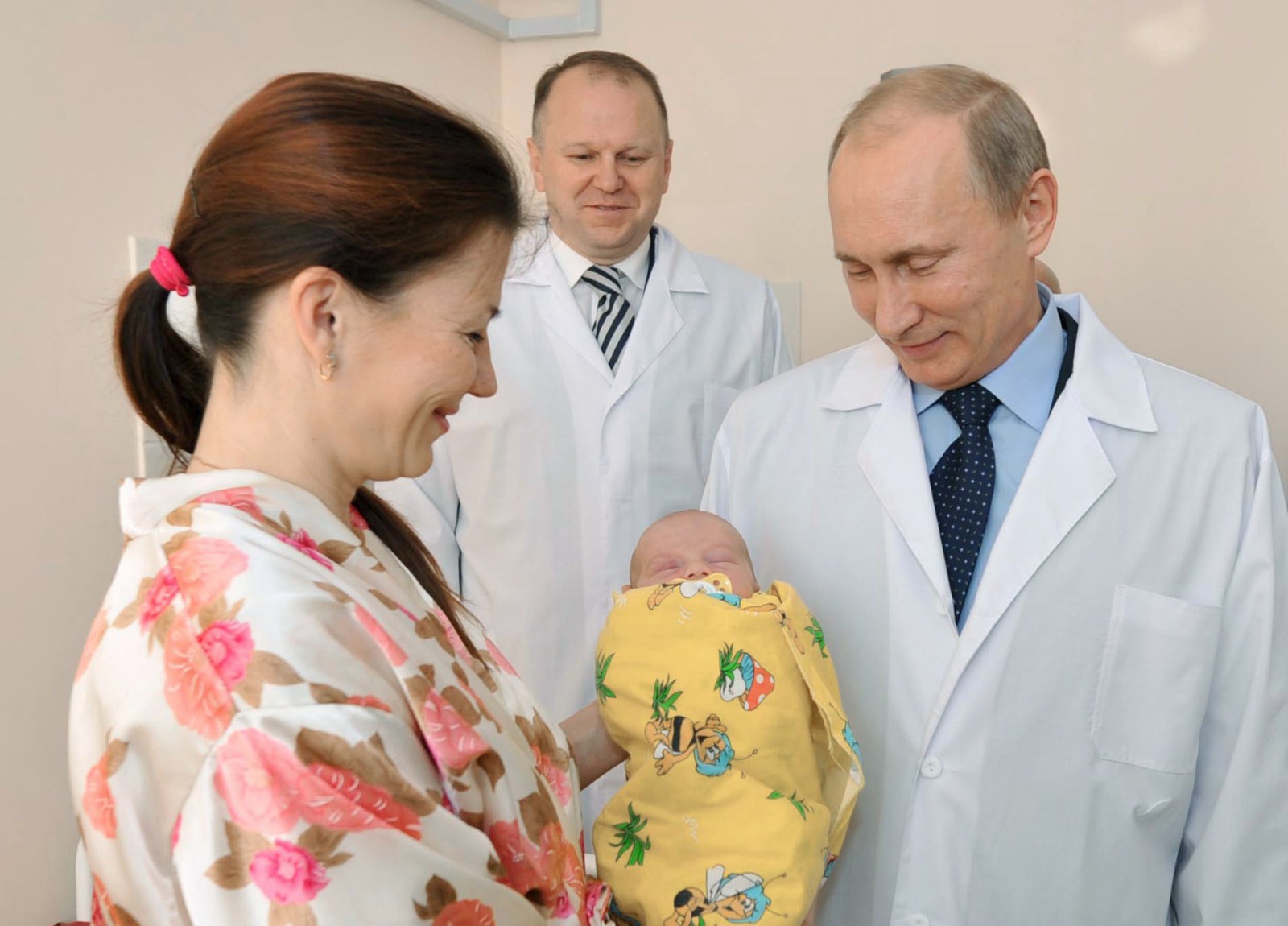
President Vladimir Putin aims to increase Russia’s birthrate. Despite abortion being legal, the government is restricting its access. Efforts include banning ‘child-free’ advocacy and pressuring clinics. Women face waiting periods and counseling when seeking abortions.
Recently, Putin ordered new measures to manipulate search engine results. The goal is to promote pregnancy support websites over abortion information.
However, this focus contrasts with significant national budget allocations. Over a third of the federal budget goes to defense, affecting healthcare and social payments. While state policies prioritize childbirth, financial support is limited.
Building the Motherland
This emphasis continues a historical trend. In 1944, Stalin’s ‘Mother Heroine’ award encouraged large families. Putin revived this initiative in 2022.
In a recent address, Putin highlighted Russia’s low fertility rates as a national security issue. Current fertility rates (1.352) lag behind the replacement level of 2.1. There’s concern about population decline from 146 million in 2025 to about 141 million by 2036.
The government launched the ‘Family’ project in 2025. This includes maternity grants and child benefits. Families can receive 729,000 rubles ($9,000) for housing and education after their first child. Additional payouts follow subsequent children.
Concurrently, authorities stigmatize abortion. New fines target those encouraging abortions. Clinics face pressures to halt services. Women encounter pre-abortion counseling designed to change their minds.
Economic hardship drives many abortion decisions. In Vologda, economic issues were cited in 59.8% of abortion-related cases.
War Comes First
The draft 2027 budget prioritizes defense (17.15 trillion rubles) over healthcare (1.82 trillion rubles). The ‘Family’ project accounts for 5.9% of the budget, which falls short of initial promises.
Regional healthcare spending decreased by 5.8%. Regions like Primorsky Krai, facing budget cuts, delay social support and healthcare projects.
Officials attribute delays to wartime budget stresses, while increasing military incentives.
Putin argues demographic issues predated the ongoing conflict, noting similar trends in Japan and South Korea. However, the current war, with significant losses, exacerbates these challenges.
For better outcomes, the Kremlin might revise its approaches to information control and financial pledges, acknowledging the complex balance of domestic priorities.
This article was developed by Newsweek’s team, aided by Martyn, their AI assistant.